


The effect of electronic monitoring feedback on medication adherence and clinical outcomes: A systematic review
- PMID: 28991903
- PMCID: PMC5633170
- DOI: 10.1371/journal.pone.0185453
The effect of electronic monitoring feedback on medication adherence and clinical outcomes: A systematic review
Abstract
Objective: This study aims to assess the efficacy of Electronic Monitoring Feedback (EMF) as an intervention to improve medication adherence (i.e. dose- or full adherence) and clinical outcomes in adult patients.
Methods: A systematic search was performed in Medline, EMBASE, PsycINFO and Web of Science and reported according to the PRISMA guidelines. Randomised controlled trials (RCTs) comparing EMF with usual care were identified to systematically summarise the evidence for use of EMF in improving medication adherence and clinical outcomes. The GRADE approach was used to assess the quality of the body of evidence.
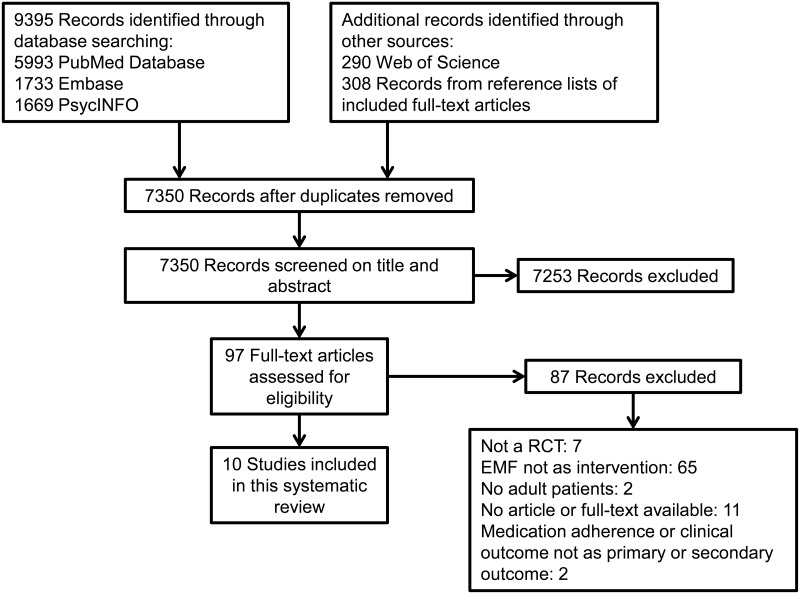
Results: Of 9,993 initially-identified studies, ten studies (four of high-quality and six of low-quality) were included. The sample size of the studies included varied from 18 to 205 patients. Four of the six studies (66.7%) reported a significant positive effect of EMF on mean dose adherence levels, whereas a significant positive effect of EMF on mean full adherence levels was found in all of the included studies (100%, five out of five of the studies included). A significant positive effect of EMF on clinical outcomes was reported in one of the seven studies included. The overall effect of EMF on mean dose- and full adherence was positive and the overall effect of EMF on clinical outcomes was inconclusive.
Conclusion: Considering the positive effect of EMF on medication adherence, EMF might be a promising intervention to enhance medication adherence. However, the effect of EMF on clinical outcomes was inconclusive. Prior to implementing EMF in clinical practice, future research with high-quality studies (e.g. adequate sample sizes, follow-up periods and no interfering co-interventions) is required to examine the (long-term) efficacy of EMF.
Conflict of interest statement
Figures
References
-
- Osterberg L, Blaschke T. Adherence to medication. N Engl J Med 2005. August 4;353(5):487–97. doi: 10.1056/NEJMra050100 - DOI - PubMed
-
- Behner P, Klink A, Visser S, Böcken J, Etgeton S. Unleashing the potential of therapy adherence high-leverage changes in patient behavior for improved health and productivity. Booz & Company; 2012.
-
- Sabate E. Adherence to long-term therapies: evidence for action. 1th ed Geneva, Switzerland: World Health Organisation; 2003. - PubMed
-
- Capgemini Consulting. Patient adherence: the next frontier in patient care. 2011. https://www.capgemini.com/resources/patient-adherence-the-next-frontier-... [Accessed March 31 2016].
Publication types
MeSH terms
LinkOut - more resources
Full Text Sources
Other Literature Sources
