


The presence and severity of cerebral small vessel disease increases the frequency of stroke in a cohort of patients with large artery occlusive disease
- PMID: 28991905
- PMCID: PMC5633141
- DOI: 10.1371/journal.pone.0184944
The presence and severity of cerebral small vessel disease increases the frequency of stroke in a cohort of patients with large artery occlusive disease
Abstract
Background: Cerebral small vessel disease (SVD) commonly coexists with large artery atherosclerosis (LAA).
Aim: We evaluate the effect of SVD on stroke recurrence in patients for ischemic stroke with LAA.
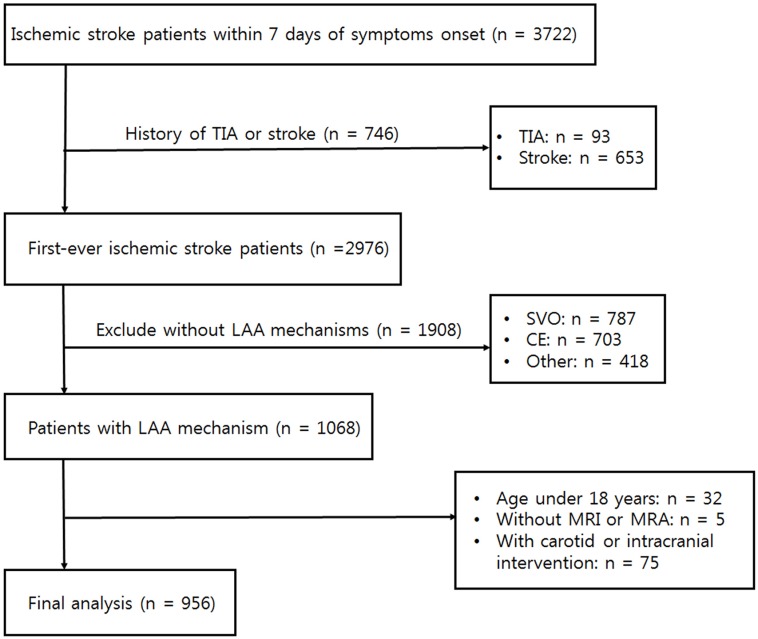
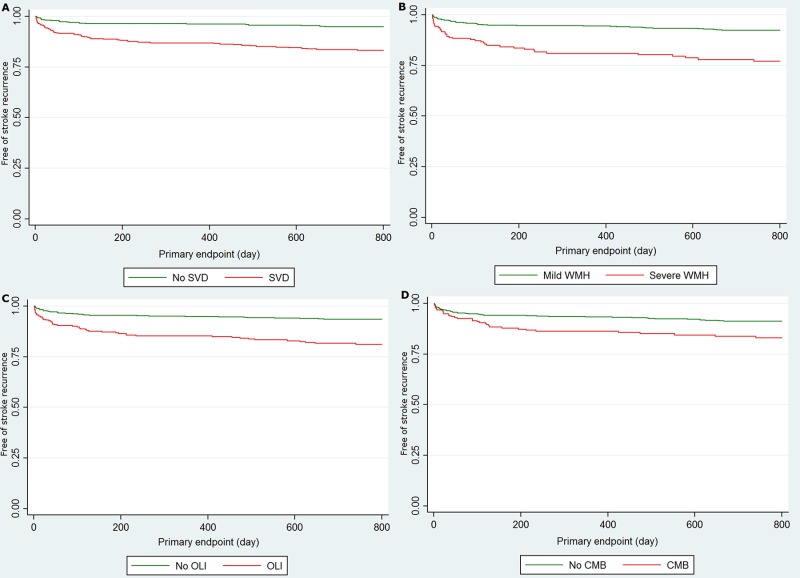
Methods: We consecutively collected first-ever ischemic stroke patients who were classified as LAA mechanism between Jan 2010 and Dec 2013. Univariate and multivariate Cox analyses were performed to evaluate the association between the 2-year recurrence and demographic, clinical, and radiological factors. To evaluate the impact of SVD and its components on recurrent stroke, we used the Kaplan-Meier analysis. SVD was defined as the presence of severe white matter hyperintensity (WMH) or old lacunar infarction (OLI) or cerebral microbleeds (CMB). We also compared frequency and burden of SVD among recurrent stroke groups with different mechanisms.
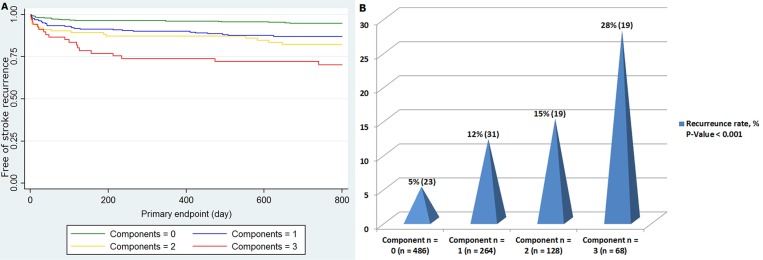
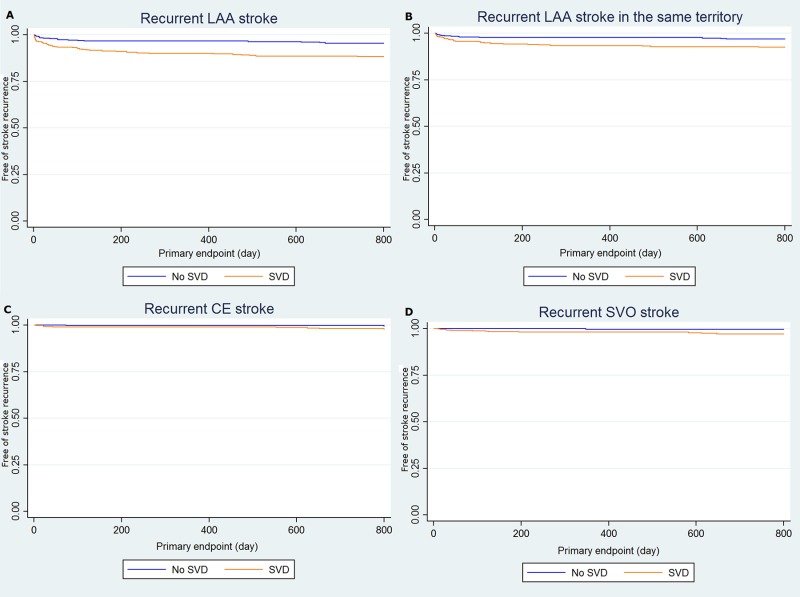
Results: Among a total of 956 participants, 92 patients had recurrent events. Recurrence group showed a higher frequency of severe WMH, OLI, asymptomatic territorial infarction, and severe stenosis on the relevant vessel in multivariate analysis. The impact of SVD and its components on recurrent stroke was significant in any ischemic recurrent stroke, and the presence of SVD was continuously important in stroke recurrence regardless of its mechanism, including recurrent LAA stroke, recurrent small vessel occlusion stroke, and even recurrent cardioembolic stroke. Additionally, the recurrence rate increased in dose-response manner with the increased number of SVD components.
Conclusions: Cerebral SVD is associated with recurrent stroke in patients with LAA. Additionally, it may affect any mechanisms of recurrent stroke and even with a dose response manner.
Conflict of interest statement
Figures
References
-
- Arenillas JF. Intracranial atherosclerosis current concepts. Stroke. 2011;42(1 suppl 1):S20–S3. - PubMed
-
- van Dijk EJ, Prins ND, Vrooman HA, Hofman A, Koudstaal PJ, Breteler MM. Progression of cerebral small vessel disease in relation to risk factors and cognitive consequences Rotterdam scan study. Stroke. 2008;39(10):2712–9. doi: 10.1161/STROKEAHA.107.513176 - DOI - PubMed
-
- Inzitari D. Leukoaraiosis An Independent Risk Factor for Stroke? Stroke. 2003;34(8):2067–71. doi: 10.1161/01.STR.0000080934.68280.82 - DOI - PubMed
-
- Chutinet A, Biffi A, Kanakis A, Fitzpatrick K, Furie K, Rost N. Severity of leukoaraiosis in large vessel atherosclerotic disease. American Journal of Neuroradiology. 2012;33(8):1591–5. doi: 10.3174/ajnr.A3015 - DOI - PMC - PubMed
MeSH terms
LinkOut - more resources
Full Text Sources
Other Literature Sources
Medical
Research Materials
