


Changing While Staying the Same: Preservation of Structural Continuity During Limb Evolution by Developmental Integration
- PMID: 28992070
- PMCID: PMC6455032
- DOI: 10.1093/icb/icx092
Changing While Staying the Same: Preservation of Structural Continuity During Limb Evolution by Developmental Integration
Abstract
More than 150 years since Charles Darwin published "On the Origin of Species", gradual evolution by natural selection is still not fully reconciled with the apparent sudden appearance of complex structures, such as the bat wing, with highly derived functions. This is in part because developmental genetics has not yet identified the number and types of mutations that accumulated to drive complex morphological evolution. Here, we consider the experimental manipulations in laboratory model systems that suggest tissue interdependence and mechanical responsiveness during limb development conceptually reduce the genetic complexity required to reshape the structure as a whole. It is an exciting time in the field of evolutionary developmental biology as emerging technical approaches in a variety of non-traditional laboratory species are on the verge of filling the gaps between theory and evidence to resolve this sesquicentennial debate.
© The Author 2017. Published by Oxford University Press on behalf of the Society for Integrative and Comparative Biology. All rights reserved. For permissions please email: journals.permissions@oup.com.
Figures
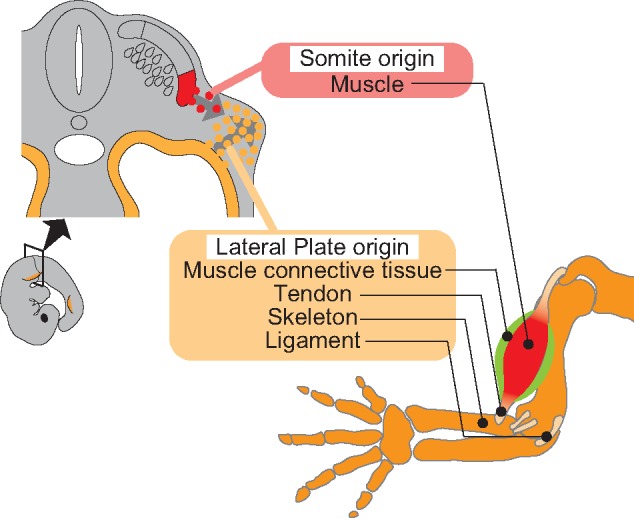
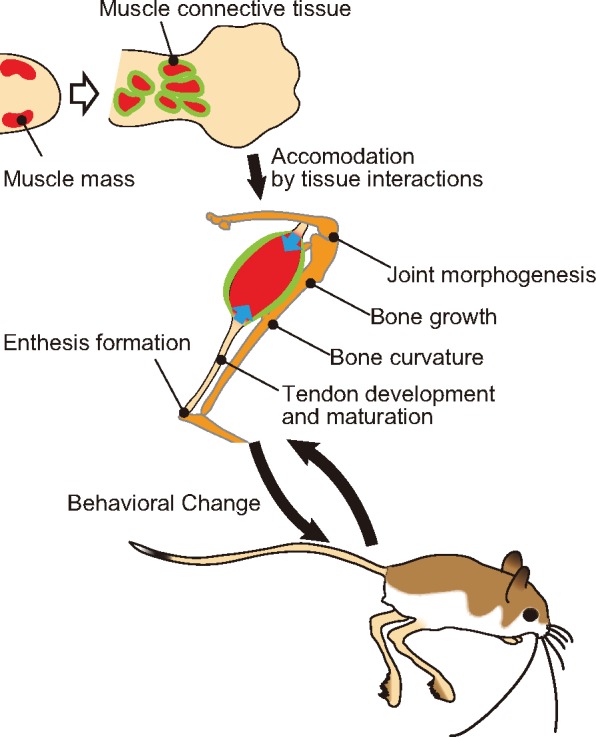
References
-
- Benjamin M, Kumai T, Milz S, Boszczyk BM, Boszczyk AA, Ralphs JR.. 2002. The skeletal attachment of tendons—tendon “entheses.” Comp Biochem Physiol A Mol Integr Physiol 133:931–45. - PubMed
-
- Bertram JEA, Biewener AA.. 1992. Allometry and curvature in the long bones of quadrupedal mammals. J Zool 226:455–67.
-
- Bertram JEA, Biewener AA.. 1988. Bone curvature: sacrificing strength for load predictability? J Theor Biol 131:75–92. - PubMed
-
- Blitz E, Sharir A, Akiyama H, Zelzer E.. 2013. Tendon-bone attachment unit is formed modularly by a distinct pool of Scx- and Sox9-positive progenitors. Development 140:2680–90. - PubMed
Publication types
MeSH terms
Grants and funding
LinkOut - more resources
Full Text Sources
Other Literature Sources
