Night-to-Night Sleep Variability in Older Adults With Chronic Insomnia: Mediators and Moderators in a Randomized Controlled Trial of Brief Behavioral Therapy (BBT-I)
- PMID: 28992829
- PMCID: PMC5656473
- DOI: 10.5664/jcsm.6790
Night-to-Night Sleep Variability in Older Adults With Chronic Insomnia: Mediators and Moderators in a Randomized Controlled Trial of Brief Behavioral Therapy (BBT-I)
Abstract
Study objectives: Sleep variability is a clinically significant variable in understanding and treating insomnia in older adults. The current study examined changes in sleep variability in the course of brief behavioral therapy for insomnia (BBT-I) in older adults who had chronic insomnia. Additionally, the current study examined the mediating mechanisms underlying reductions of sleep variability and the moderating effects of baseline sleep variability on treatment responsiveness.
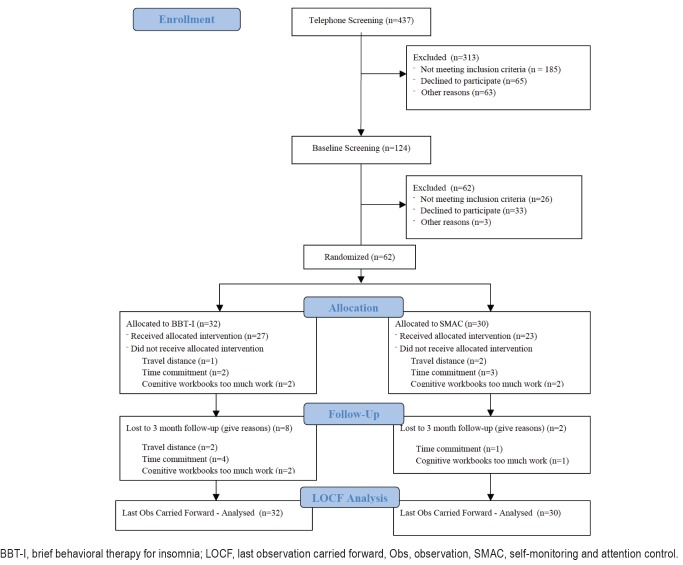
Methods: Sixty-two elderly participants were randomly assigned to either BBT-I or self-monitoring and attention control (SMAC). Sleep was assessed by sleep diaries and actigraphy from baseline to posttreatment and at 3-month follow-up. Mixed models were used to examine changes in sleep variability (within-person standard deviations of weekly sleep parameters) and the hypothesized mediation and moderation effects.
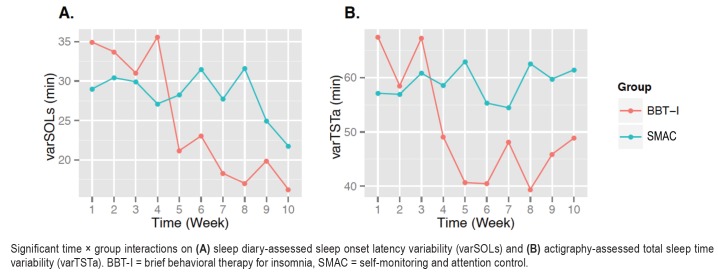
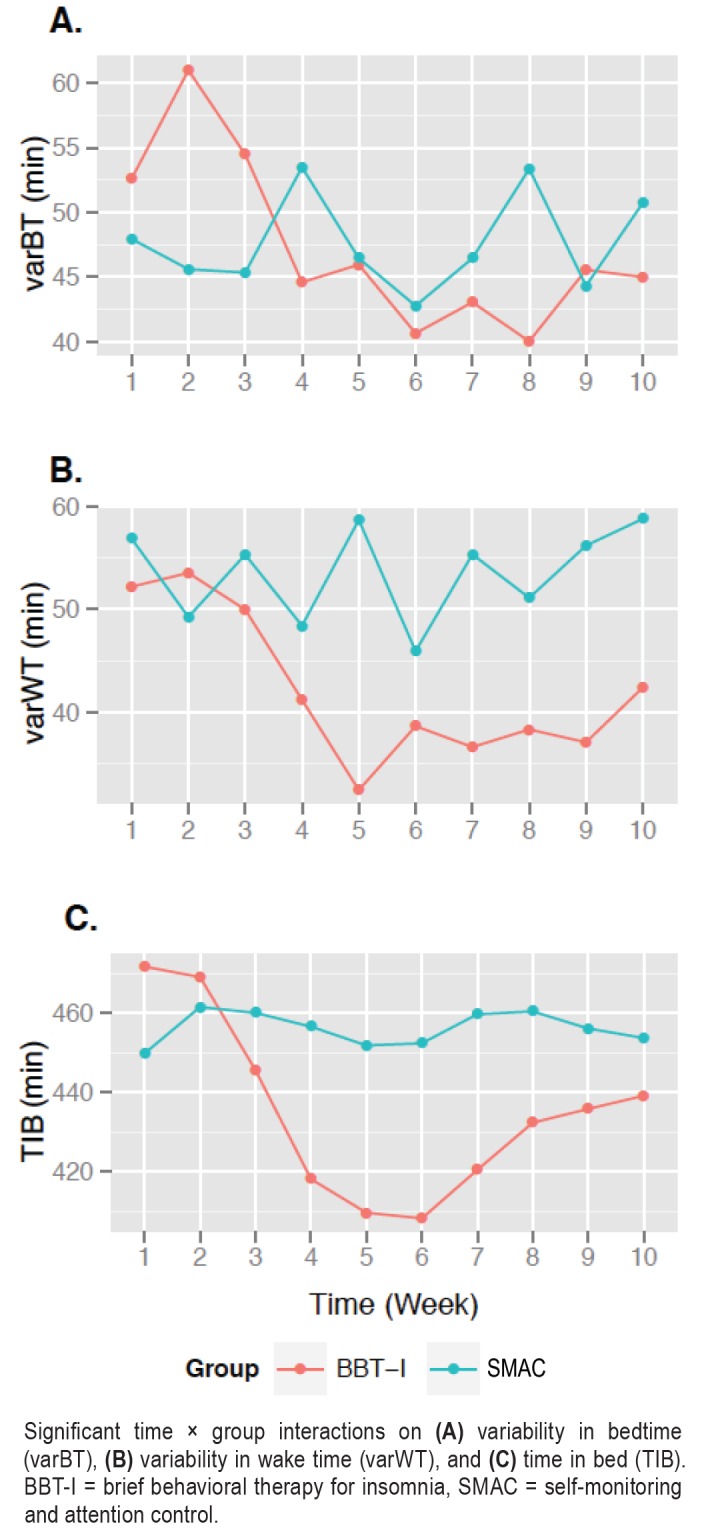
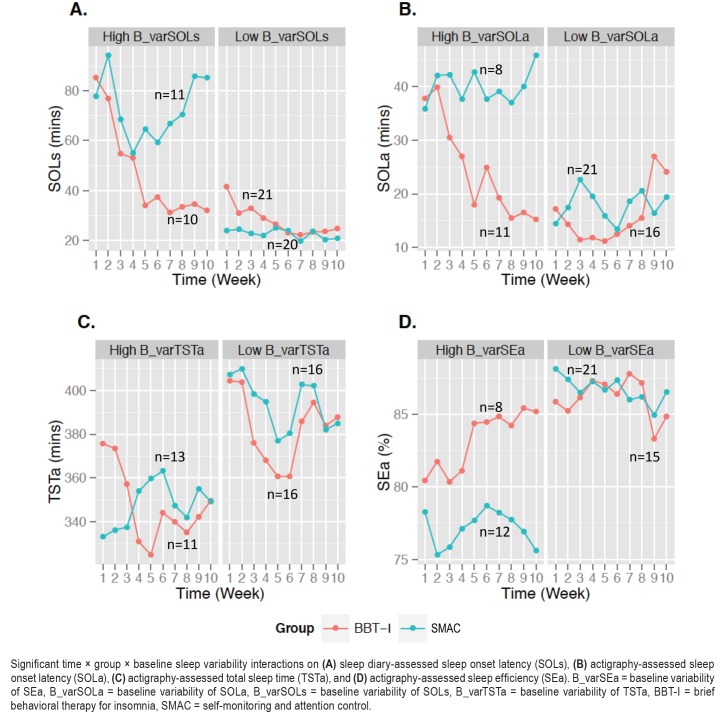
Results: Variabilities in sleep diary-assessed sleep onset latency (SOL) and actigraphy-assessed total sleep time (TST) significantly decreased in BBT-I compared to SMAC (Pseudo R2 = .12, .27; P = .018, .008). These effects were mediated by reductions in bedtime and wake time variability and time in bed. Significant time × group × baseline sleep variability interactions on sleep outcomes indicated that participants who had higher baseline sleep variability were more responsive to BBT-I; their actigraphy-assessed TST, SOL, and sleep efficiency improved to a greater degree (Pseudo R2 = .15 to .66; P < .001 to .044).
Conclusions: BBT-I is effective in reducing sleep variability in older adults who have chronic insomnia. Increased consistency in bedtime and wake time and decreased time in bed mediate reductions of sleep variability. Baseline sleep variability may serve as a marker of high treatment responsiveness to BBT-I.
Clinical trial registration: ClinicalTrials.gov, Identifier: NCT02967185.
Keywords: CBT-I; insomnia; mechanisms of change; older adults; sleep variability; treatment efficacy moderator.
© 2017 American Academy of Sleep Medicine
Figures
References
-
- Mallon L, Broman JE, Hetta J. Relationship between insomnia, depression, and mortality: a 12-year follow-up of older adults in the community. Int Psychogeriatr. 2000;12(3):295–306. - PubMed
-
- Stewart R, Besset A, Bebbington P, et al. Insomnia comorbidity and impact and hypnotic use by age group in a national survey population aged 16 to 74 years. Sleep. 2006;29(11):1391–1397. - PubMed
-
- Ohayon MM. Epidemiology of insomnia: what we know and what we still need to learn. Sleep Med Rev. 2002;6(2):97–111. - PubMed
Publication types
MeSH terms
Associated data
Grants and funding
LinkOut - more resources
Full Text Sources
Other Literature Sources
Medical