Sleeping Beauty Insertional Mutagenesis in Mice Identifies Drivers of Steatosis-Associated Hepatic Tumors
- PMID: 28993411
- PMCID: PMC5712258
- DOI: 10.1158/0008-5472.CAN-17-2281
Sleeping Beauty Insertional Mutagenesis in Mice Identifies Drivers of Steatosis-Associated Hepatic Tumors
Abstract
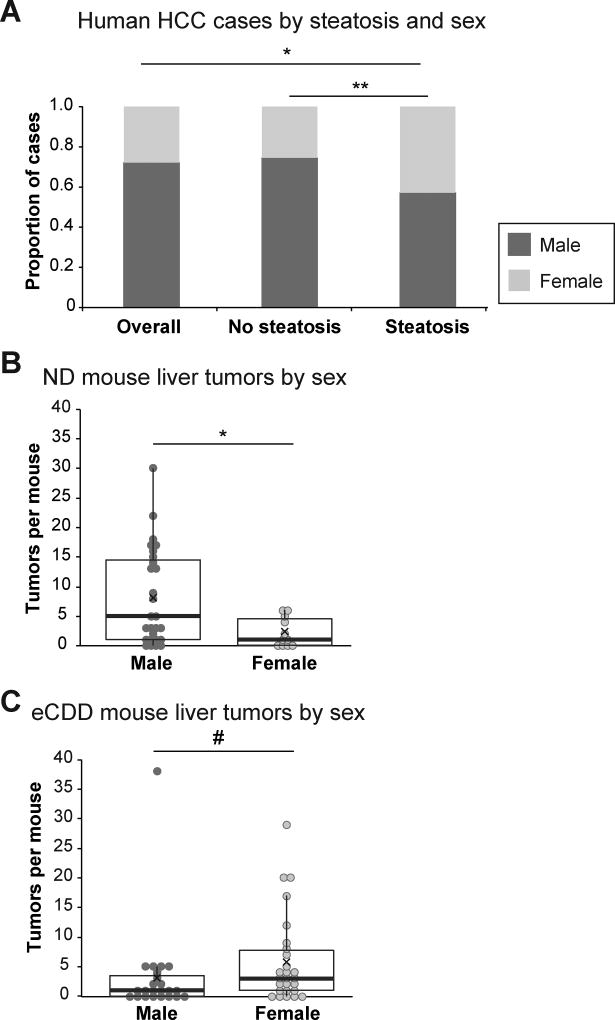
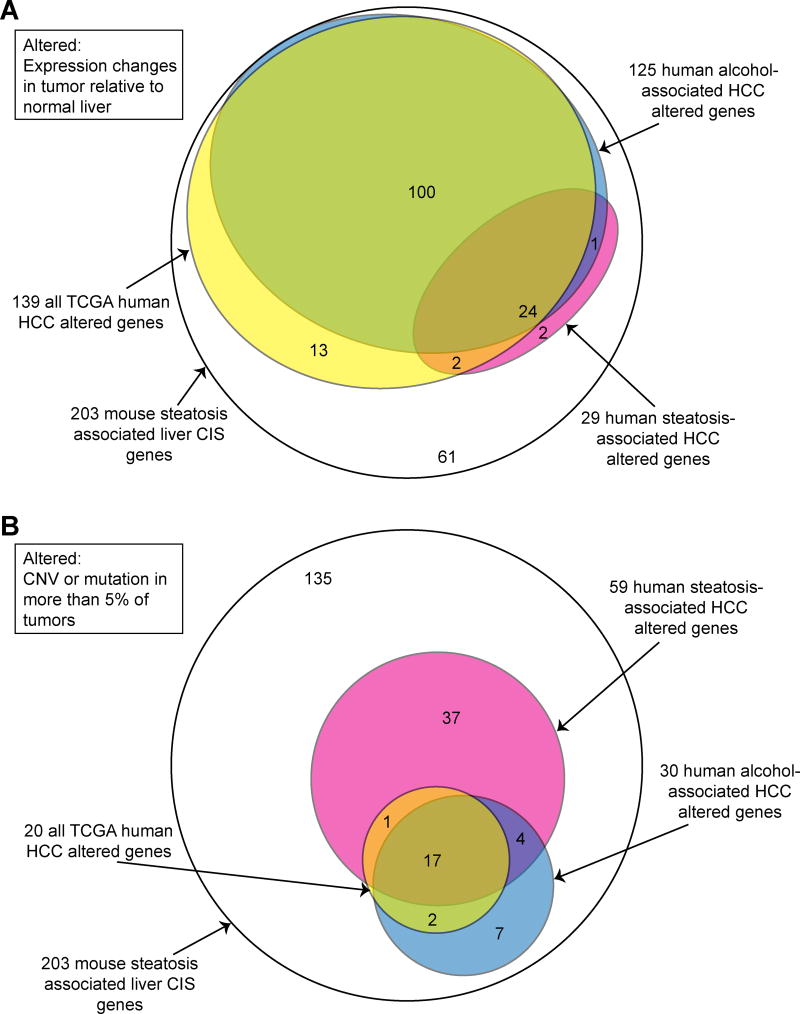
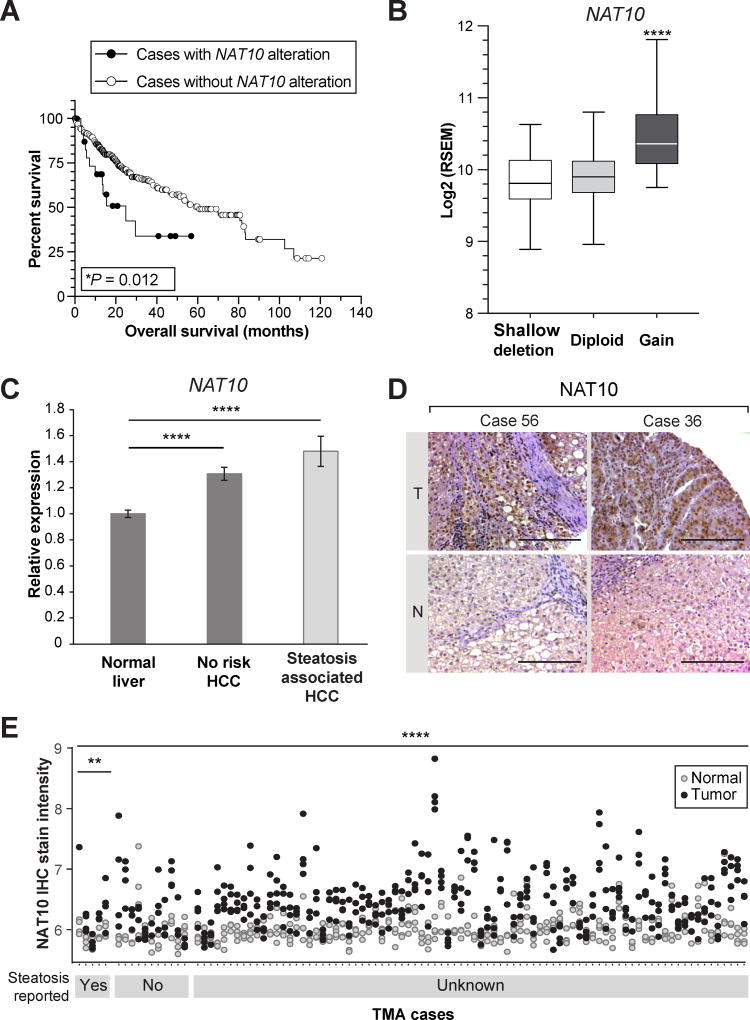
Hepatic steatosis is a strong risk factor for the development of hepatocellular carcinoma (HCC), yet little is known about the molecular pathology associated with this factor. In this study, we performed a forward genetic screen using Sleeping Beauty (SB) transposon insertional mutagenesis in mice treated to induce hepatic steatosis and compared the results to human HCC data. In humans, we determined that steatosis increased the proportion of female HCC patients, a pattern also reflected in mice. Our genetic screen identified 203 candidate steatosis-associated HCC genes, many of which are altered in human HCC and are members of established HCC-driving signaling pathways. The protein kinase A/cyclic AMP signaling pathway was altered frequently in mouse and human steatosis-associated HCC. We found that activated PKA expression drove steatosis-specific liver tumorigenesis in a mouse model. Another candidate HCC driver, the N-acetyltransferase NAT10, which we found to be overexpressed in human steatosis-associated HCC and associated with decreased survival in human HCC, also drove liver tumorigenesis in a steatotic mouse model. This study identifies genes and pathways promoting HCC that may represent novel targets for prevention and treatment in the context of hepatic steatosis, an area of rapidly growing clinical significance. Cancer Res; 77(23); 6576-88. ©2017 AACR.
©2017 American Association for Cancer Research.
Figures
References
-
- Ferlay J, Soerjomataram I, Ervik M, Dikshit R, Eser S, Mathers C, et al. GLOBOCAN 2012 v1.0, Cancer Incidence and Mortality Worldwide: IARC CancerBase No. 11 [Internet] Lyon, Fr. Int. Agency Res. Cancer. 2013 Available from: http://globocan.iarc.fr.
-
- El-Serag HB. Hepatocellular carcinoma. N Engl J Med. 2011;365:1118–27. - PubMed
-
- Ascha MS, Hanouneh IA, Lopez R, Tamimi TA-R, Feldstein AF, Zein NN. The incidence and risk factors of hepatocellular carcinoma in patients with nonalcoholic steatohepatitis. Hepatology. 2010;51:1972–78. - PubMed
-
- Lieber CS. Alcoholic fatty liver: its pathogenesis and mechanism of progression to inflammation and fibrosis. Alcohol. 2004;34:9–19. - PubMed
-
- Seitz HK, Stickel F. Risk factors and mechanisms of hepatocarcinogenesis with special emphasis on alcohol and oxidative stress. Biol Chem. 2006;387:349–60. - PubMed
MeSH terms
Substances
Grants and funding
LinkOut - more resources
Full Text Sources
Other Literature Sources
Medical
Molecular Biology Databases