


Evolution of host adaptation in the Salmonella typhoid toxin
- PMID: 28993610
- PMCID: PMC5705260
- DOI: 10.1038/s41564-017-0033-2
Evolution of host adaptation in the Salmonella typhoid toxin
Erratum in
-
Author Correction: Evolution of host adaptation in the Salmonella typhoid toxin.Nat Microbiol. 2017 Dec;2(12):1697. doi: 10.1038/s41564-017-0070-x. Nat Microbiol. 2017. PMID: 29093550
Abstract
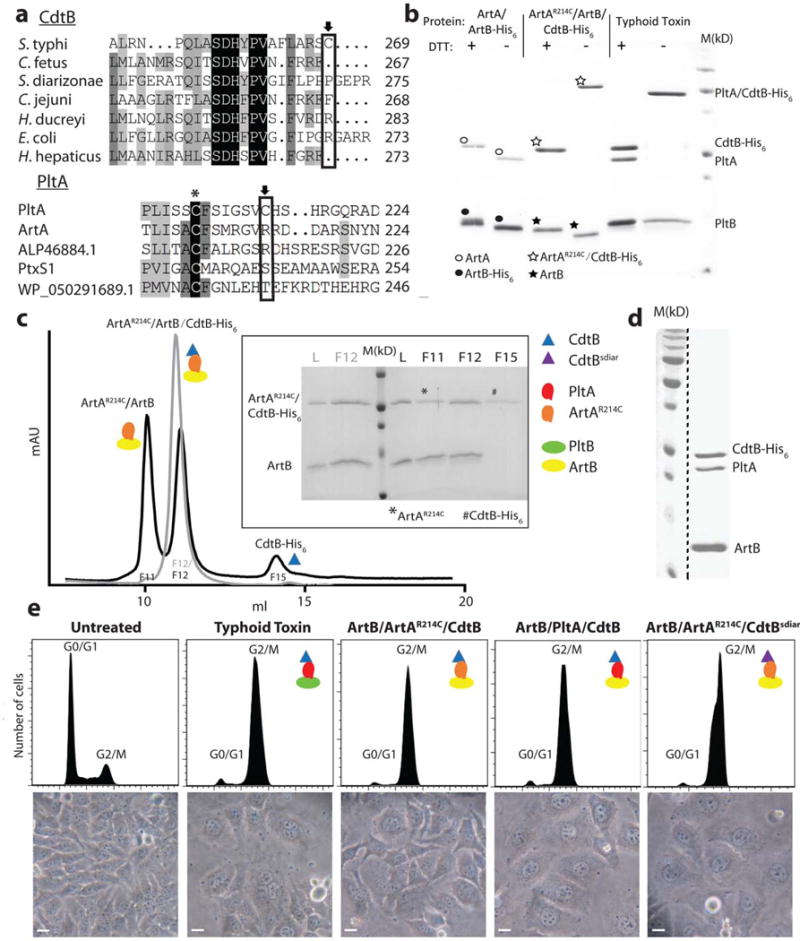
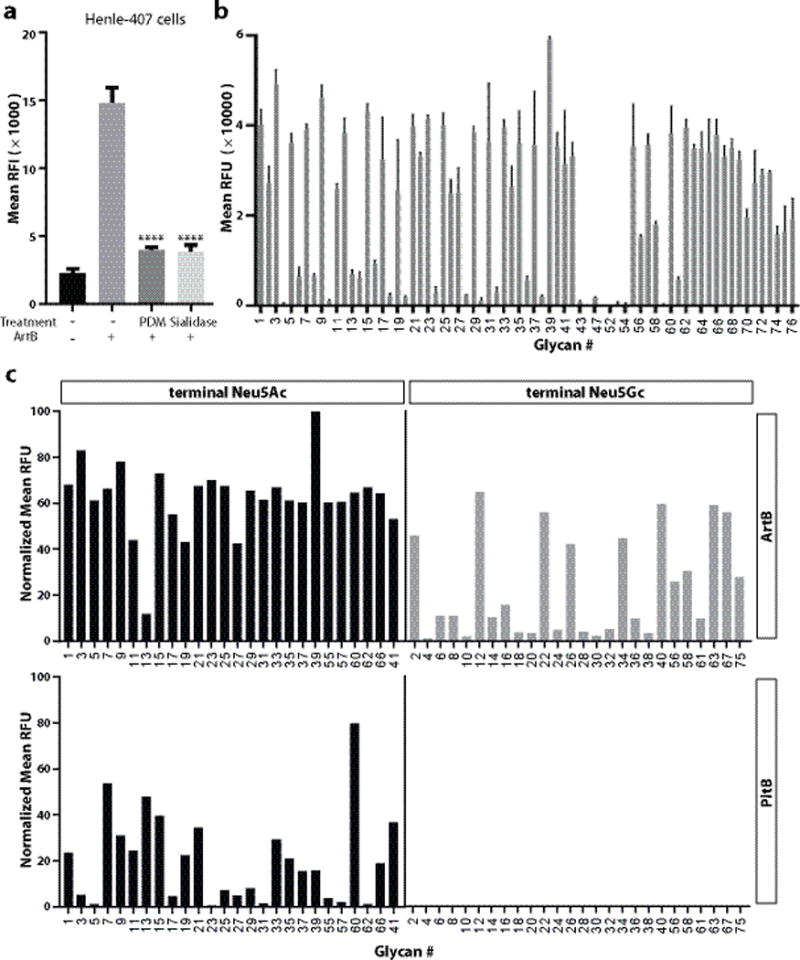
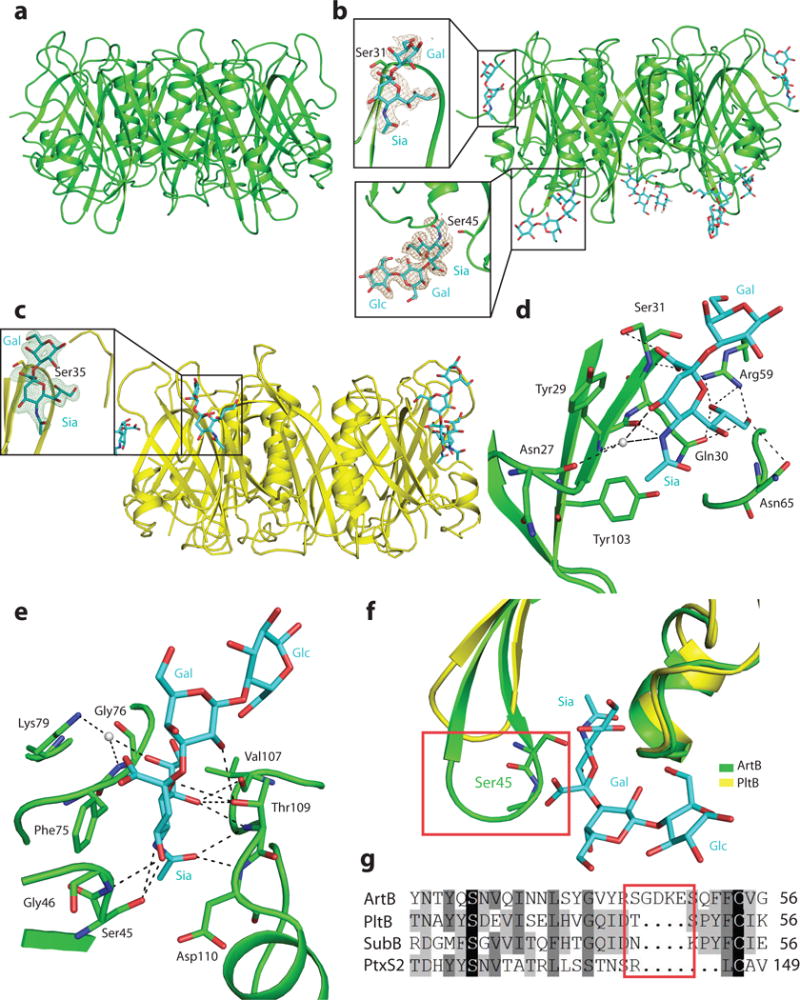
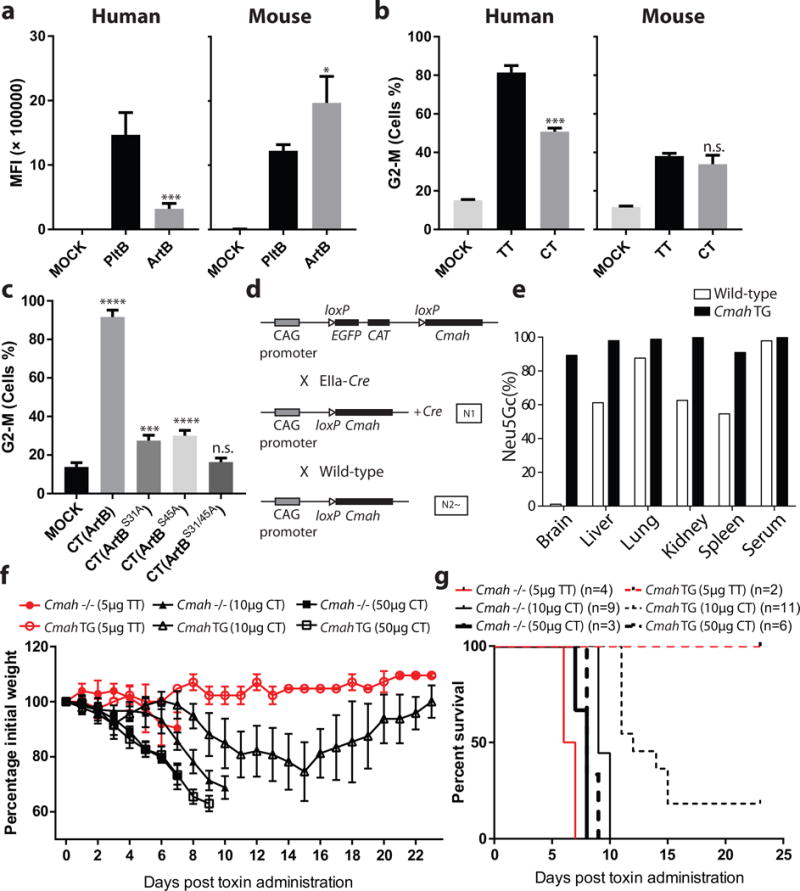
The evolution of virulence traits is central for the emergence or re-emergence of microbial pathogens and for their adaptation to a specific host 1-5 . Typhoid toxin is an essential virulence factor of the human-adapted bacterial pathogen Salmonella Typhi 6,7 , the cause of typhoid fever in humans 8-12 . Typhoid toxin has a unique A2B5 architecture with two covalently linked enzymatic 'A' subunits, PltA and CdtB, associated with a homopentameric 'B' subunit made up of PltB, which has binding specificity for the N-acetylneuraminic acid (Neu5Ac) sialoglycans 6,13 prominently present in humans 14 . Here, we examine the functional and structural relationship between typhoid toxin and ArtAB, an evolutionarily related AB5 toxin encoded by the broad-host Salmonella Typhimurium 15 . We find that ArtA and ArtB, homologues of PltA and PltB, can form a functional complex with the typhoid toxin CdtB subunit after substitution of a single amino acid in ArtA, while ArtB can form a functional complex with wild-type PltA and CdtB. We also found that, after addition of a single-terminal Cys residue, a CdtB homologue from cytolethal distending toxin can form a functional complex with ArtA and ArtB. In line with the broad host specificity of S. Typhimurium, we found that ArtB binds human glycans, terminated in N-acetylneuraminic acid, as well as glycans terminated in N-glycolylneuraminic acid (Neu5Gc), which are expressed in most other mammals 14 . The atomic structure of ArtB bound to its receptor shows the presence of an additional glycan-binding site, which broadens its binding specificity. Despite equivalent toxicity in vitro, we found that the ArtB/PltA/CdtB chimaeric toxin exhibits reduced lethality in an animal model, indicating that the host specialization of typhoid toxin has optimized its targeting mechanisms to the human host. This is a remarkable example of a toxin evolving to broaden its enzymatic activities and adapt to a specific host.
Conflict of interest statement
The authors declare no competing interests
Figures
References
-
- Jackson R, Johnson L, Clarke S, Arnold D. Bacterial pathogen evolution: breaking news. Trends Genet. 2011;27:32–40. - PubMed
-
- Alizon S, Michalakis Y. Adaptive virulence evolution: the good old fitness-based approach. Trends Ecol Evol. 2015;30:248–254. - PubMed
-
- Daugherty M, Malik H. Rules of engagement: molecular insights from host-virus arms races. Annu Rev Genet. 2012;46:677–700. - PubMed
MeSH terms
Substances
Grants and funding
LinkOut - more resources
Full Text Sources
Other Literature Sources
Molecular Biology Databases
