. 2017 Oct 10:4:170148.
doi: 10.1038/sdata.2017.148.

Whole genome DNA methylation sequencing of the chicken retina, cornea and brain

Affiliations

Whole genome DNA methylation sequencing of the chicken retina, cornea and brain

Isac Lee et al. Sci Data. .

Abstract

Whole genome bisulfite sequencing (WGBS) analysis of DNA methylation uses massively parallel next generation sequencing technology to characterize global epigenetic patterns and fluctuations throughout a range of tissue samples. Development of the vertebrate retina is thought to involve extensive epigenetic reprogramming during embryogenesis. The chicken embryo (Gallus gallus) is a classic model system for studying developmental biology and retinogenesis, however, there are currently no publicly available data sets describing the developing chicken retinal methylome. Here we used Illumina WGBS analysis to characterize genome-wide patterns of DNA methylation in the developing chicken retina as well as cornea and brain in an effort to further our understanding of retina-specific epigenetic regulation. These data will be valuable to the vision research community for correlating global changes in DNA methylation to differential gene expression between ocular and neural tissues during critical developmental time points of retinogenesis in the chicken retina.


Conflict of interest statement

The authors declare no competing financial interests.

Figures
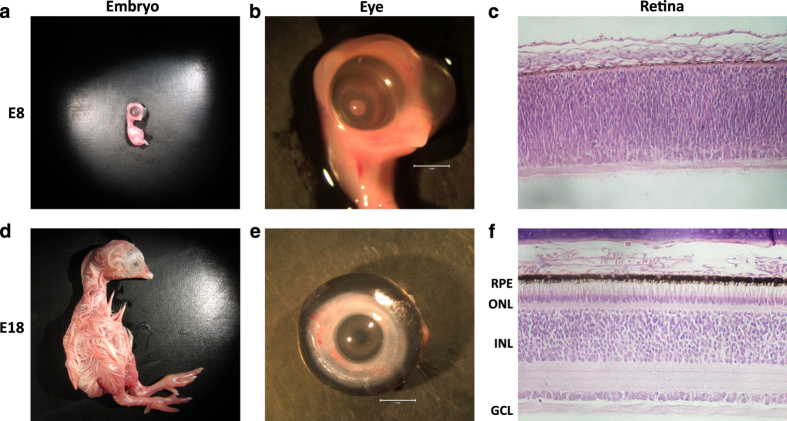
Figure 1
Figure 1. Overview of the chicken embryo, eye, and retinal development.
Image of embryonic day 8 (E8) and E18 embryos (a,d), eyes (b,e) and H+E stained retinal cross sections (c,f). Cross section abbreviations: Retinal Pigmented Epithelium (RPE), Outer Nuclear Layer (ONL), Inner Nuclear Layer (INL), and Ganglion Cell Layer (GCL).
Figure 2
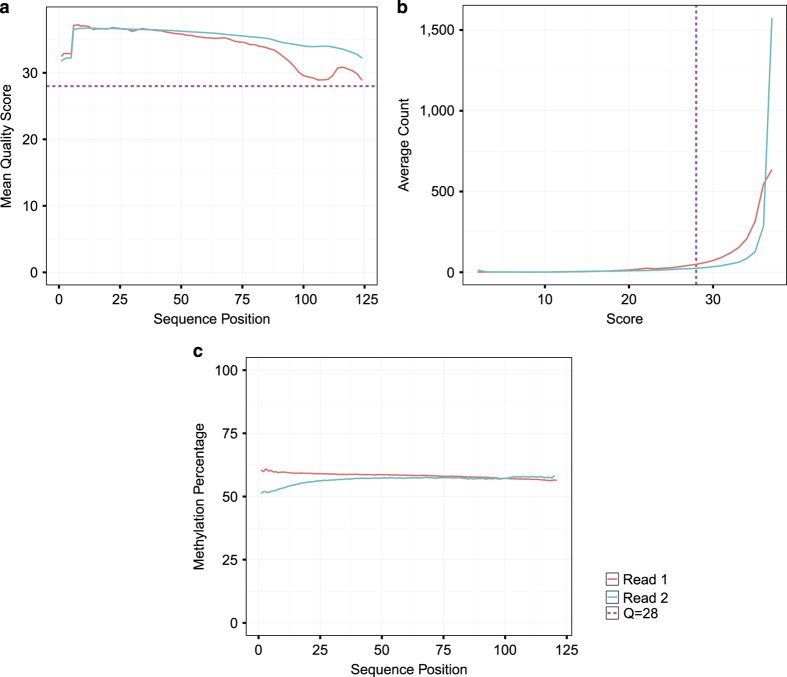
Figure 2. Quality Assessment of FASTQ sequencing data for 125 bp paired end reads.
Representative plots showing (a) Per Cycle Sequence PHRED score for read 1 and 2, (b) Sequence Score Distribution across lanes for raw FASTQ files, and (c) per base CpG context methylation percentage.
Figure 3
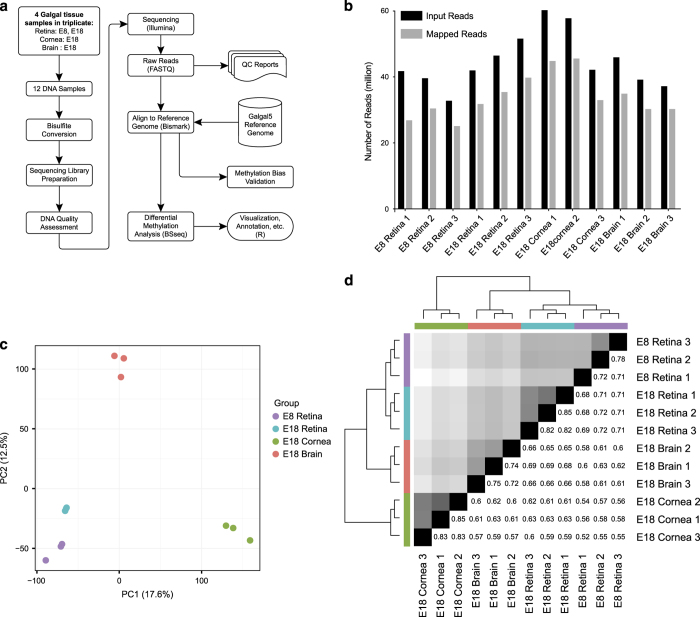
Figure 3. Experimental overview and assessment of read mapping, read length and sample variance.
(a) Flowchart of the WGBS-seq experiment and data analysis. (b) Total number of raw reads compared to number of mapped reads listed per sample. Additional details about the alignment are listed in the table below. (c) Principal Component Analysis (PCA) Biplot of samples. Largest source of variation is tissue type, as represented by both PC1 and PC2. (d) Hierarchical clustering analyses performed using LOESS smoothed WGBS-seq data. Color code refers to the distance metric used for clustering with white being the lowest correlation value and black being the largest correlation value.

References

Data Citations

    1. 2017. NCBI Sequence Read Archive. SRP108572

References

    1. Henson J., Tischler G. & Ning Z. Next-generation sequencing and large genome assemblies. Pharmacogenomics 13, 901–915 (2014). - PMC - PubMed
    1. The ENCODE Project Consortium. A User’ s Guide to the Encyclopedia of DNA Elements ( ENCODE). PLoS Biol. 9 (2011). - PMC - PubMed
    1. Chadwick L. H. The NIH Roadmap Epigenomics Program data resource. Epigenomics 4, 317–324 (2013). - PMC - PubMed
    1. Lamb T. D., Collin S. P. & Pugh E. N. Jr Evolution of the vertebrate eye: opsins, photoreceptors, retina and eye cup. Nat Rev Neurosci 8, 960–976 (2011). - PMC - PubMed
    1. Vergara M. N. & Canto-Soler M. V. Rediscovering the chick embryo as a model to study retinal development. Neural Dev 7, 22–40 (2012). - PMC - PubMed

Publication types

LinkOut - more resources