Treatment changes of hypo- and hyperdivergent Class II Herbst patients
- PMID: 29016191
- PMCID: PMC8315713
- DOI: 10.2319/060117-369.1
Treatment changes of hypo- and hyperdivergent Class II Herbst patients
Abstract
Objectives: To determine the relative effects of Herbst appliance therapy in hypo- and hyperdivergent patients.
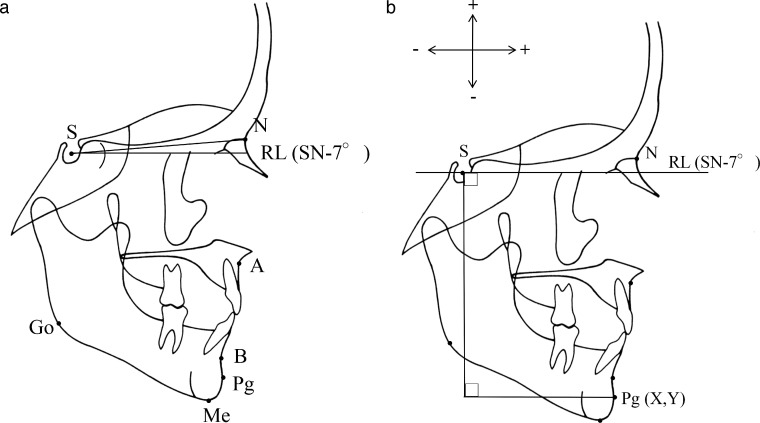
Materials and methods: The treated group included 45 growing Class II, division 1, patients treated with stainless steel crown Herbst appliances, followed by fixed edgewise appliances. The untreated control group consisted of 45 Class II, division 1, subjects, matched to the treated sample based on Angle classification, age, sex, and pretreatment mandibular plane angle (MPA). Subjects were categorized as hypo- or hyperdivergent based on their MPAs. Pre- and posttreatment cephalograms were traced and superimposed on cranial base and mandibular structures.
Results: The primary effect of the Herbst in terms of maxillomandibular correction was in the maxilla. It significantly restricted maxillary growth, producing a "headgear effect." Mandibular treatment changes depended on divergence. Hyperdivergent patients experienced a deleterious backward true mandibular rotation with Herbst treatment. Hypodivergent patients, as well as untreated hypo- and hyperdivergent controls, underwent forward true mandibular rotation. However, hypodivergent chins did not advance any more than expected for untreated hypodivergent Class II patients.
Conclusions: Hypo- and hyperdivergent patients benefit from the Herbst's headgear effect. While the mandibular growth of hypodivergent patients overcomes the negative rotational effects, hyperdivergent patients undergo a deleterious backward mandibular rotation and increases in facial height.
Keywords: Growing children; Herbst therapy; Hyperdivergent; Hypodivergent.
Figures
References
-
- Proffit WR, Fields HW, Jr, Moray LJ. Prevalence of malocclusion and orthodontic treatment need in the United States: estimates from the NHANES III survey. Int J Adult Orthod Orthognath Surg. 1998;13:97–106. - PubMed
-
- Beresford JS. Tooth size and class distinction. Dent Pract Dent Rec. 1969;20:113–120. - PubMed
-
- Milacic M, Markovic M. A comparative occlusal and cephalometric study of dental and skeletal anteriorposterior relationships. Br J Orthod. 1983;10:53–54. - PubMed
-
- Cozza P, Baccetti T, Franchi L, De Toffol L, McNamara JA., Jr Mandibular changes produced by functional appliances in Class II malocclusion: a systematic review. Am J Orthod Dentofacial Orthop. 2006;129:599.e1–12. - PubMed
-
- LaHaye MB, Buschang PH, Alexander RG, Boley JC. Orthodontic treatment changes of chin position in Class II Division 1 patients. Am J Orthod Dentofacial Orthop. 2006;130:732–741. - PubMed
MeSH terms
LinkOut - more resources
Full Text Sources
Other Literature Sources