Chikungunya Detection during Dengue Outbreak in Sumatra, Indonesia: Clinical Manifestations and Virological Profile
- PMID: 29016291
- PMCID: PMC5817737
- DOI: 10.4269/ajtmh.16-0935
Chikungunya Detection during Dengue Outbreak in Sumatra, Indonesia: Clinical Manifestations and Virological Profile
Abstract
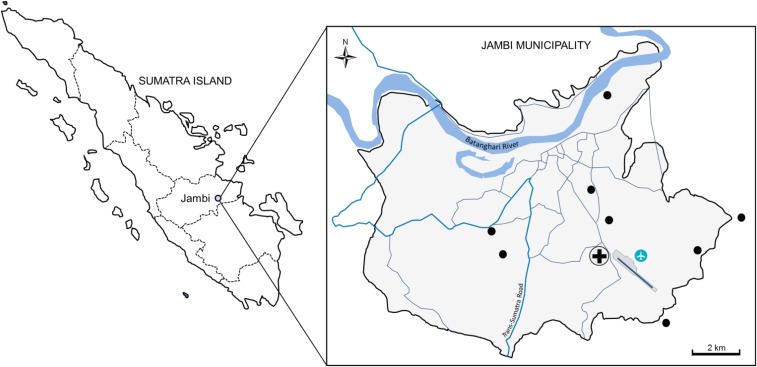
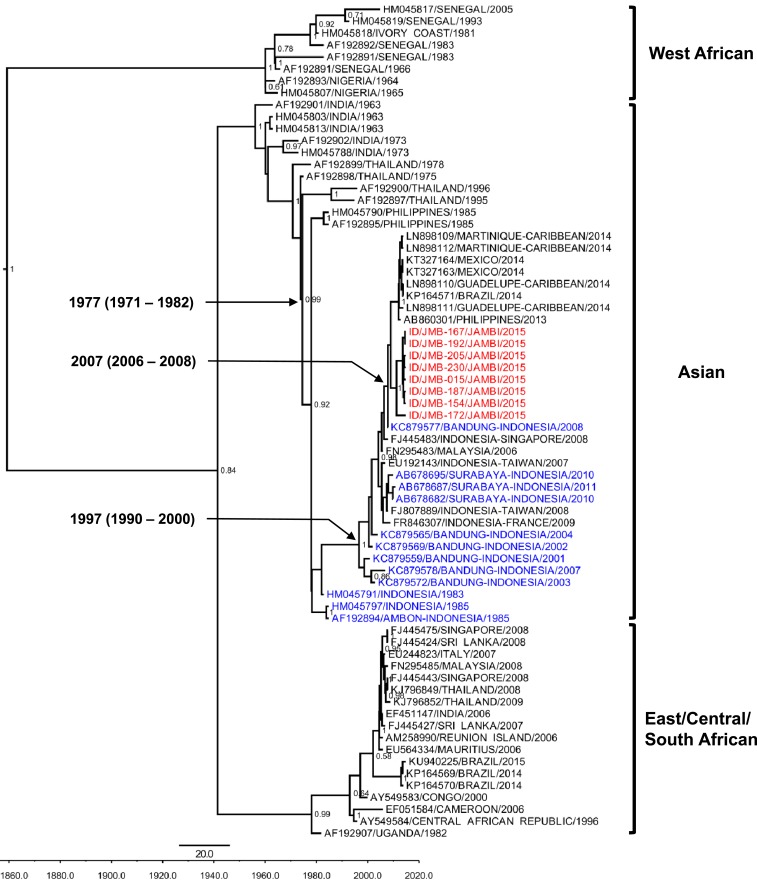
Chikungunya fever (CHIK) is an acute viral infection caused by infection with chikungunya virus (CHIKV). The disease affects people in areas where certain Aedes species mosquito vectors are present, especially in tropical and subtropical countries. Indonesia has witnessed CHIK disease since the early 1970s with sporadic outbreaks occurring throughout the year. The CHIK clinical manifestation, characterized by fever, headache, and joint pain, is similar to that of dengue (DEN) disease. During a molecular study of a DEN outbreak in Jambi, Sumatra, in early 2015, DENV-negative samples were evaluated for evidence of CHIKV infection. Among 103 DENV-negative samples, eight samples were confirmed (7.8%) as positive for CHIKV by both molecular detection and virus isolation. The mean age of the CHIK patients was 21.3 ± 9.1 (range 11-35 years). The clinical manifestations of the CHIK patients were mild and mimicked DEN, with fever and headache as the main symptoms. Only three out of eight patients presented with classical joint pain. Sequencing of the envelope glycoprotein E1 gene and phylogenetic analysis identified all CHIKV isolates as belonging to the Asian genotype. Overall, our study confirms sustained endemic CHIKV transmission and the presence of multiple arboviruses circulating during a DEN outbreak in Indonesia. The co-circulation of arboviruses poses a public health threat and is likely to cause misdiagnosis and underreporting of CHIK in DEN-endemic areas such as Indonesia.
Figures
References
-
- Powers AM, Brault AC, Tesh RB, Weaver SC, 2000. Re-emergence of chikungunya and O’nyong-nyong viruses: evidence for distinct geographical lineages and distant evolutionary relationships. J Gen Virol 81: 471–479. - PubMed
-
- Laras K, et al. 2005. Tracking the re-emergence of epidemic chikungunya virus in Indonesia. Trans R Soc Trop Med Hyg 99: 128–141. - PubMed
MeSH terms
Substances
Grants and funding
LinkOut - more resources
Full Text Sources
Other Literature Sources
Medical