


Incidence and severity of self-reported chemotherapy side effects in routine care: A prospective cohort study
- PMID: 29016607
- PMCID: PMC5634543
- DOI: 10.1371/journal.pone.0184360
Incidence and severity of self-reported chemotherapy side effects in routine care: A prospective cohort study
Abstract
Aim: Chemotherapy side effects are often reported in clinical trials; however, there is little evidence about their incidence in routine clinical care. The objective of this study was to describe the frequency and severity of patient-reported chemotherapy side effects in routine care across treatment centres in Australia.
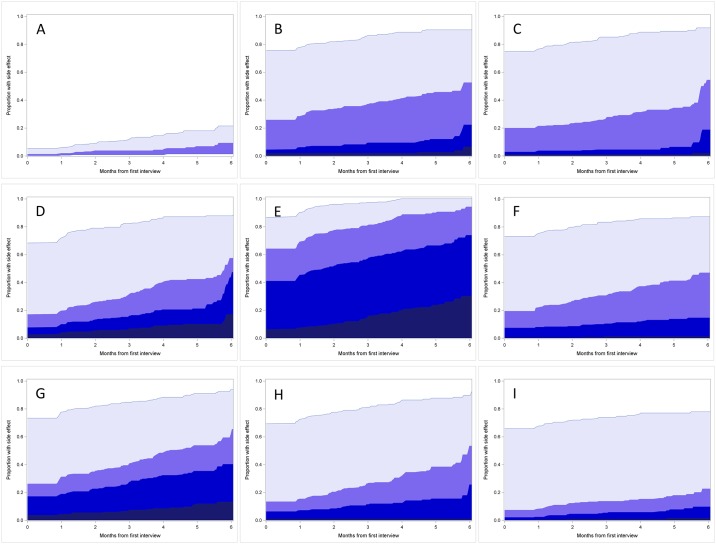
Methods: We conducted a prospective cohort study of individuals with breast, lung or colorectal cancer undergoing chemotherapy. Side effects were identified by patient self-report. The frequency, prevalence and incidence rates of side effects were calculated by cancer type and grade, and cumulative incidence curves for each side effect computed. Frequencies of side effects were compared between demographic subgroups using chi-squared statistics.
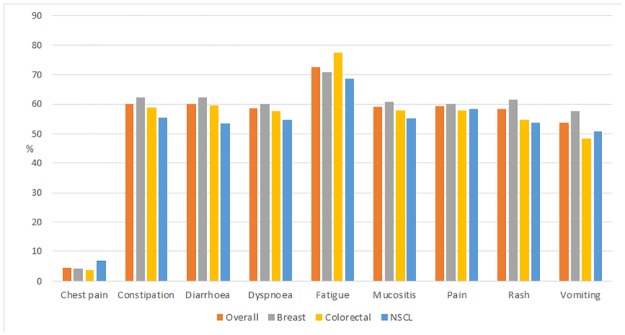
Results: Side effect data were available for 449 eligible individuals, who had a median follow-up of 5.64 months. 86% of participants reported at least one side effect during the study period and 27% reported a grade IV side effect, most commonly fatigue or dyspnoea. Fatigue was the most common side effect overall (85%), followed by diarrhoea (74%) and constipation (74%). Prevalence and incidence rates were similar across side effects and cancer types. Age was the only demographic factor associated with the incidence of side effects, with older people less likely to report side effects.
Conclusion: This research has produced the first Australian estimates of self-reported incidence of chemotherapy side effects in routine clinical care. Chemotherapy side effects in routine care are common, continue throughout chemotherapy and can be serious. This work confirms the importance of observational data in providing clinical practice-relevant information to decision-makers.
Conflict of interest statement
Figures
References
-
- OECD, Health technologies and decision making. 2005, OECD: Paris.
-
- Chabner B.A. and Roberts T.G. Timeline: Chemotherapy and the war on cancer. Nature Reviews Cancer, 2005. 5(1): p. 65–72. doi: 10.1038/nrc1529 - DOI - PubMed
-
- American Cancer Society. After diagnosis: A guide for patients and families 2012 [cited 2016 May 03]; http://www.cancer.org/acs/groups/cid/documents/webcontent/002813-pdf.pdf
-
- Carelle N., Piotto E., Bellanger, Germanaud J., Thuillier A., Khayat D. Changing patient perceptions of the side effects of cancer chemotherapy. Cancer, 2002. 95(1): p. 155–163. doi: 10.1002/cncr.10630 - DOI - PubMed
-
- Coates A., Abraham S., Kaye S.B., Sowerbutts T., Frewin C., Fox., Tattersall M.H. On the receiving end: patient perception of the side-effects of cancer chemotherapy. European Journal of Cancer and Clinical Oncology, 1983. 19(2): p. 203–208. - PubMed
MeSH terms
LinkOut - more resources
Full Text Sources
Other Literature Sources
Medical
