


A recombinant lentiviral PDGF-driven mouse model of proneural glioblastoma
- PMID: 29016807
- PMCID: PMC5817944
- DOI: 10.1093/neuonc/nox129
A recombinant lentiviral PDGF-driven mouse model of proneural glioblastoma
Abstract
Background: Mouse models of glioblastoma (GBM), the most aggressive primary brain tumor, are critical for understanding GBM pathology and can contribute to the preclinical evaluation of therapeutic agents. Platelet-derived growth factor (PDGF) signaling has been implicated in the development and pathogenesis of GBM, specifically the proneural subtype. Although multiple mouse models of PDGF-driven glioma have been described, they require transgenic mice engineered to activate PDGF signaling and/or impair tumor suppressor genes and typically represent lower-grade glioma.
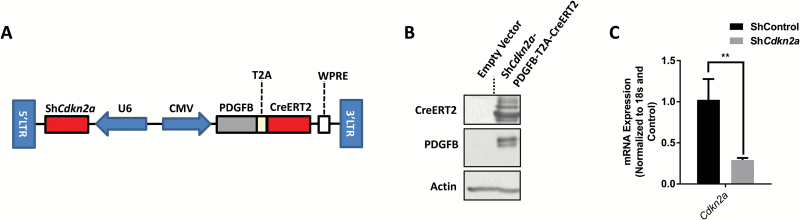
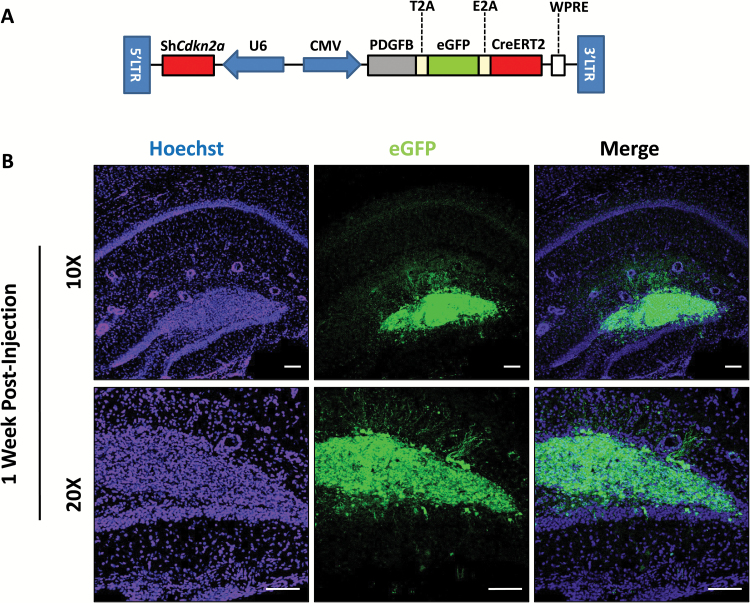
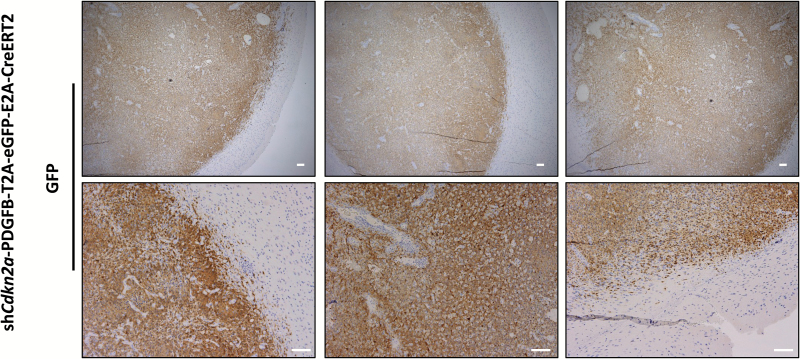
Methods: We designed recombinant lentiviruses expressing both PDGFB and a short hairpin RNA targeting Cdkn2a to induce gliomagenesis following stereotactic injection into the dentate gyrus of adult immunocompetent mice. We engineered these viruses to coexpress CreERT2 with PDGFB, allowing for deletion of floxed genes specifically in transduced cells, and designed another version of this recombinant lentivirus in which enhanced green fluorescent protein was coexpressed with PDGFB and CreERT2 to visualize transduced cells.
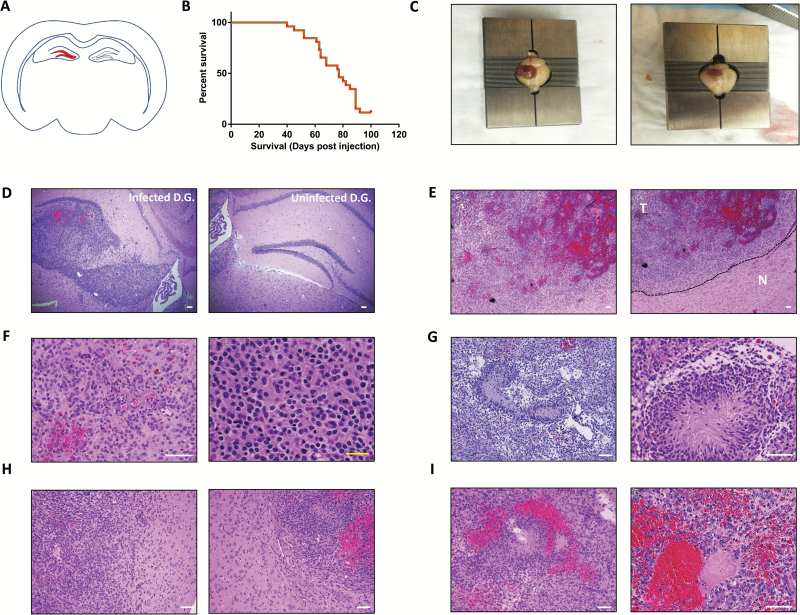
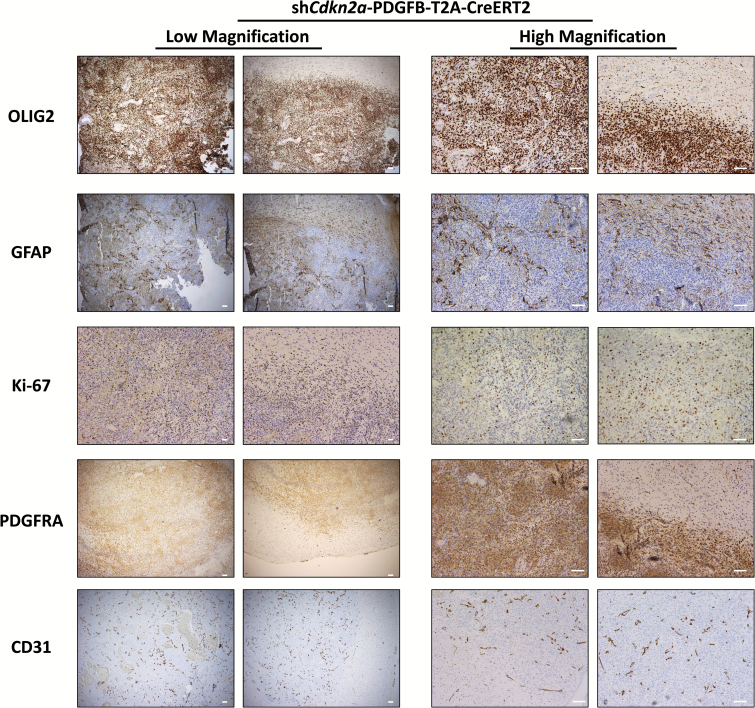
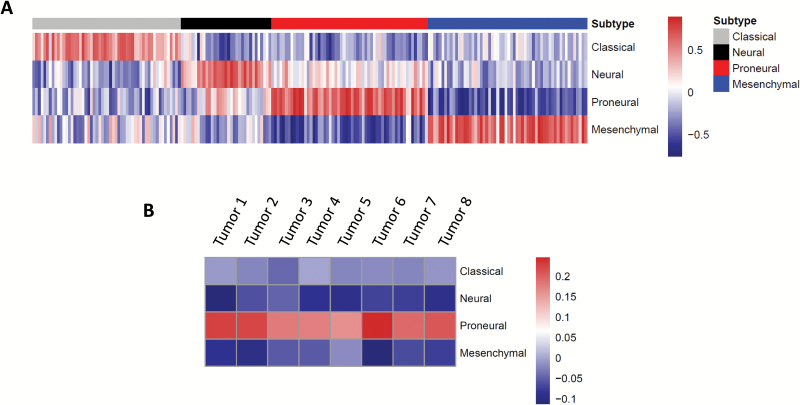
Results: The dentate gyrus of injected mice showed hypercellularity one week post-injection and subsequently developed bona fide tumors with the pathologic hallmarks of GBM leading to a median survival of 77 days post-injection. Transcriptomic analysis of these tumors revealed a proneural gene expression signature.
Conclusion: Informed by the genetic alterations observed in human GBM, we engineered a novel mouse model of proneural GBM. While reflecting many of the advantages of transgenic mice, this model allows for the facile in vivo testing of gene function in tumor cells and makes possible the rapid production of large numbers of immunocompetent tumor-bearing mice for preclinical testing of therapeutics.
© The Author(s) 2017. Published by Oxford University Press on behalf of the Society for Neuro-Oncology. All rights reserved. For permissions, please e-mail: journals.permissions@oup.com
Figures
Comment in
-
A new practical and versatile mouse model of proneural glioblastoma.Neuro Oncol. 2018 Feb 19;20(3):299-301. doi: 10.1093/neuonc/nox233. Neuro Oncol. 2018. PMID: 29432618 Free PMC article. No abstract available.
References
-
- Omuro A, DeAngelis LM. Glioblastoma and other malignant gliomas: a clinical review. JAMA. 2013;310(17):1842–1850. - PubMed
-
- Louis DN, Perry A, Reifenberger G et al. The 2016 World Health Organization classification of tumors of the central nervous system: a summary. Acta Neuropathol. 2016;131(6):803–820. - PubMed
-
- Aldape K, Zadeh G, Mansouri S, Reifenberger G, von Deimling A. Glioblastoma: pathology, molecular mechanisms and markers. Acta Neuropathol. 2015;129(6):829–848. - PubMed
Publication types
MeSH terms
Substances
Grants and funding
LinkOut - more resources
Full Text Sources
Other Literature Sources
Medical
Molecular Biology Databases
Miscellaneous
