


Molecular and Epigenetic Mechanisms for the Complex Effects of Stress on Synaptic Physiology and Cognitive Functions
- PMID: 29016816
- PMCID: PMC5737802
- DOI: 10.1093/ijnp/pyx052
Molecular and Epigenetic Mechanisms for the Complex Effects of Stress on Synaptic Physiology and Cognitive Functions
Abstract
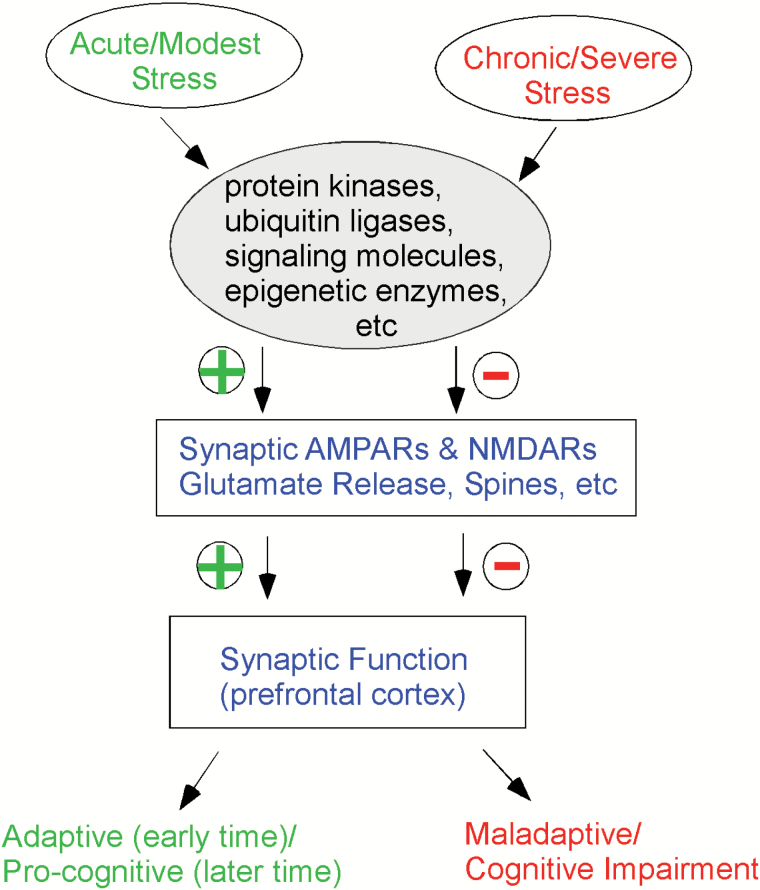
Evidence over the past decades has found that stress, particularly through the corticosterone stress hormones, produces complex changes in glutamatergic signaling in prefrontal cortex, which leads to the alteration of cognitive processes medicated by this brain region. Interestingly, the effects of stress on glutamatergic transmission appear to be "U-shaped," depending upon the duration and severity of the stressor. These biphasic effects of acute vs chronic stress represent the adaptive vs maladaptive responses to stressful stimuli. Animal studies suggest that the stress-induced modulation of excitatory synaptic transmission involves changes in presynaptic glutamate release, postsynaptic glutamate receptor membrane trafficking and degradation, spine structure and cytoskeleton network, and epigenetic control of gene expression. This review will discuss current findings on the key molecules involved in the stress-induced regulation of prefrontal cortex synaptic physiology and prefrontal cortex-mediated functions. Understanding the molecular and epigenetic mechanisms that underlie the complex effects of stress will help to develop novel strategies to cope with stress-related mental disorders.
Keywords: AMPA receptor; E3 ligase; NMDA receptor; cognition; corticosterone stress hormones; emotion; glucocorticoid receptor; glutamatergic transmission; histone deacetylase; prefrontal cortex; protein ubiquitination; stress; stress-related mental disorders; trafficking.
© The Author 2017. Published by Oxford University Press on behalf of CINP.
Figures
References
-
- Abercrombie ED, Keefe KA, DiFrischia DS, Zigmond MJ (1989) Differential effect of stress on in vivo dopamine release in striatum, nucleus accumbens, and medial frontal cortex. J Neurochem 52:1655–1658. - PubMed
-
- Agid O, Shapira B, Zislin J, Ritsner M, Hanin B, Murad H, Troudart T, Bloch M, Heresco-Levy U, Lerer B (1999) Environment and vulnerability to major psychiatric illness: a case control study of early parental loss in major depression, bipolar disorder and schizophrenia. Mol Psychiatry 4:163–172. - PubMed
-
- Arnsten AF, Goldman-Rakic PS (1998) Noise stress impairs prefrontal cortical cognitive function in monkeys: evidence for a hyperdopaminergic mechanism. Arch Gen Psychiatry 55:362–368. - PubMed
Publication types
MeSH terms
Substances
Grants and funding
LinkOut - more resources
Full Text Sources
Other Literature Sources
Medical
Miscellaneous
