


Challenges of developing small-molecule kinase inhibitors for brain tumors and the need for emphasis on free drug levels
- PMID: 29016919
- PMCID: PMC5817959
- DOI: 10.1093/neuonc/nox179
Challenges of developing small-molecule kinase inhibitors for brain tumors and the need for emphasis on free drug levels
Abstract
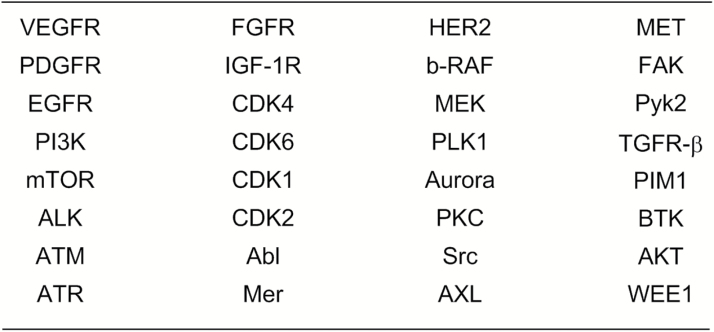
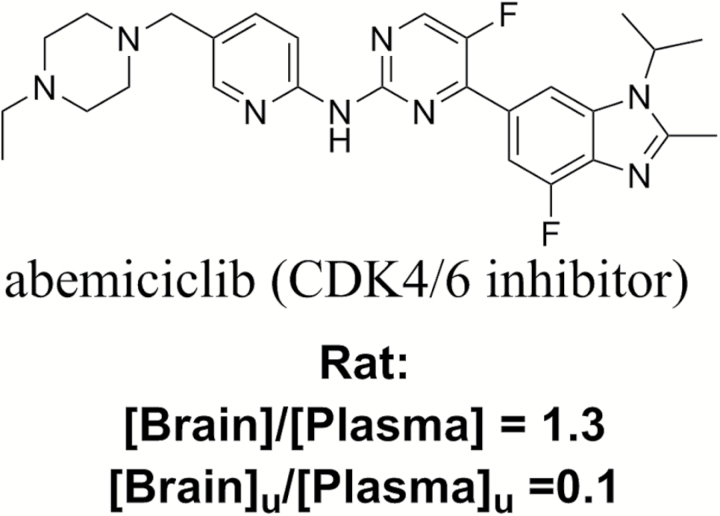
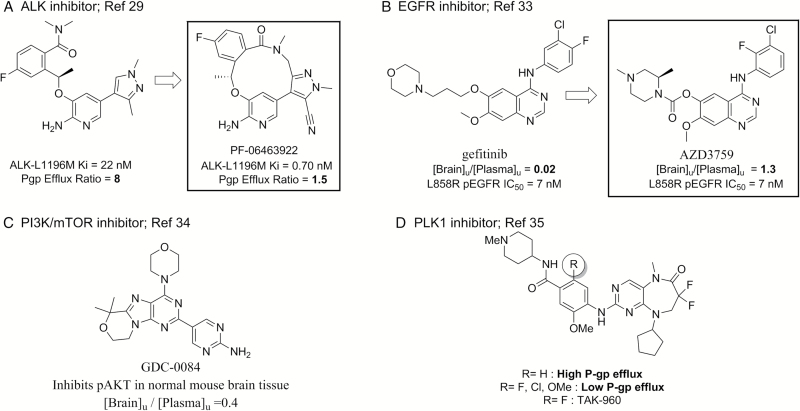
Despite biological rationale and significant clinical study, the pursuit of small-molecule kinase inhibitors for the treatment of brain cancers has had very limited success. This Advance-in-Brief discusses the need for drugs to achieve free brain penetration to engage their targets where CNS tumors reside. This need to achieve free, as opposed to total, drug concentrations in the brain may be a contributing factor to why so many small-molecule kinase inhibitors have not realized success in the neuro-oncology setting. For kinase targets of interest for brain cancer, either the vast majority of small-molecule inhibitors have data suggesting that free brain penetration would be limited or there are inadequate data to suggest that free brain penetration could be expected. Therefore, kinase targets of interest in the treatment of brain cancers may be inadequately assessed due to a lack of freely brain-penetrant inhibitors available for clinical study. Encouraging recent drug discovery efforts that focused on achieving free brain penetration for cancers in the CNS are highlighted. Still, further efforts are needed to enable thorough clinical evaluation of biological hypotheses.
Figures
References
-
- Patchell RA. The management of brain metastases. Cancer Treat Rev. 2003;29(6):533–540. - PubMed
-
- Heffron TP. Small molecule kinase inhibitors for brain cancer. J Med Chem. 2016;59(22):10030–10066. - PubMed
-
- Bridges AJ. Chemical inhibitors of protein kinases. Chem Rev. 2001;101(8):2541–2572. - PubMed
-
- Wu P, Nielsen TE, Clausen MH. FDA-approved small-molecule kinase inhibitors. Trends Pharmacol Sci. 2015;36(7):422–439. - PubMed
Publication types
MeSH terms
Substances
LinkOut - more resources
Full Text Sources
Other Literature Sources
Medical
