


Efficiency and safety of speech recognition for documentation in the electronic health record
- PMID: 29016971
- PMCID: PMC7651984
- DOI: 10.1093/jamia/ocx073
Efficiency and safety of speech recognition for documentation in the electronic health record
Abstract
Objective: To compare the efficiency and safety of using speech recognition (SR) assisted clinical documentation within an electronic health record (EHR) system with use of keyboard and mouse (KBM).
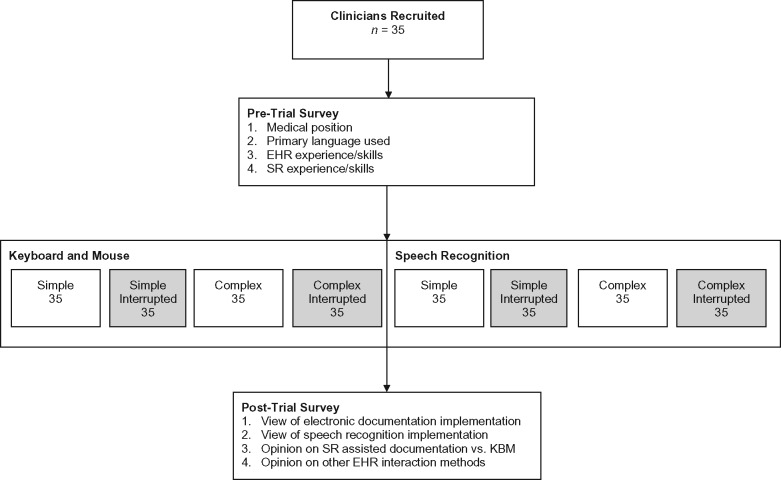
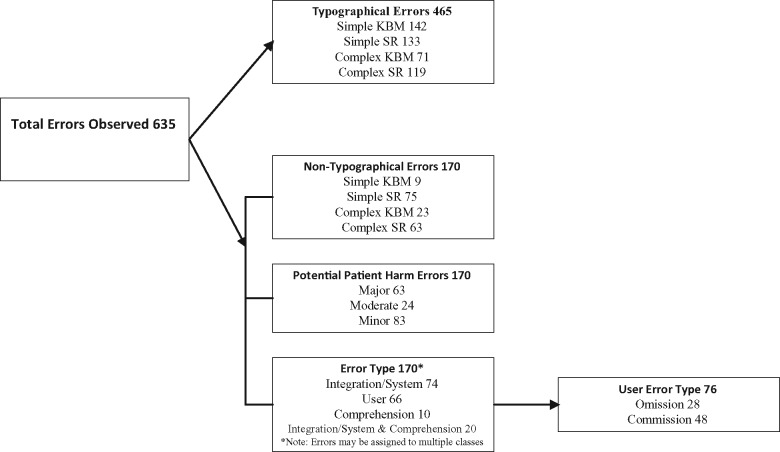
Methods: Thirty-five emergency department clinicians undertook randomly allocated clinical documentation tasks using KBM or SR on a commercial EHR system. Tasks were simple or complex, and with or without interruption. Outcome measures included task completion times and observed errors. Errors were classed by their potential for patient harm. Error causes were classified as due to IT system/system integration, user interaction, comprehension, or as typographical. User-related errors could be by either omission or commission.
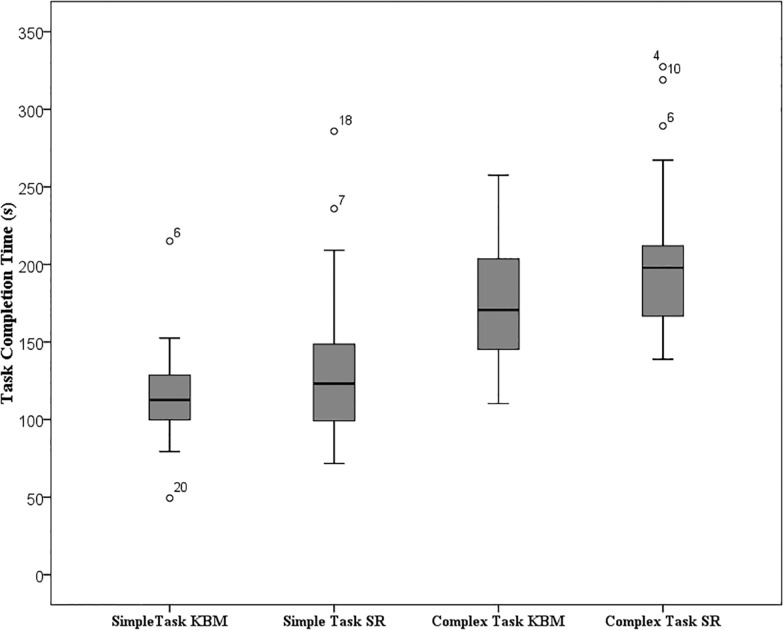
Results: Mean task completion times were 18.11% slower overall when using SR compared to KBM (P = .001), 16.95% slower for simple tasks (P = .050), and 18.40% slower for complex tasks (P = .009). Increased errors were observed with use of SR (KBM 32, SR 138) for both simple (KBM 9, SR 75; P < 0.001) and complex (KBM 23, SR 63; P < 0.001) tasks. Interruptions did not significantly affect task completion times or error rates for either modality.
Discussion: For clinical documentation, SR was slower and increased the risk of documentation errors, including errors with the potential to cause clinical harm compared to KBM. Some of the observed increase in errors may be due to suboptimal SR to EHR integration and workflow.
Conclusion: Use of SR to drive interactive clinical documentation in the EHR requires careful evaluation. Current generation implementations may require significant development before they are safe and effective. Improving system integration and workflow, as well as SR accuracy and user-focused error correction strategies, may improve SR performance.
Keywords: documentation; electronic health record; medical errors; patient safety; speech recognition.
© The Author 2017. Published by Oxford University Press on behalf of the American Medical Informatics Association.
Figures
References
-
- Coiera E. Guide to Health Informatics, 3rd ed London: CRC Press; 2015.
-
- Shea S, Hripcsak G. Accelerating the use of electronic health records in physician practices. New Engl J Med. 2010;3623:192–95. - PubMed
-
- Communications N. Speech Recognition Accelerating the Adoption of Electronic Health Records (white paper). Nuance Communications; 2012.
Publication types
MeSH terms
LinkOut - more resources
Full Text Sources
Other Literature Sources
Research Materials
