Review
. 2017 Oct 9;27(19):R1081-R1088.
doi: 10.1016/j.cub.2017.08.054.

Embracing Uncertainty in Reconstructing Early Animal Evolution

Affiliations
Review

Embracing Uncertainty in Reconstructing Early Animal Evolution

Nicole King et al. Curr Biol. .

Abstract

The origin of animals, one of the major transitions in evolution, remains mysterious. Many key aspects of animal evolution can be reconstructed by comparing living species within a robust phylogenetic framework. However, uncertainty remains regarding the evolutionary relationships between two ancient animal lineages - sponges and ctenophores - and the remaining animal phyla. Comparative morphology and some phylogenomic analyses support the view that sponges represent the sister lineage to the rest of the animals, while other phylogenomic analyses support ctenophores, a phylum of carnivorous, gelatinous marine organisms, as the sister lineage. Here, we explore why different studies yield different answers and discuss the implications of the two alternative hypotheses for understanding the origin of animals. Reconstruction of ancient evolutionary radiations is devilishly difficult and will likely require broader sampling of sponge and ctenophore genomes, improved analytical strategies and critical analyses of the phylogenetic distribution and molecular mechanisms underlying apparently conserved traits. Rather than staking out positions in favor of the ctenophores-sister or the sponges-sister hypothesis, we submit that research programs aimed at understanding the biology of the first animals should instead embrace the uncertainty surrounding early animal evolution in their experimental designs.


Figures

Figure 1
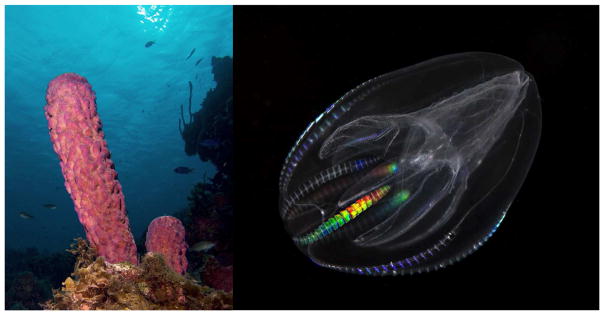
Figure 1. Representatives of sponges and ctenophores, the two metazoan phyla at the center of the controversy
Left: Stove-pipe sponge Aplysina archeri (source: https://en.wikipedia.org/wiki/Sponge#/media/File:Aplysina_archeri_(Stove-pipe_Sponge-pink_variation).jpg). Right: the ctenophore Mnemiopsis leidyi (from: Stefan Siebert, Brown University; https://phys.org/news/2013-12-aquatic-jelly-evolutionary-position.html).
Figure 2
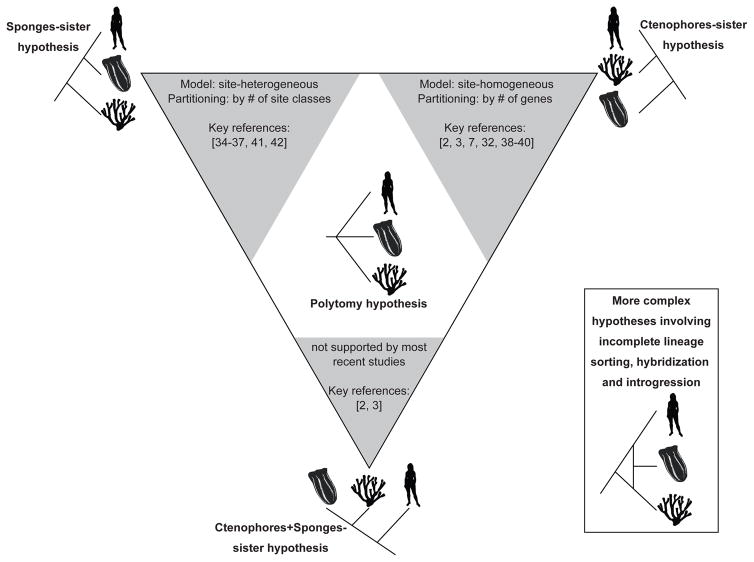
Figure 2. Different models of amino acid evolution favor different hypotheses for the evolutionary relationships between sponges, ctenophores, and other metazoans
Three alternative hypotheses are shown on each of the corners of the triangle: sponges as the sister lineage to the rest of the metazoans (top left), ctenophores as the sister lineage (top right), or a clade of sponges + ctenophores as the sister lineage to the rest of the metazoans (represented by human). The grey triangles summarize some of the key characteristics of phylogenomic studies supporting or rejecting each hypothesis (e.g., application of site-homogeneous models tends to favor the ctenophores-sister hypothesis, whereas application of the CAT site-heterogeneous model tends to favor the sponges-sister hypothesis). The polytomy hypothesis, under which all three lineages originated at the same time, is displayed inside the triangle. The inset depicts more complex phylogenetic scenarios, such as hybridization, introgression, and incomplete lineage sorting of ancestral polymorphisms (see Glossary). Although evidence in support of either polytomy or a more complex scenario is lacking, had it occurred, it remains questionable whether it would be detectable with existing data and methodologies.
Figure 3
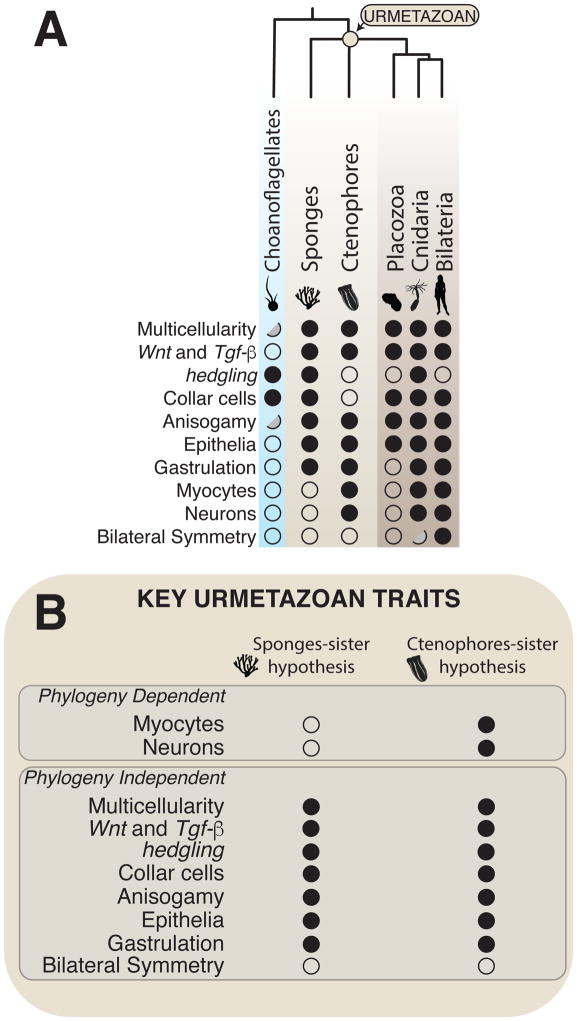
Figure 3. Much can be inferred about the Urmetazoan, despite the ongoing phylogenetic controversy
A. Distribution of illustrative traits in diverse metazoans (brown/tan shading) and their closest living relatives, the choanoflagellates (blue shading). The base of the metazoan tree is depicted as a polytomy to emphasize current uncertainty about the relative placement of sponges and ctenophores. Each trait is indicated as being either present in a clade (black circles), not detected in a clade (white circles), or as having been detected in an intermediate form in a subset of taxa within the lineage (half-gray circles). For example, some choanoflagellates produce an intermediate multicellular form, a “colony,” in which all cells have apparently equivalent morphology. How traits are coded (i.e., present vs. absent for intermediate or convergent traits) influences inferences about their presence or absence in the Urmetazoan. B. Controversies regarding the phylogenetic relationships among sponges, ctenophores, and other metazoans shape inferences about the biology of the Urmetazoan. Inferences about the presence (black circles) or apparent absence (white circles) of myocytes and neurons in the Urmetazoan are “Phylogeny Dependent” and are contingent on whether ctenophores or sponges are the sister group to all other metazoans. In contrast, the presence or absence from the Urmetazoan of “Phylogeny Independent” traits can be reasonably inferred, regardless of the branch order of sponges and ctenophores.

References

    1. Rokas A, Carroll SB. Bushes in the tree of life. PLoS Biol. 2006;4:e352. doi: 10.1371/journal.pbio.0040352. - DOI - PMC - PubMed
    1. Shen XX, Hittinger CT, Rokas A. Contentious relationships in phylogenomic studies can be driven by a handful of genes. Nature Ecol Evol. 2017;1:0126. doi: 10.1038/s41559-017-0126. - DOI - PMC - PubMed
    1. Arcila D, Ortí G, Vari R, Armbruster JW, Stiassny MLJ, Ko KD, Sabaj MH, Lundberg J, Revell LJ, Betancur-R R. Genome-wide interrogation advances resolution of recalcitrant groups in the tree of life. Nature Ecol Evol. 2017;1:0020. doi: 10.1038/s41559-016-0020. - DOI - PubMed
    1. Richter DJ, King N. The genomic and cellular foundations of animal origins. Ann Rev Genet. 2013;47:509–537. doi: 10.1146/annurev-genet-111212-133456. - DOI - PubMed
    1. Schierwater B, Holland PWH, Miller DJ, Stadler PF, Wiegmann BM, Wörheide G, Wray GA, DeSalle R. Never ending analysis of a century old evolutionary debate: “Unringing” the Urmetazoon bell. Front Ecol Evol. 2016;4:5. doi: 10.3389/fevo.2016.00005. - DOI