


Assessing bed net damage: comparisons of three measurement methods for estimating the size, shape, and distribution of holes on bed nets
- PMID: 29017537
- PMCID: PMC5635507
- DOI: 10.1186/s12936-017-2049-8
Assessing bed net damage: comparisons of three measurement methods for estimating the size, shape, and distribution of holes on bed nets
Abstract
Background: Measuring the physical condition of long-lasting insecticidal nets (LLINs) under field conditions is of great importance for malaria control programmes to guide decisions on how frequently to replace LLINs. Current guidelines by the World Health Organization Pesticide Evaluation Scheme (WHOPES) propose a proportionate hole index (pHI) for assessing LLIN condition by counting the number of holes the size of a thumb, fist, head, and larger than a head. However, this method does not account for irregular hole shapes or exact hole sizes which could result in inaccurate decisions about when to replace LLINs.
Methods: LLINs were collected during a 2013 health facility-based malaria case control study in Machinga District, Malawi. To evaluate the accuracy of the pHI, the physical condition of 277 LLINs was estimated by the WHOPES method and then compared with two more thorough measurement methods: image analysis of digital photographs of each LLIN side; and for 10 nets, ruler measurements of the length, width, and location of each hole. Total hole counts and areas per net were estimated by each method, and detailed results of hole shapes and composite pictures of hole locations were generated using image analysis.
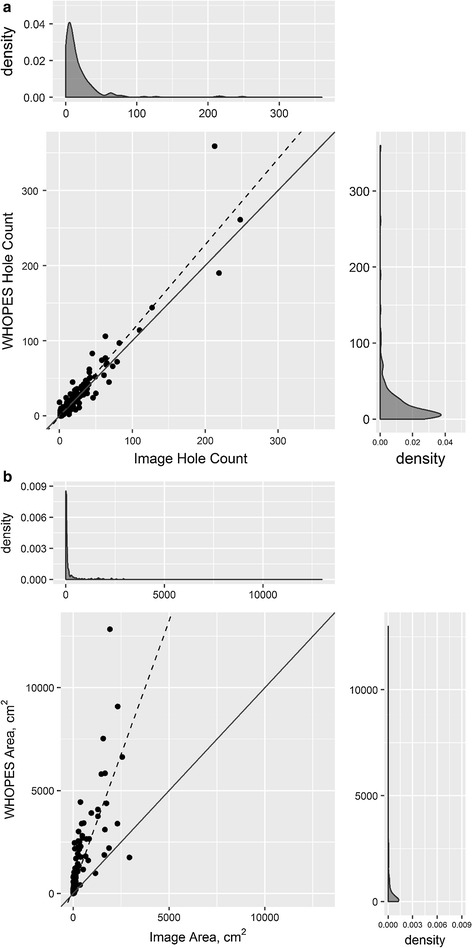
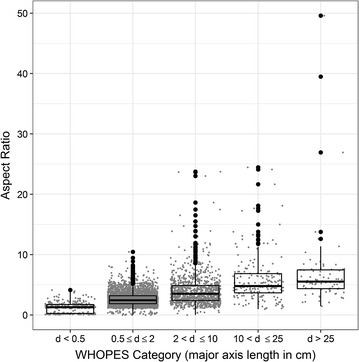
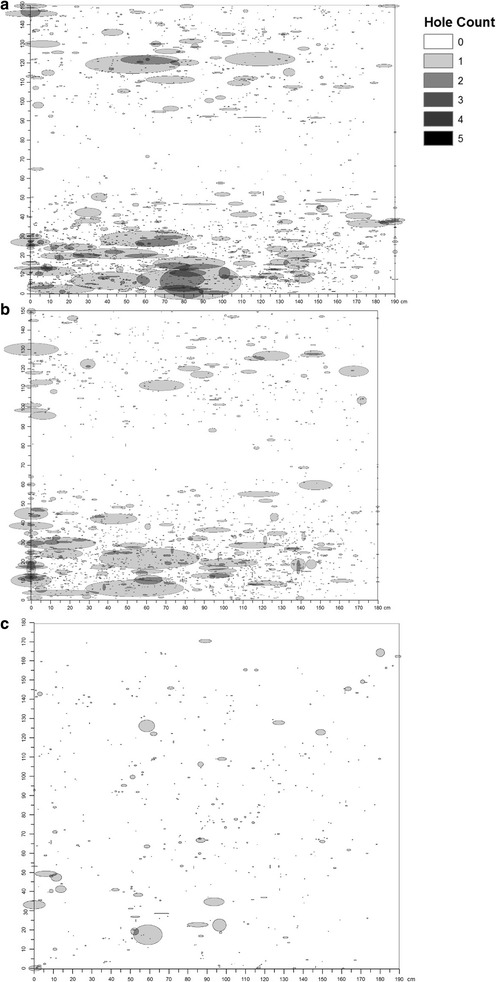
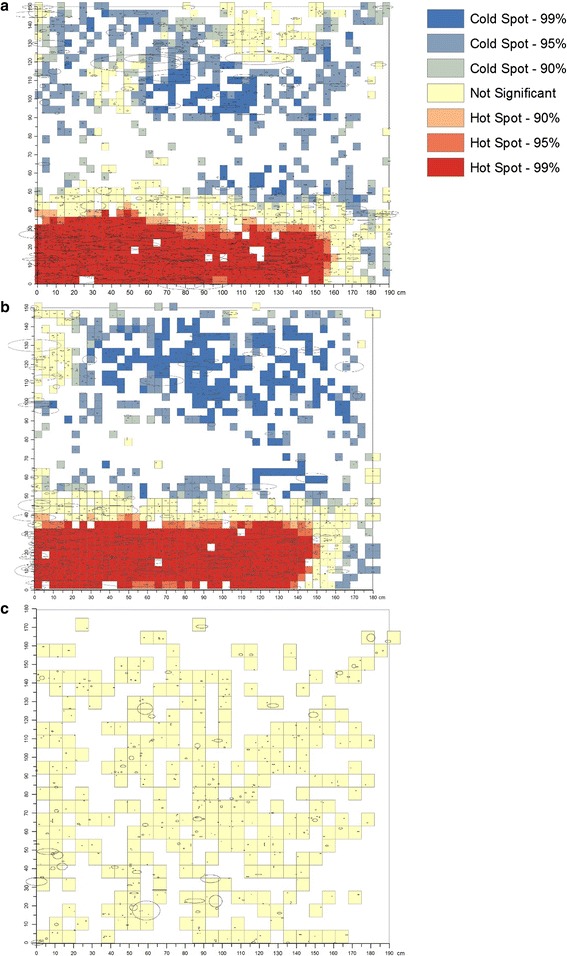
Results: The WHOPES method and image analysis resulted in similar estimates of total hole counts, each with a median of 10 (inter-quartile range (IQR) 4-24 and 4-23, respectively; p = 0.004); however, estimated hole areas were significantly larger using the WHOPES method (median 162 cm2, IQR 28-793) than image analysis (median 13 cm2, IQR 3-101; p < 0.0001). The WHOPES method classified fewer LLINs in 'good condition' compared to image analysis (42% vs 74%). The ruler method detected significantly more holes than image analysis did (p = 0.002) in 10 LLINs; however, total hole area was not significantly different (p = 0.16). Most holes were not circular but roughly 2-5 times longer in one direction. The lower quarter of LLIN sides was found to have the most holes.
Conclusions: The WHOPES method overestimated total hole area, likely because holes are elongated rather than circular, suggesting further adjustments to the pHI formula may be warranted when considering LLIN replacement strategies.
Keywords: Bed net; Hole index; Image analysis; Malaria; Physical durability; Vector control.
Figures
References
-
- Lengeler C. Insecticide-treated bed nets and curtains for preventing malaria. Cochrane Database Syst Rev. 2004;2:CD000363. - PubMed
-
- WHO. World Malaria Report. Geneva: World Health Organization; 2013.
-
- WHO. Guidelines for monitoring the durability of long-lasting insecticidal mosquito nets under operational conditions. Geneva: WHO/HTM/NTD/WHOPES; 2011.
-
- WHO. Vector Control Technical Expert Group Report to Malaria Policy and Advisory Committee Meeting. vol. Session 6.1. Geneva: World Heatlh Organization; 2013.
Publication types
MeSH terms
Grants and funding
LinkOut - more resources
Full Text Sources
Other Literature Sources
