


In vivo anti-malarial activity and toxicity studies of triterpenic esters isolated form Keetia leucantha and crude extracts
- PMID: 29017554
- PMCID: PMC5635585
- DOI: 10.1186/s12936-017-2054-y
In vivo anti-malarial activity and toxicity studies of triterpenic esters isolated form Keetia leucantha and crude extracts
Abstract
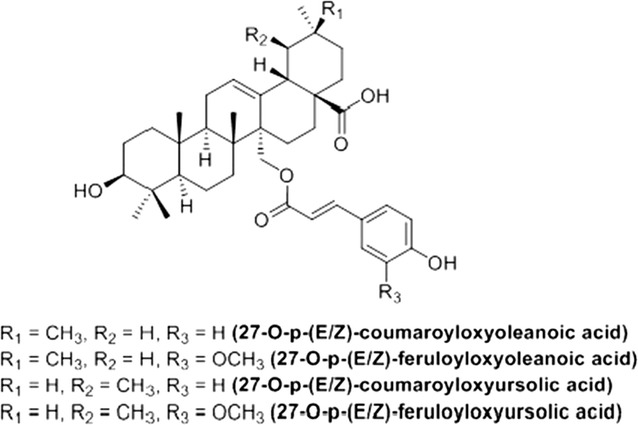
Background: Considering the need for new anti-malarial drugs, further investigations on Keetia leucantha (Rubiaceae), an in vitro antiplasmodial plant traditionally used to treat malaria, were carried out. This paper aimed to assess the in vivo anti-malarial efficacy of K. leucantha triterpenic esters previously identified as the most in vitro active components against Plasmodium falciparum and their potential toxicity as well as those of anti-malarial extracts.
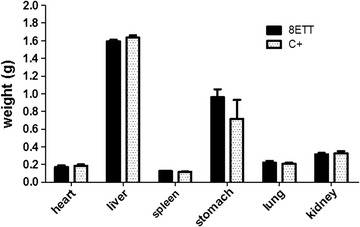
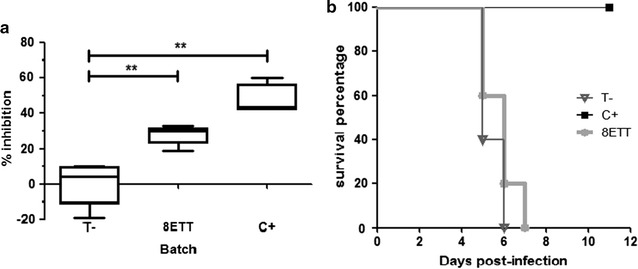
Results: These eight triterpenic esters and the major antiplasmodial triterpenic acids, ursolic and oleanolic acids, were quantified in the twigs dichloromethane extract by validated HPLC-UV methods. They account for about 19% of this extract (16.9% for acids and 1.8% for esters). These compounds were also identified in trace in the twigs decoction by HPLC-HRMS. Results also showed that extracts and esters did not produce any haemolysis, and were devoid of any acute toxicity at a total cumulative dose of 800 and 150 mg/kg respectively. Moreover, esters given intraperitoneally at 50 mg/kg/day to Plasmodium berghei-infected mice showed a very significant (p < 0.01) parasitaemia inhibition (27.8 ± 5.4%) on day 4 post-infection compared to vehicle-treated mice.
Conclusions: These results bring out new information on the safety of K. leucantha use and on the identification of anti-malarial compounds from its dichloromethane extract. Its activity can be explained by the presence of triterpenic acids and esters which in vivo activity and safety were demonstrated for the first time.
Keywords: Anti-malarial; Keetia leucantha; Oleanolic; Plasmodium; Rubiaceae; Triterpene esters; Ursolic.
Figures
References
-
- WHO. World Malaria Report 2015. Geneva: World Health Organization. http://www.who.int/malaria/publications/world-malaria-report-2015/report.... Accessed 18 July 2017.
Publication types
MeSH terms
Substances
LinkOut - more resources
Full Text Sources
Other Literature Sources
