Randomized Crossover Trial of Blood Volume Monitoring-Guided Ultrafiltration Biofeedback to Reduce Intradialytic Hypotensive Episodes with Hemodialysis
- PMID: 29018100
- PMCID: PMC5672962
- DOI: 10.2215/CJN.01030117
Randomized Crossover Trial of Blood Volume Monitoring-Guided Ultrafiltration Biofeedback to Reduce Intradialytic Hypotensive Episodes with Hemodialysis
Abstract
Background and objectives: Intradialytic hypotension (IDH) is associated with morbidity. The effect of blood volume-guided ultrafiltration biofeedback, which automatically adjusts fluid removal rate on the basis of blood volume parameters, on the reduction of IDH was tested in a randomized crossover trial.
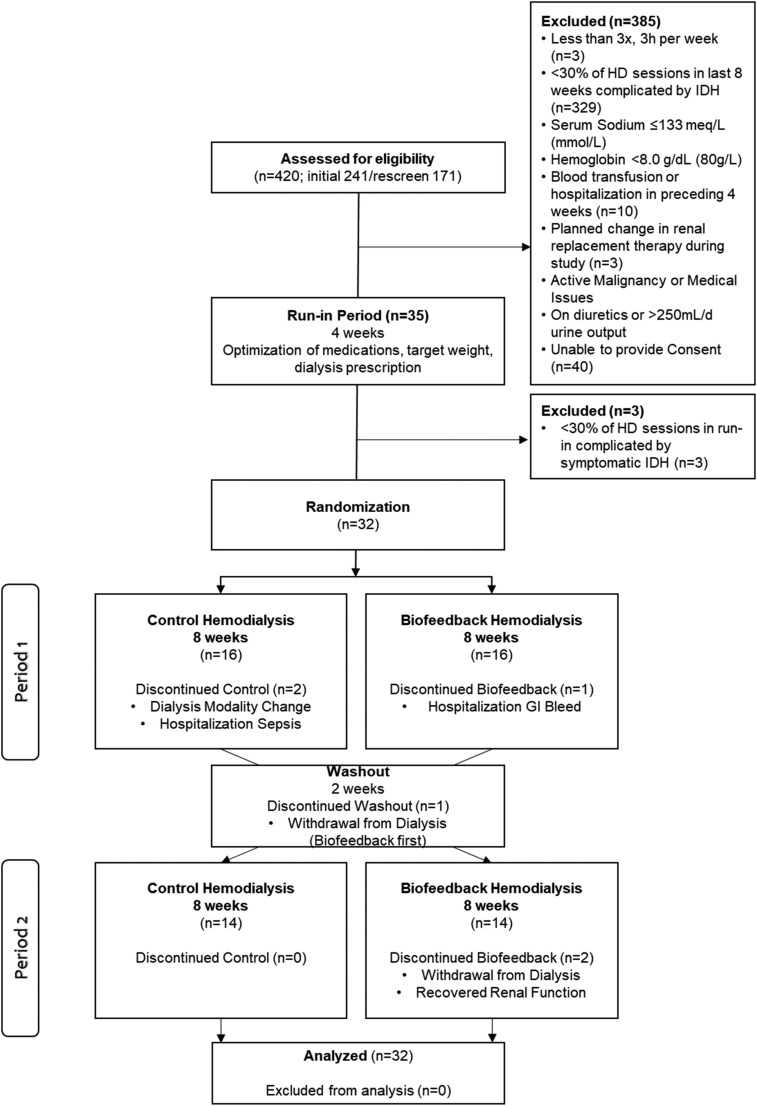
Design, setting, participants, & measurements: We performed a 22-week, single blind, randomized crossover trial in patients receiving maintenance hemodialysis who had >30% of sessions complicated by symptomatic IDH in five centers in Calgary, Alberta, Canada. Participants underwent a 4-week run-in period to standardize dialysis prescription and dry weight on the basis of clinical examination. Those meeting inclusion criteria were randomized to best clinical practice hemodialysis (control) or best clinical practice plus blood volume-guided ultrafiltration biofeedback (intervention) for 8 weeks, followed by a 2-week washout and subsequent crossover for a second 8-week phase. The primary outcome was rate of symptomatic IDH.
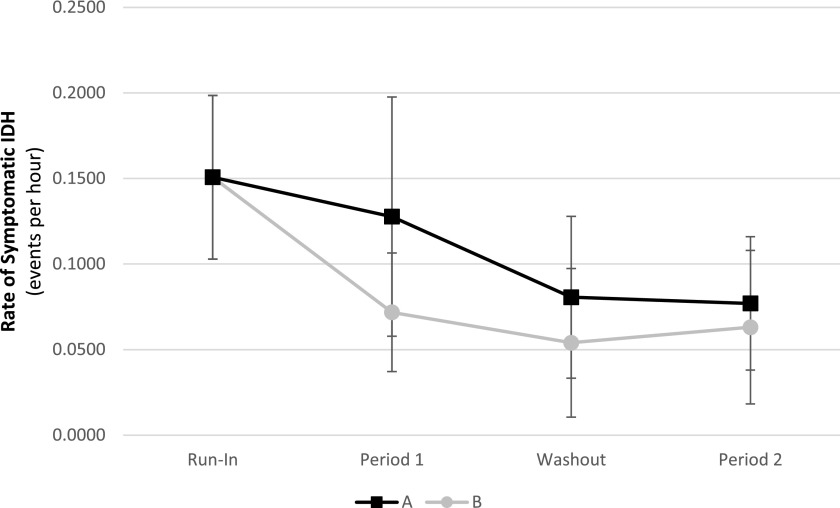
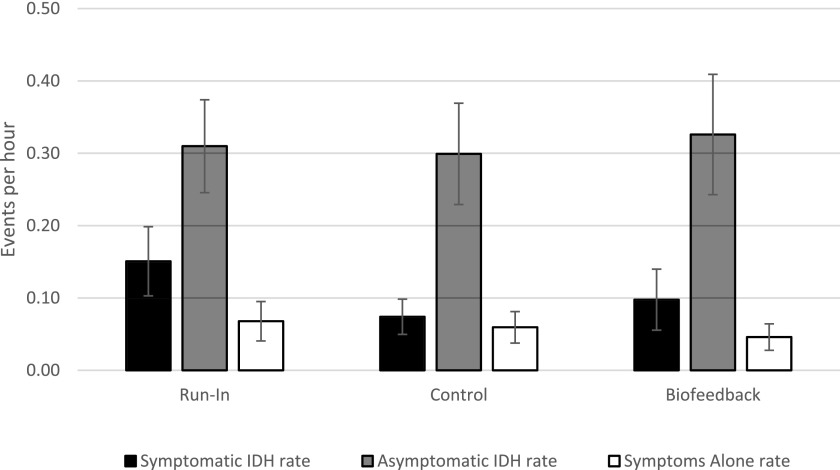
Results: Thirty-five participants entered, 32 were randomized, and 26 completed the study. The rate of symptomatic IDH with biofeedback was 0.10/h (95% confidence interval, 0.06 to 0.14) and 0.07/h (95% confidence interval, 0.05 to 0.10) during control (P=0.29). There were no differences in the rate or proportion of sessions with asymptomatic IDH or symptoms alone. Results remained consistent when adjusted for randomization order and study week. There were no differences between intervention and control in the last study week in interdialytic weight gain (difference [SD], -0.02 [0.8] kg), brain natriuretic peptide (1460 [19,052] ng/L), cardiac troponins (3 [86] ng/L), extracellular water-to-intracellular water ratio (0.05 [0.33]), ultrafiltration rate (1.1 [7.0] ml/kg per hour), and dialysis recovery time (0.43 [19.25] hours).
Conclusion: The use of blood volume monitoring-guided ultrafiltration biofeedback in patients prone to IDH did not reduce the rate of symptomatic IDH events.
Keywords: Alberta; Biofeedback, Psychology; Blood Volume; Canada; Confidence Intervals; Cross-Over Studies; Fluid Therapy; Natriuretic Peptide, Brain; Random Allocation; Single-Blind Method; Troponin; Water; Weight Gain; biofeedback; hemodialysis; hypotension; intradialytic hypotension; randomized controlled trials; renal dialysis; ultrafiltration.
Copyright © 2017 by the American Society of Nephrology.
Figures

Comment in
-
Feedback Control in Hemodialysis-Much Ado about Nothing?Clin J Am Soc Nephrol. 2017 Nov 7;12(11):1730-1732. doi: 10.2215/CJN.09770917. Epub 2017 Oct 10. Clin J Am Soc Nephrol. 2017. PMID: 29018099 Free PMC article. No abstract available.
References
-
- Zager PG, Nikolic J, Brown RH, Campbell MA, Hunt WC, Peterson D, Van Stone J, Levey A, Meyer KB, Klag MJ, Johnson HK, Clark E, Sadler JH, Teredesai P: “U” curve association of blood pressure and mortality in hemodialysis patients. Medical Directors of Dialysis Clinic, Inc. Kidney Int 54: 561–569, 1998 - PubMed
-
- Shoji T, Tsubakihara Y, Fujii M, Imai E: Hemodialysis-associated hypotension as an independent risk factor for two-year mortality in hemodialysis patients. Kidney Int 66: 1212–1220, 2004 - PubMed
-
- Yoshimitsu T, Hirakata H, Fujii K, Kanai H, Hirakata E, Higashi H, Kubo M, Tanaka H, Shinozaki M, Katafuchi R, Yokomizo Y, Oh Y, Tomooka S, Fujimi S, Fujishima M: Cerebral ischemia as a causative mechanism for rapid progression of brain atrophy in chronic hemodialysis patients. Clin Nephrol 53: 445–451, 2000 - PubMed
-
- Ishida I, Hirakata H, Sugimori H, Omae T, Hirakata E, Ibayashi S, Kubo M, Fujishima M: Hemodialysis causes severe orthostatic reduction in cerebral blood flow velocity in diabetic patients. Am J Kidney Dis 34: 1096–1104, 1999 - PubMed
Publication types
MeSH terms
Substances
LinkOut - more resources
Full Text Sources
Other Literature Sources
Medical
Research Materials
Miscellaneous