


High-throughput analysis unveils a highly shared satellite DNA library among three species of fish genus Astyanax
- PMID: 29018237
- PMCID: PMC5635008
- DOI: 10.1038/s41598-017-12939-7
High-throughput analysis unveils a highly shared satellite DNA library among three species of fish genus Astyanax
Erratum in
-
Publisher Correction: High-throughput analysis unveils a highly shared satellite DNA library among three species of fish genus Astyanax.Sci Rep. 2020 Jan 8;10(1):190. doi: 10.1038/s41598-020-57475-z. Sci Rep. 2020. PMID: 31913332 Free PMC article.
Abstract
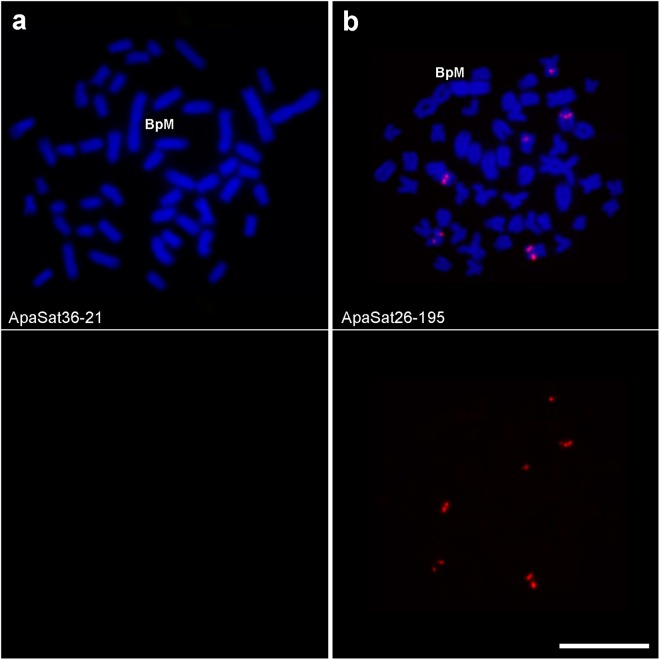
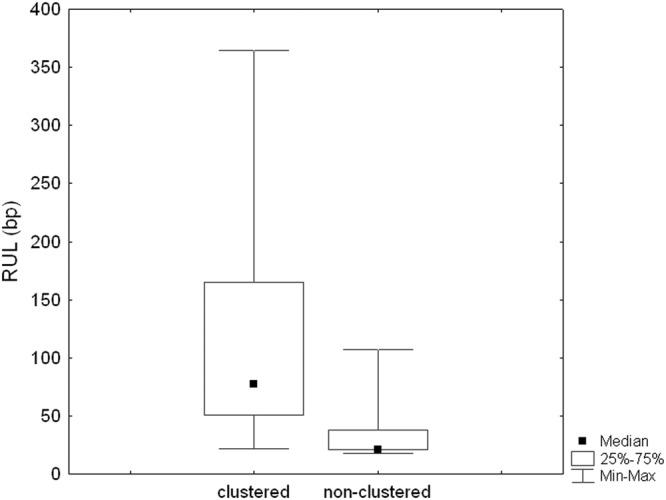
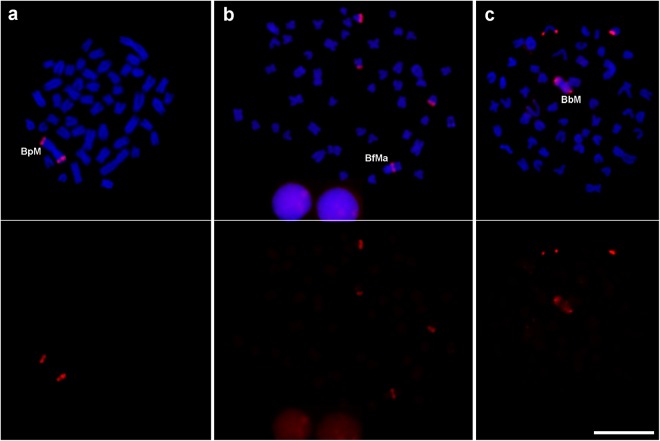
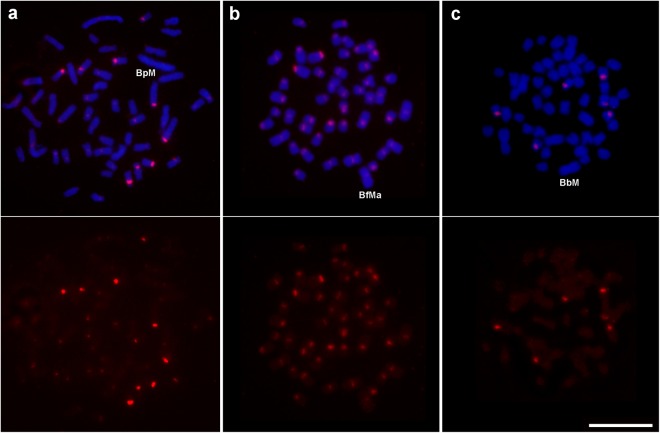
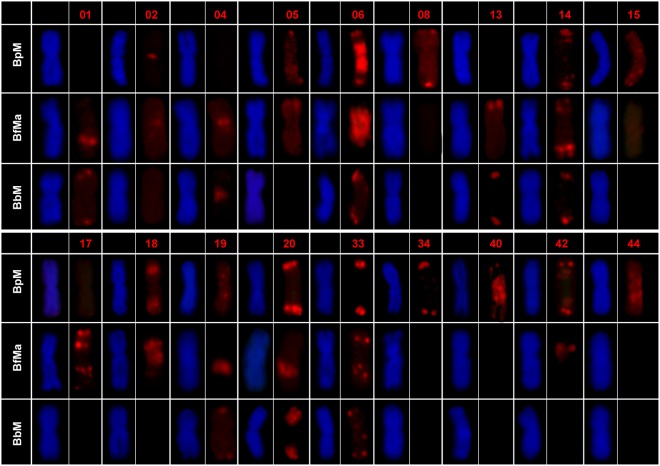
The high-throughput analysis of satellite DNA (satDNA) content, by means of Illumina sequencing, unveiled 45 satDNA families in the genome of Astyanax paranae, with repeat unit length (RUL) ranging from 6 to 365 bp and marked predominance of short satellites (median length = 59 bp). The analysis of chromosomal location of 35 satDNAs in A. paranae, A. fasciatus and A. bockmanni revealed that most satellites are shared between the three species and show highly similar patterns of chromosome distribution. The high similarity in satellite DNA content between these species is most likely due to their recent common descent. Among the few differences found, the ApaSat44-21 satellite was present only on the B chromosome of A. paranae, but not on the A or B chromosomes of the two other species. Likewise, the ApaSat20-18 satellite was B-specific in A. paranae but was however present on A and B chromosomes of A. fasciatus and A. bockmanni. The isochromosome nature of B chromosomes in these species was evidenced by the symmetric location of many satDNAs on both B chromosome arms, and the lower symmetry observed in the A. fasciatus BfMa chromosome suggests that it is older than those analyzed in A. paranae and A. bockmanni.
Conflict of interest statement
The authors declare that they have no competing interests.
Figures
References
-
- Fry K, Salser W. Nucleotide sequences of HS-α satellite DNA from kangaroo rat Dipodomys ordii and characterization of similar sequences in other rodents. Cell. 1977;12:1069–1084. - PubMed
Publication types
MeSH terms
Substances
LinkOut - more resources
Full Text Sources
Other Literature Sources
