HMGB1 in the Pathogenesis of Nasal Inflammatory Diseases and its Inhibition as New Therapeutic Approach: A Review from the Literature
- PMID: 29018504
- PMCID: PMC5629088
- DOI: 10.1055/s-0036-1597665
HMGB1 in the Pathogenesis of Nasal Inflammatory Diseases and its Inhibition as New Therapeutic Approach: A Review from the Literature
Abstract
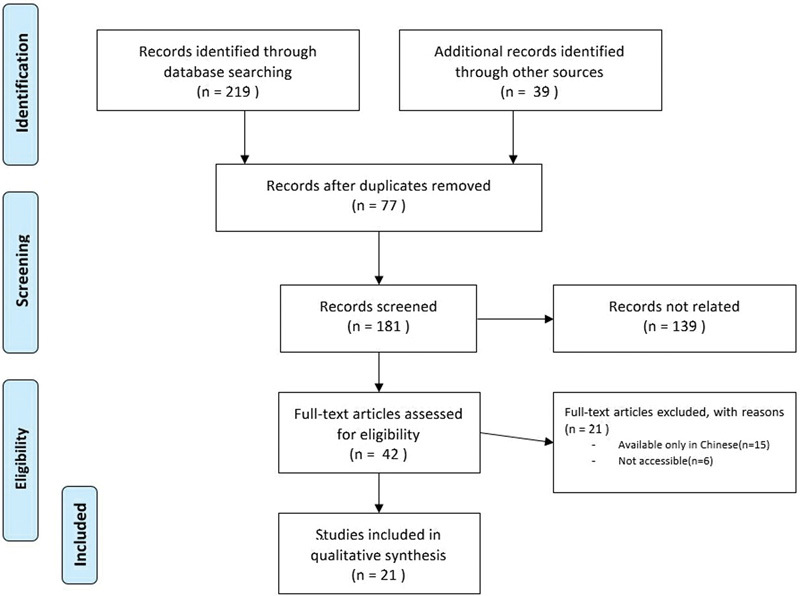
Introduction This study is a systematic review on recent developments about the importance of HMGB1 protein in the pathogenesis of rhino-sinusal inflammatory diseases. We also report data on the use of 18-β-glycyrrhetic acid (GA), which has been shown able to inhibit the pro-inflammatory activities of HMGB1, in young patients affected by allergic rhinitis and complaining of nasal obstruction as main symptom. Objectives The objective of this study was to review the literature to demonstrate the importance of HMGB1 in the pathogenesis of nasal inflammatory disorders and understand whether the inhibition of this protein may be an efficacious and innovative therapeutic strategy for patients with rhino-sinusal inflammation. Data Synthesis Authors searched for pertinent articles indexed in PubMed, Scopus, and other health journals between 2004 and 2015. In total, the authors gathered 258 articles: 219 articles through Pubmed and 39 articles from other search engines. The search terms used were as follows: HMGB1 AND "respiratory epithelium," "airway inflammation," "rhinitis," "allergic rhinitis," "rhinosinusitis," "nasal polyposis," "glycyrrhetic acid," "children." Conclusions Patients with severe symptoms have the highest serum levels and the highest extracellular expression of HMGB1. GA inhibits HMGB1 chemotactic and mitogenic function by a scavenger mechanism on extracellular HMGB1 accumulation stimulated by lipopolysaccharides in vitro. Treatment of allergic rhinitis with GA is not associated with local or systemic side effects in children and adults.
Keywords: HMGB1; allergic rhinitis; chronic rhinosinusitis; glycyrrhetic acid; rhino-sinusal inflammation.
Conflict of interest statement
Figures
Similar articles
-
Rhinosinusal Inflammation and High Mobility Group Box 1 Protein: A New Target for Therapy.ORL J Otorhinolaryngol Relat Spec. 2016;78(2):77-85. doi: 10.1159/000443481. Epub 2016 Mar 12. ORL J Otorhinolaryngol Relat Spec. 2016. PMID: 26966912 Review.
-
HMGB1 in nasal inflammatory diseases: a reappraisal 30 years after its discovery.Expert Rev Clin Immunol. 2020 May;16(5):457-463. doi: 10.1080/1744666X.2020.1752668. Epub 2020 May 12. Expert Rev Clin Immunol. 2020. PMID: 32252560 Review.
-
Glycyrrhetinic acid suppressed hmgb1 release by up-regulation of Sirt6 in nasal inflammation.J Biol Regul Homeost Agents. 2017 Apr-Jun;31(2):269-277. J Biol Regul Homeost Agents. 2017. PMID: 28685526
-
Level of secreted HMGB1 correlates with severity of inflammation in chronic rhinosinusitis.Laryngoscope. 2015 Jul;125(7):E225-30. doi: 10.1002/lary.25172. Epub 2015 Jan 30. Laryngoscope. 2015. PMID: 25639490
-
Are HMGB1 protein expression and secretion markers of upper airways inflammatory diseases?J Biol Regul Homeost Agents. 2013 Jul-Sep;27(3):791-804. J Biol Regul Homeost Agents. 2013. PMID: 24152844
Cited by
-
Glycyrrhizic Acid and Its Hydrolyzed Metabolite 18β-Glycyrrhetinic Acid as Specific Ligands for Targeting Nanosystems in the Treatment of Liver Cancer.Pharmaceutics. 2021 Oct 26;13(11):1792. doi: 10.3390/pharmaceutics13111792. Pharmaceutics. 2021. PMID: 34834206 Free PMC article. Review.
-
Dysfunction of epithelial permeability barrier induced by HMGB1 in 2.5D cultures of human epithelial cells.Tissue Barriers. 2022 Apr 3;10(2):1972760. doi: 10.1080/21688370.2021.1972760. Epub 2021 Sep 18. Tissue Barriers. 2022. PMID: 34538217 Free PMC article. Review.
-
High mobility group box-1: a potential therapeutic target for allergic rhinitis.Eur J Med Res. 2023 Oct 12;28(1):430. doi: 10.1186/s40001-023-01412-z. Eur J Med Res. 2023. PMID: 37828579 Free PMC article. Review.
-
Nasal Muco-ciliary transport time alteration: efficacy of 18 B Glycyrrhetinic acid.Multidiscip Respir Med. 2017 Nov 29;12:29. doi: 10.1186/s40248-017-0110-7. eCollection 2017. Multidiscip Respir Med. 2017. PMID: 29209499 Free PMC article.
-
Ethyl pyruvate ameliorate inflammatory response of sinonasal mucosa by inhibiting HMGB1 in rats with acute rhinosinusitis.Sci Rep. 2021 Mar 18;11(1):6206. doi: 10.1038/s41598-021-85785-3. Sci Rep. 2021. PMID: 33737667 Free PMC article.
References
-
- Turner P J, Kemp A S. Allergic rhinitis in children. J Paediatr Child Health. 2012;48(04):302–310. - PubMed
-
- Kemp A S. Allergic rhinitis. Paediatr Respir Rev. 2009;10(02):63–68. - PubMed
-
- Konstantinopoulou S, Sideris G A, DelRosso L M. The Role of Co-Morbidities. Curr Probl Pediatr Adolesc Health Care. 2016;46(01):7–10. - PubMed
-
- Gentile D, Bartholow A, Valovirta E, Scadding G, Skoner D.Current and future directions in pediatric allergic rhinitis J Allergy Clin Immunol Pract 2013103214–226., quiz 227 - PubMed
-
- Brozek J L, Bousquet J, Baena-Cagnani C E et al.Allergic Rhinitis and its Impact on Asthma (ARIA) guidelines: 2010 revision. J Allergy Clin Immunol. 2010;126(03):466–476. - PubMed
Publication types
LinkOut - more resources
Full Text Sources
Other Literature Sources