


Association of Neighborhood Socioeconomic Context With Participation in Cardiac Rehabilitation
- PMID: 29021267
- PMCID: PMC5721841
- DOI: 10.1161/JAHA.117.006260
Association of Neighborhood Socioeconomic Context With Participation in Cardiac Rehabilitation
Abstract
Background: Cardiac rehabilitation (CR) is underutilized in the United States, with fewer than 20% of eligible patients participating in CR programs. Individual socioeconomic status is associated with CR utilization, but data regarding neighborhood characteristics and CR are sparse. We investigated the association of neighborhood socioeconomic context with CR participation in the SCCS (Southern Community Cohort Study).
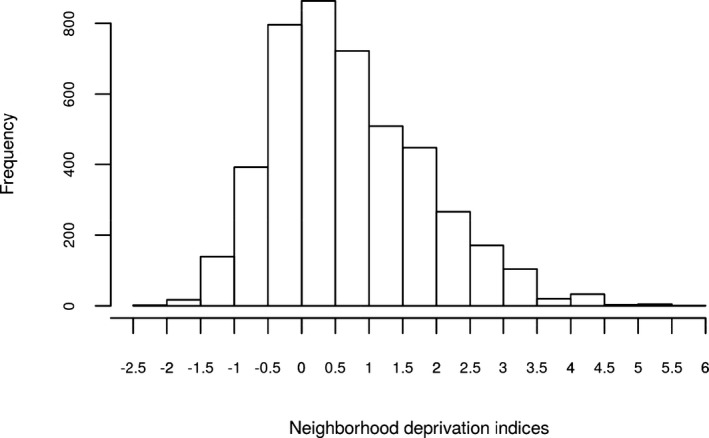
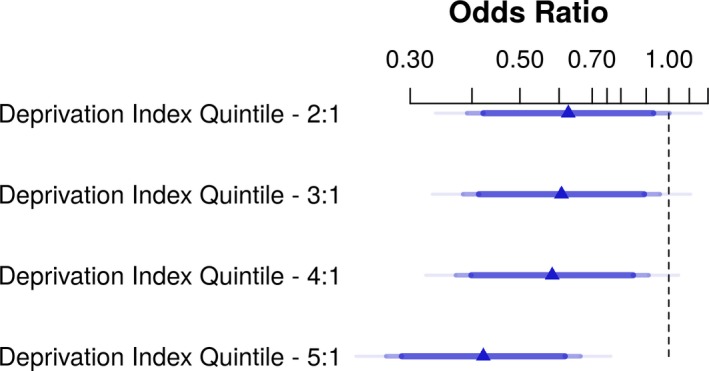
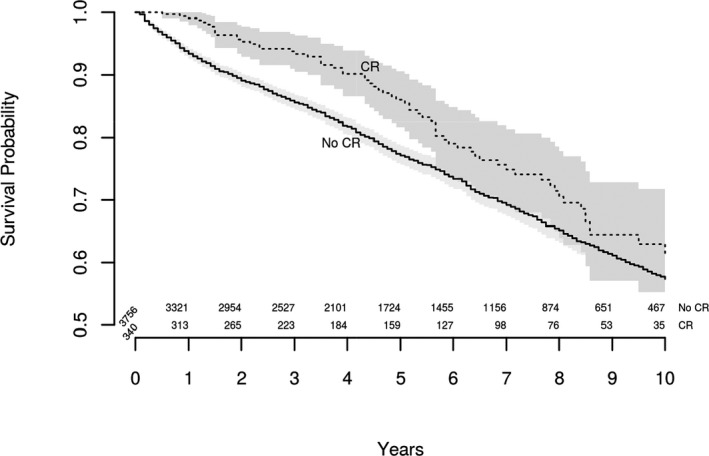
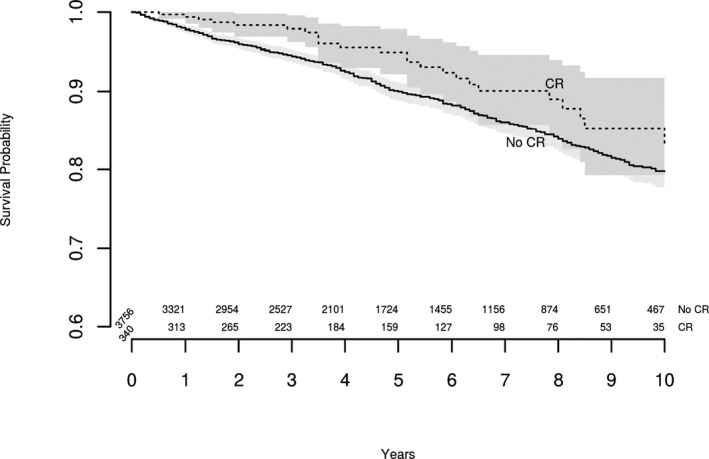
Methods and results: The SCCS is a prospective cohort study of 84 569 adults in the southeastern United States from 2002 to 2009, 52 117 of whom have Medicare or Medicaid claims. Using these data, we identified participants with hospitalizations for myocardial infarction, percutaneous coronary intervention, or coronary artery bypass surgery and ascertained their CR utilization. Neighborhood socioeconomic context was assessed using a neighborhood deprivation index derived from 11 census-tract level variables. We analyzed the association of CR utilization with neighborhood deprivation after adjusting for individual socioeconomic status. A total of 4096 SCCS participants (55% female, 57% black) with claims data were eligible for CR. CR utilization was low, with 340 subjects (8%) participating in CR programs. Study participants residing in the most deprived communities (highest quintile of neighborhood deprivation) were less than half as likely to initiate CR (odds ratio 0.42, 95% confidence interval, 0.27-0.66, P<0.001) as those in the lowest quintile. CR participation was inversely associated with all-cause mortality (hazard ratio 0.77, 95% confidence interval, 0.60-0.996, P<0.05).
Conclusions: Lower neighborhood socioeconomic context was associated with decreased CR participation independent of individual socioeconomic status. These data invite research on interventions to increase CR access in deprived communities.
Keywords: cardiac rehabilitation; cardiovascular mortality; neighborhood deprivation; socioeconomic position.
© 2017 The Authors. Published on behalf of the American Heart Association, Inc., by Wiley.
Figures
Comment in
-
"Road Map" to Improving Enrollment in Cardiac Rehabilitation: Identifying Barriers and Evaluating Alternatives.J Am Heart Assoc. 2017 Oct 11;6(10):e007468. doi: 10.1161/JAHA.117.007468. J Am Heart Assoc. 2017. PMID: 29021269 Free PMC article. No abstract available.
References
-
- Arena R, Williams M, Forman DE, Cahalin LP, Coke L, Myers J, Hamm L, Kris‐Etherton P, Humphrey R, Bittner V, Lavie CJ; American Heart Association Exercise CR, Prevention Committee of the Council on Clinical Cardiology CoE, Prevention, Council on Nutrition PA, Metabolism . Increasing referral and participation rates to outpatient cardiac rehabilitation: the valuable role of healthcare professionals in the inpatient and home health settings: a science advisory from the American Heart Association. Circulation. 2012;125:1321–1329. - PubMed
-
- Balady GJ, Ades PA, Bittner VA, Franklin BA, Gordon NF, Thomas RJ, Tomaselli GF, Yancy CW; American Heart Association Science A, Coordinating C . Referral, enrollment, and delivery of cardiac rehabilitation/secondary prevention programs at clinical centers and beyond: a presidential advisory from the American Heart Association. Circulation. 2011;124:2951–2960. - PubMed
-
- Taylor RS, Brown A, Ebrahim S, Jolliffe J, Noorani H, Rees K, Skidmore B, Stone JA, Thompson DR, Oldridge N. Exercise‐based rehabilitation for patients with coronary heart disease: systematic review and meta‐analysis of randomized controlled trials. Am J Med. 2004;116:682–692. - PubMed
-
- Kwan G, Balady GJ. Cardiac rehabilitation 2012: advancing the field through emerging science. Circulation. 2012;125:e369–e373. - PubMed
MeSH terms
Grants and funding
LinkOut - more resources
Full Text Sources
Other Literature Sources
Medical
Molecular Biology Databases
