


Pharmacogenomics in the treatment of mood disorders: Strategies and Opportunities for personalized psychiatry
- PMID: 29021832
- PMCID: PMC5607053
- DOI: 10.1007/s13167-017-0112-8
Pharmacogenomics in the treatment of mood disorders: Strategies and Opportunities for personalized psychiatry
Abstract
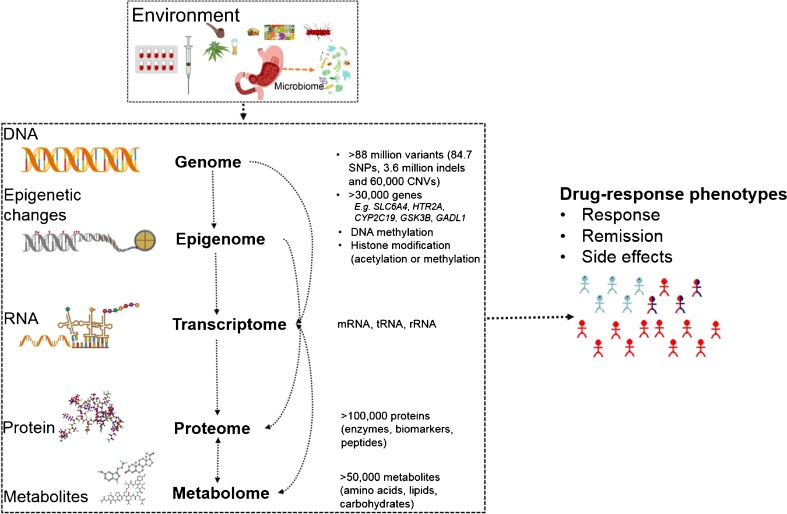
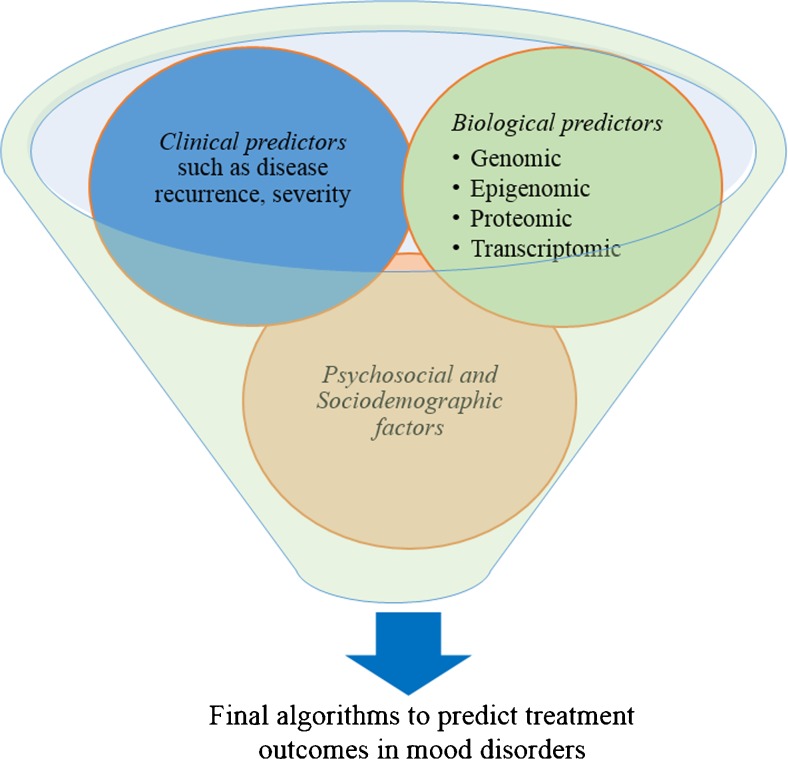
Personalized medicine (personalized psychiatry in a specific setting) is a new model towards individualized care, in which knowledge from genomics and other omic pillars (microbiome, epigenomes, proteome, and metabolome) will be combined with clinical data to guide efforts to new drug development and targeted prescription of the existing treatment options. In this review, we summarize pharmacogenomic studies in mood disorders that may lay the foundation towards personalized psychiatry. In addition, we have discussed the possible strategies to integrate data from omic pillars as a future path to personalized psychiatry. So far, the progress of uncovering single nucleotide polymorphisms (SNPs) underpinning treatment efficacy in mood disorders (e.g., SNPs associated with selective serotonin re-uptake inhibitors or lithium treatment response in patients with bipolar disorder and major depressive disorder) are encouraging, but not adequate. Genetic studies have pointed to a number of SNPs located at candidate genes that possibly influence response to; (a) antidepressants COMT, HTR2A, HTR1A, CNR1, SLC6A4, NPY, MAOA, IL1B, GRIK4, BDNF, GNB3, FKBP5, CYP2D6, CYP2C19, and ABCB1 and (b) mood stabilizers (lithium) 5-HTT, TPH, DRD1, FYN, INPP1, CREB1, BDNF, GSK3β, ARNTL, TIM, DPB, NR3C1, BCR, XBP1, and CACNG2. We suggest three alternative and complementary strategies to implement knowledge gained from pharmacogenomic studies. The first strategy can be to implement diagnostic, therapeutic, or prognostic genetic testing based on candidate genes or gene products. The second alternative is an integrative analysis (systems genomics approach) to combine omics data obtained from the different pillars of omics investigation, including genomics, epigenomes, proteomics, metabolomics and microbiomes. The main goal of system genomics is an identification and understanding of biological pathways, networks, and modules underlying drug-response. The third strategy aims to the development of multivariable diagnostic or prognostic algorithms (tools) combining individual's genomic information (polygenic score) with other predictors (e.g., omics pillars, neuroimaging, and clinical characteristics) to finally predict therapeutic outcomes. An integration of molecular science with that of traditional clinical practice is the way forward to drug discoveries and novel therapeutic approaches and to characterize psychiatric disorders leading to a better predictive, preventive, and personalized medicine (PPPM) in psychiatry. With future advances in the omics technology and methodological developments for data integration, the goal of PPPM in psychiatry is promising.
Keywords: Bipolar disorder; Depression; Lithium; Personalized psychiatry; Pharmacogenomics; Predictive preventive and personalized medicine (PPPM); SSRIs.
Conflict of interest statement
Funding
The University of Adelaide, Adelaide Graduate Centre, supported this work. ATA was a recipient of a postgraduate study scholarship, Adelaide Scholarship International (ASI), from the University of Adelaide.
Conflict of interest
The authors declare that they have no conflict of interest.
Figures
References
-
- American Psychiatric Association, DSM-5 Task Force. Diagnostic and statistical manual of mental disorders: DSM-5. Arlington: American Psychiatric Association; 2013.
Publication types
LinkOut - more resources
Full Text Sources
Other Literature Sources
Miscellaneous
