


Quantification of mitochondrial DNA copy number in suspected cancer patients by a well optimized ddPCR method
- PMID: 29021970
- PMCID: PMC5634817
- DOI: 10.1016/j.bdq.2017.08.001
Quantification of mitochondrial DNA copy number in suspected cancer patients by a well optimized ddPCR method
Abstract
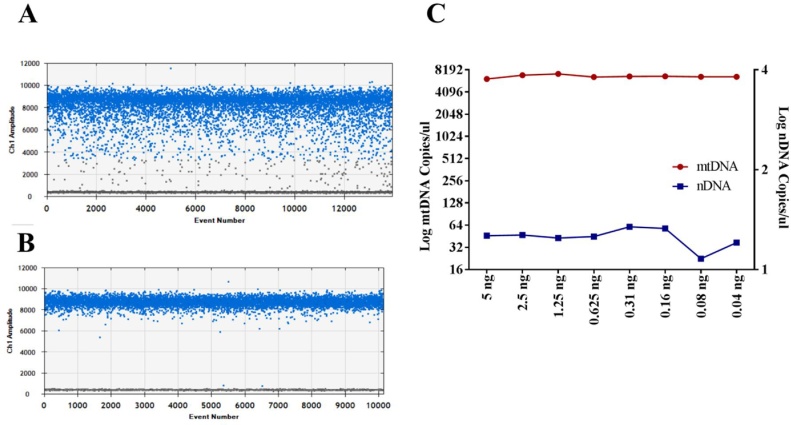
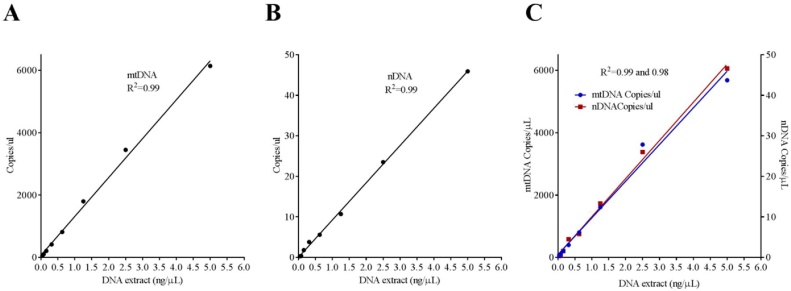
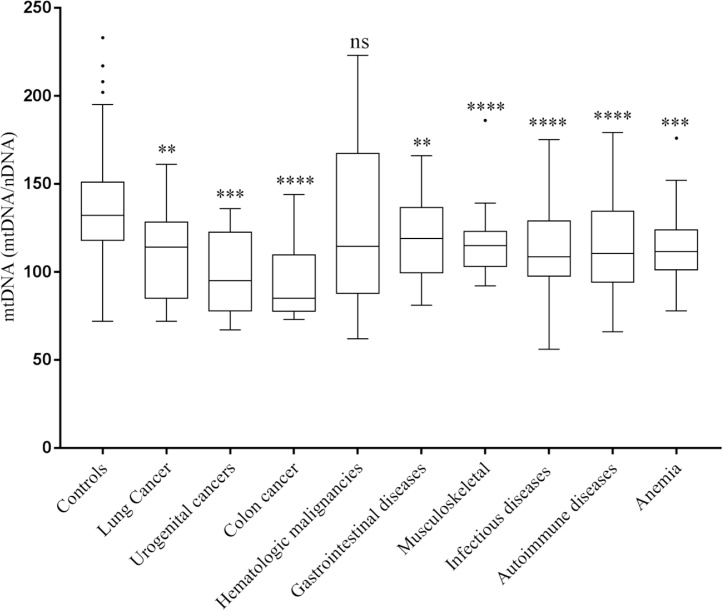
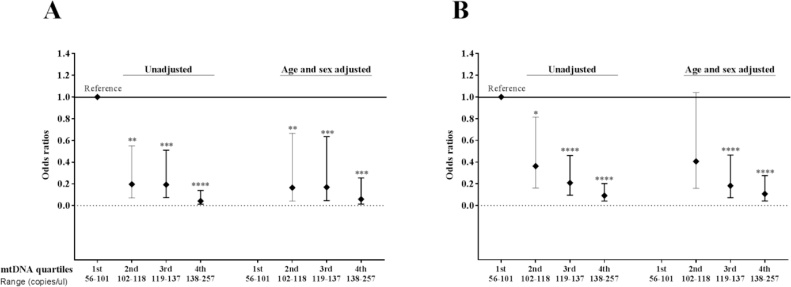
Changes in mitochondrial DNA (mtDNA) content is a useful clinical biomarker for various diseases, however results are controversial as several analytical factors can affect measurement of mtDNA. MtDNA is often quantified by taking ratio between a target mitochondrial gene and a reference nuclear gene (mtDNA/nDNA) using quantitative real time PCR often on two separate experiments. It measures relative levels by using external calibrator which may not be comparable across laboratories. We have developed and optimized a droplet digital PCR (ddPCR) based method for quantification of absolute copy number of both mtDNA and nDNA gene in whole blood. Finally, the role of mtDNA in suspected cancer patients referred to a cancer diagnostic center was investigated. Analytical factors which can result in false quantification of mtDNA have been optimized and both target and reference have been quantified simultaneously with intra- and inter-assay coefficient variances as 3.1% and 4.2% respectively. Quantification of mtDNA show that compared to controls, solid tumors (but not hematologic malignancies) and other diseases had significantly lower copy number of mtDNA. Higher mtDNA (highest quartile) was associated with a significantly lower risk of both solid tumors and other diseases, independent of age and sex. Receiver operating curve demonstrated that mtDNA levels could differentiate controls from patients with solid tumors and other diseases. Quantification of mtDNA by a well optimized ddPCR method showed that its depletion may be a hallmark of general illness and can be used to stratify healthy individuals from patients diagnosed with cancer and other chronic diseases.
Keywords: Biomarker; Cancer; Droplet digital PCR; Mitochondrial DNA; Nuclear DNA; ddPCR; mtDNA.
Figures
References
-
- Tritschler H.J., Mitochondrial Medori R. DNA alterations as a source of human disorders. Neurology. 1993;43(2):280–288. - PubMed
-
- Wallace D.C. Diseases of the mitochondrial DNA. Annu. Rev. Biochem. 1992;61:1175–1212. - PubMed
-
- Burger G., Gray M.W., Lang B.F. Mitochondrial genomes: anything goes. Trends Genet. 2003;19(12):709–716. - PubMed
-
- Lee H.C., Wei Y.H. Oxidative stress, mitochondrial DNA mutation, and apoptosis in aging. Exp. Biol. Med. (Maywood) 2007;232(5):592–606. - PubMed
LinkOut - more resources
Full Text Sources
Other Literature Sources