


Adolescent cannabinoid exposure effects on natural reward seeking and learning in rats
- PMID: 29022083
- PMCID: PMC5790819
- DOI: 10.1007/s00213-017-4749-8
Adolescent cannabinoid exposure effects on natural reward seeking and learning in rats
Abstract
Rationale: Adolescence is characterized by endocannabinoid (ECB)-dependent refinement of neural circuits underlying emotion, learning, and motivation. As a result, adolescent cannabinoid receptor stimulation (ACRS) with phytocannabinoids or synthetic agonists like "Spice" cause robust and persistent changes in both behavior and circuit architecture in rodents, including in reward-related regions like medial prefrontal cortex and nucleus accumbens (NAc).
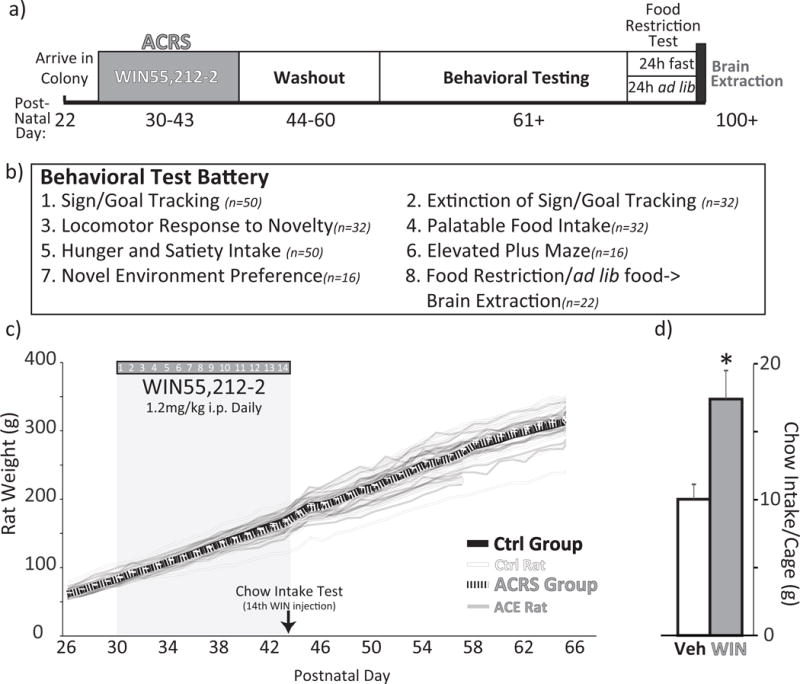
Objectives and methods: Here, we examine persistent effects of ACRS with the cannabinoid receptor 1/2 specific agonist WIN55-212,2 (WIN; 1.2 mg/kg/day, postnatal day (PD) 30-43), on natural reward-seeking behaviors and ECB system function in adult male Long Evans rats (PD 60+).
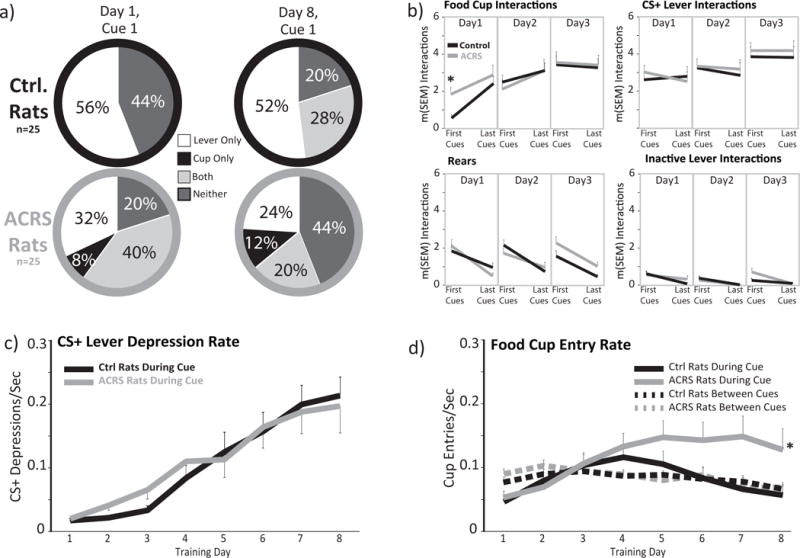
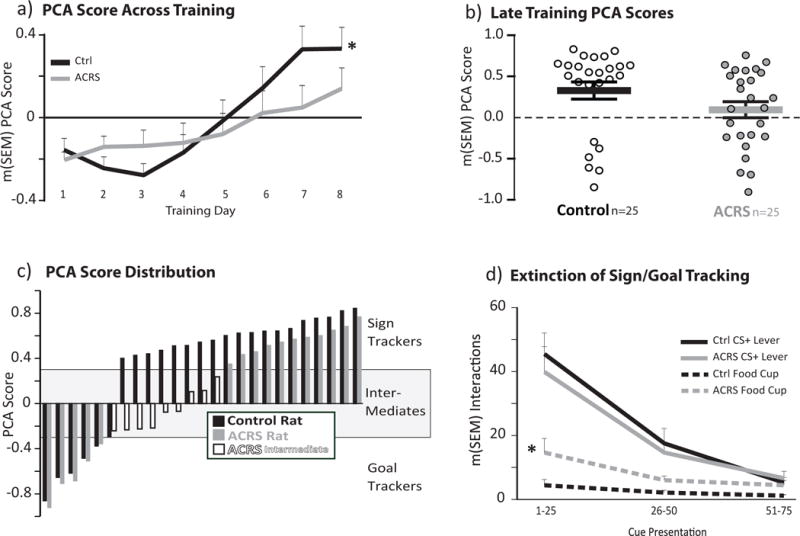
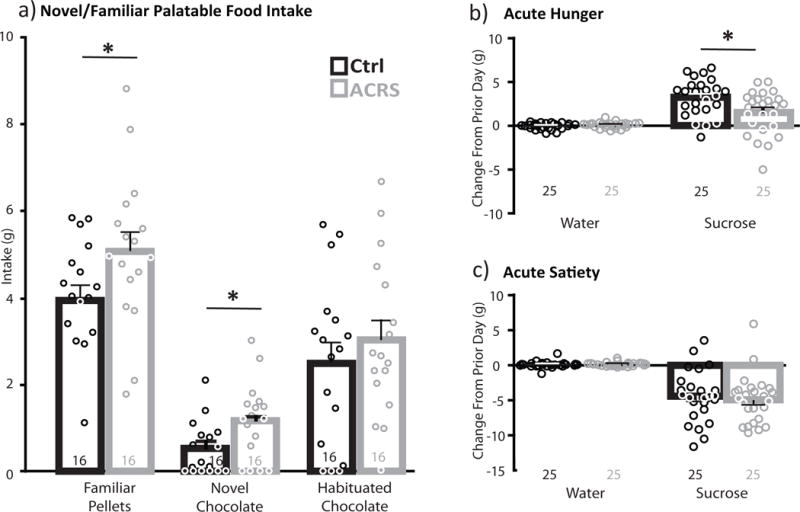
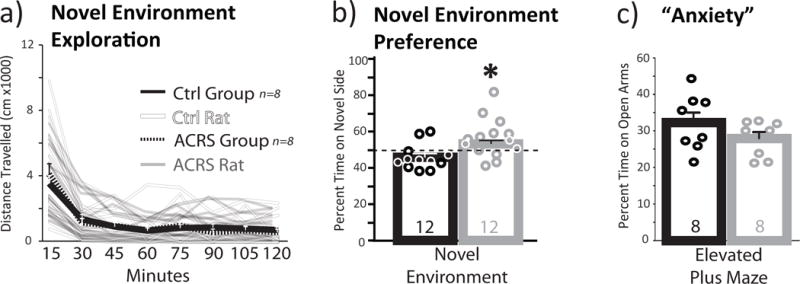
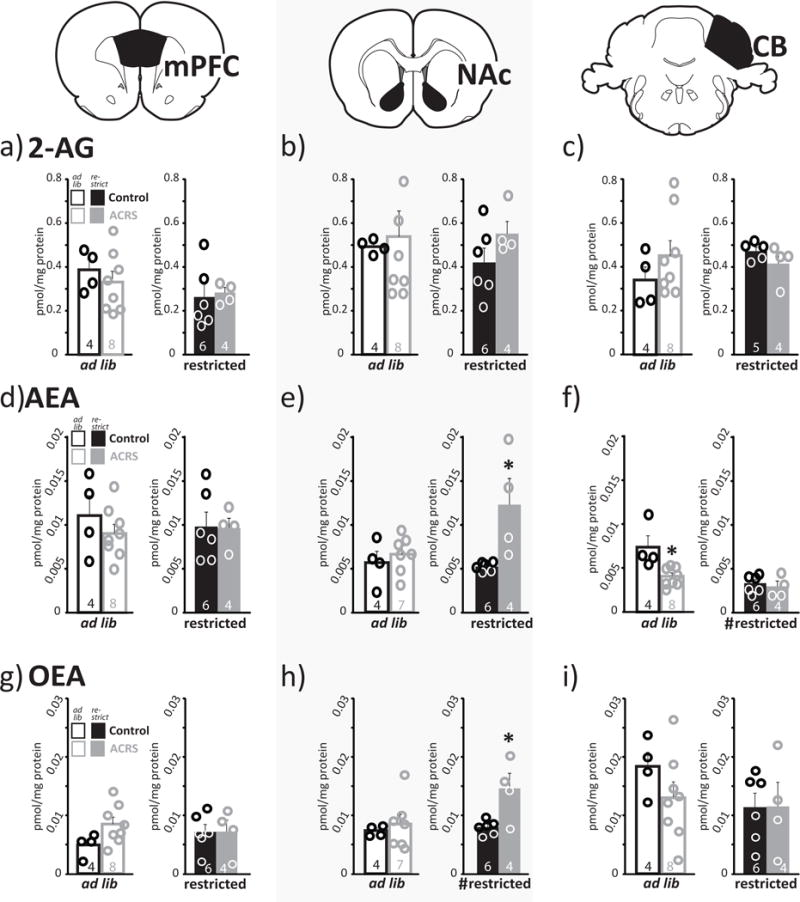
Results: WIN ACRS increased palatable food intake, and altered attribution of incentive salience to food cues in a sign-/goal-tracking paradigm. ACRS also blunted hunger-induced sucrose intake, and resulted in increased anandamide and oleoylethanolamide levels in NAc after acute food restriction not seen in controls. ACRS did not affect food neophobia or locomotor response to a novel environment, but did increase preference for exploring a novel environment.
Conclusions: These results demonstrate that ACRS causes long-term increases in natural reward-seeking behaviors and ECB system function that persist into adulthood, potentially increasing liability to excessive natural reward seeking later in life.
Keywords: Autoshaping; Endocannabinoid; Novelty; Nucleus accumbens; Palatable food; Reward.
Conflict of interest statement
No financial conflicts of interest exist.
Figures
References
-
- Abboussi O, Tazi A, Paizanis E, El Ganouni S. Chronic exposure to WIN55,212-2 affects more potently spatial learning and memory in adolescents than in adult rats via a negative action on dorsal hippocampal neurogenesis. Pharmacol Biochem Behav. 2014;120:95–102. - PubMed
-
- Astarita G, Ahmed F, Piomelli D. Lipidomic analysis of biological samples by liquid chromatography coupled to mass spectrometry. Methods in molecular biology. 2009;579:201–19. - PubMed
-
- Bambico FR, Nguyen NT, Katz N, Gobbi G. Chronic exposure to cannabinoids during adolescence but not during adulthood impairs emotional behaviour and monoaminergic neurotransmission. Neurobiol Dis. 2010;37:641–55. - PubMed
Publication types
MeSH terms
Substances
Grants and funding
LinkOut - more resources
Full Text Sources
Other Literature Sources
Research Materials
Miscellaneous
