


Adenosine versus intravenous calcium channel antagonists for supraventricular tachycardia
- PMID: 29025197
- PMCID: PMC6485380
- DOI: 10.1002/14651858.CD005154.pub4
Adenosine versus intravenous calcium channel antagonists for supraventricular tachycardia
Abstract
Background: People with supraventricular tachycardia (SVT) frequently are symptomatic and present to the emergency department for treatment. Although vagal manoeuvres may terminate SVT, they often fail, and subsequently adenosine or calcium channel antagonists (CCAs) are administered. Both are known to be effective, but both have a significant side effect profile. This is an update of a Cochrane review previously published in 2006.
Objectives: To review all randomised controlled trials (RCTs) that compare effects of adenosine versus CCAs in terminating SVT.
Search methods: We identified studies by searching CENTRAL, MEDLINE, Embase, and two trial registers in July 2017. We checked bibliographies of identified studies and applied no language restrictions.
Selection criteria: We planned to include all RCTs that compare adenosine versus a CCA for patients of any age presenting with SVT.
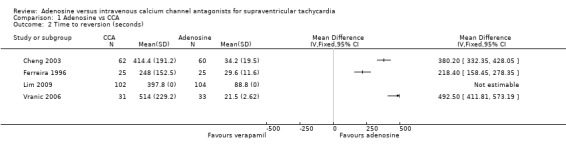
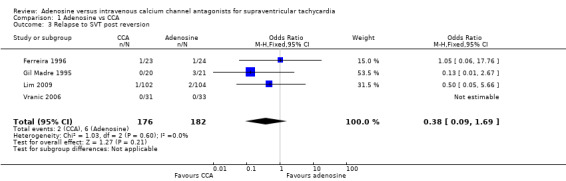
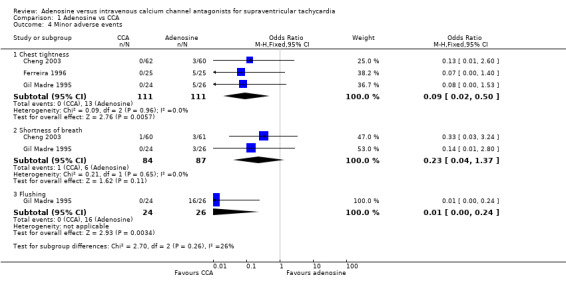
Data collection and analysis: We used standard methodological procedures as expected by Cochrane. Two review authors independently checked results of searches to identify relevant studies and resolved differences by discussion with a third review author. At least two review authors independently assessed each included study and extracted study data. We entered extracted data into Review Manager 5. Primary outcomes were rate of reversion to sinus rhythm and major adverse effects of adenosine and CCAs. Secondary outcomes were rate of recurrence, time to reversion, and minor adverse outcomes. We measured outcomes by calculating odds ratios (ORs) and assessed the quality of primary outcomes using the GRADE approach through the GRADEproGDT website.
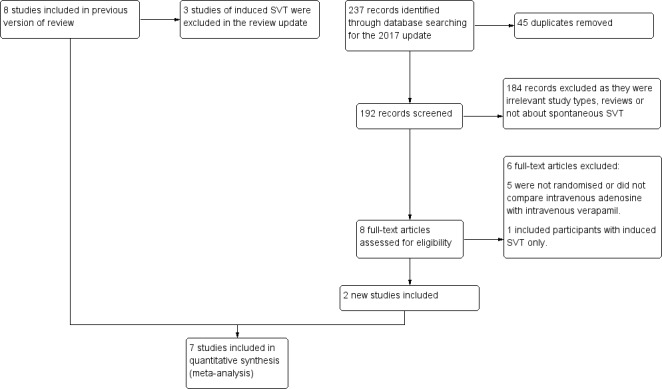
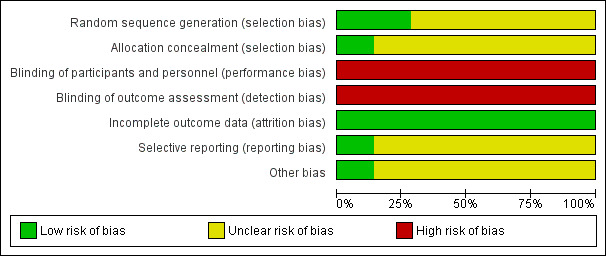
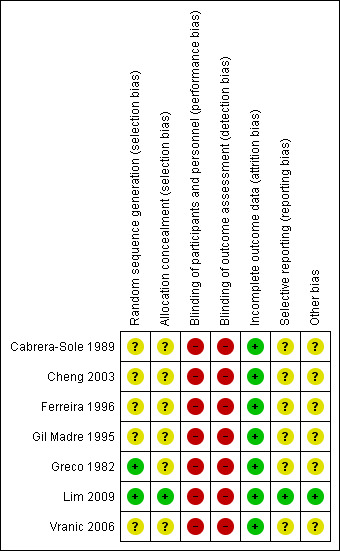
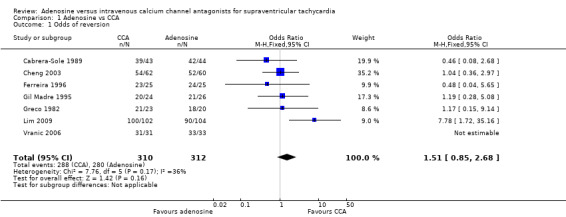
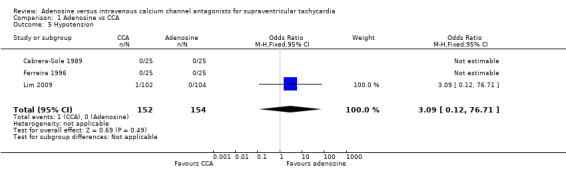
Main results: We identified two new studies for inclusion in the review update; the review now includes seven trials with 622 participants who presented to an emergency department with SVT. All included studies were RCTs, but only three described the randomisation process, and none had blinded participants, personnel, or outcome assessors to the intervention given. Moderate-quality evidence shows no differences in the number of people reverting to sinus rhythm who were treated with adenosine or CCA (89.7% vs 92.9%; OR 1.51, 95% confidence interval (CI) 0.85 to 2.68; participants = 622; studies = 7; I2 = 36%). Low-quality evidence suggests no appreciable differences in major adverse event rates between CCAs and adenosine. Researchers reported only one case of hypotension in the CCA group and none in the adenosine group (0.66% vs 0%; OR 3.09, 95% CI 0.12 to 76.71; participants = 306; studies = 3; I2 = 0%). Included trials did not report length of stay in hospital nor patient satisfaction.
Authors' conclusions: Moderate-quality evidence shows no differences in effects of adenosine and calcium channel antagonists for treatment of SVT on reverting to sinus rhythm, and low-quality evidence suggests no appreciable differences in the incidence of hypotension. A study comparing patient experiences and prospectively studied adverse events would provide evidence on which treatment is preferable for management of SVT.
Conflict of interest statement
SA: none known.
AS: none known.
RP: has received a research grant from Medtronic for a clinical epidemiology study on sudden cardiac death, and proctored and lectured for Medtronic and Pfizer, respectively, on topics related to atrial fibrillation. However, these topics are not directly related to treatment of supraventricular arrhythmias (which do not include atrial fibrillation) in A&E.
EA: none known.
MQ: none known.
T JA C: none known.
Figures
Update of
-
WITHDRAWN: Adenosine versus intravenous calcium channel antagonists for the treatment of supraventricular tachycardia in adults.Cochrane Database Syst Rev. 2012 Feb 15;(2):CD005154. doi: 10.1002/14651858.CD005154.pub3. Cochrane Database Syst Rev. 2012. Update in: Cochrane Database Syst Rev. 2017 Oct 12;10:CD005154. doi: 10.1002/14651858.CD005154.pub4. PMID: 22336809 Updated.
Comment in
-
Cochrane corner: adenosine versus intravenous calcium channel antagonists for supraventricular tachycardia.Heart. 2018 Dec;104(24):1993-1994. doi: 10.1136/heartjnl-2017-312909. Epub 2018 May 14. Heart. 2018. PMID: 29760241 No abstract available.
References
References to studies included in this review
Cabrera‐Sole 1989 {published data only}
-
- Cabrera‐Sole R, Abeytua M, Lopez Bescos L, Rubio R. Paroxysmal supraventricular tachycardia: efficacy of adenosine versus verapamil. Revista Espanola de Cardiologia 1989;42(Suppl 2):19. [MEDLINE: ]
Cheng 2003 {published data only}
-
- Cheng KA. A randomized, multicenter trial to compare the safety and efficacy of adenosine versus verapamil for termination of paroxysmal supraventricular tachycardia. Chinese Journal of Internal Medicine 2003;42:773‐6. [MEDLINE: ] - PubMed
Ferreira 1996 {published data only}
-
- Ferreira JFM, Pamplona D, Cesar LAM, Leite PF, Sosa EA, Luz PL, et al. Adenosin‐three phosphate compared with verapamil to treat paroxysmal supraventricular tachycardia. Arquivos Brasileros de Cardiologia 1996;66:55‐7. [MEDLINE: ] - PubMed
Gil Madre 1995 {published data only}
-
- Gil Madre J, Lazaro Rodriguez S, Sentenac Marchan G, Sepulveda Berrocal MA, Alises Moraleda JM, Cortes Bermejo S, et al. Adenosin triphosphate and the treatment of paroxysmal supraventricular tachycardia: a comparison with verapamil. Revista Espanola de Cardiologia 1995;48:55‐8. [MEDLINE: ] - PubMed
Greco 1982 {published data only}
-
- Greco R, Musto B, Arienzo V, et al. Treatment of paroxysmal supraventricular tachycardia in infancy with digitalis, adenosine‐5'‐triphosphate and verapamil: a comparative study. Circulation 1982;66:504‐8. [MEDLINE: ] - PubMed
Lim 2009 {published data only}
-
- Lim SH, Anantharaman V, Teo WS, Chan YH. Slow infusion of calcium channel blockers compared with intravenous adenosine in the emergency treatment of supraventricular tachycardia. Resuscitation 2009;80(5):523‐8. - PubMed
Vranic 2006 {published data only}
-
- Vranic II, Matic M, Perunicic J, Simic T, Soskic L, Milic N. Adenosine cardioprotection study in clinical setting of paroxysmal supraventricular tachycardia. Prostaglandins, Leukotrienes, and Essential Fatty Acids 2006;74(6):365‐71. - PubMed
References to studies excluded from this review
Athar 2013 {published data only}
-
- Athar M, Majid A, Hussain A, Haider I, Shahid N, Ahmed I, et al. Comparison of efficacy of intravenous adenosine and verapamil in acute paroxysmal supraventricular tachycardia in adults. Journal of Sheikh Zayed Medical College (JSZMC) 2013;4(3):492‐6.
Ballo 2004 {published data only}
-
- Ballo P, Bernabo D, Faraguti SA. Heart rate is a predictor of success in the treatment of adults with symptomatic paroxysmal supraventricular tachycardia. European Heart Journal 2004;25:1310‐7. [MEDLINE: ] - PubMed
Belhassen 1984 {published data only}
-
- Belhassen B, Pelleg A. Acute management of supraventricular tachycardia: verapamil, adenosine triphosphate or adenosine?. American Journal of Cardiology 1984;54:225‐7. [MEDLINE: ] - PubMed
Conti 1995 {published data only}
-
- Conti Gimenez LA, Gil Madre J. Adenosine triphosphate and the treatment of paroxysmal supraventricular tachycardia: a comparison with verapamil. Revista Espanola de Cardiologia 1995;48:499‐500. [MEDLINE: ] - PubMed
DiMarco 1990 {published data only}
-
- DiMarco JP, Miles W, Akhtar M, Milstein S, Sharma AD, Platia E, et al. Adenosine for paroxysmal supraventricular tachycardia: dose ranging and comparison with verapamil. Assessment in placebo‐controlled, multicenter trials.. Annals of Internal Medicine 1990;113:104‐10. [MEDLINE: ] - PubMed
Garratt 1989 {published data only}
-
- Garratt C, Linker N, Griffith M, Ward D, Camm AJ. Comparison of adenosine and verapamil for termination of paroxysmal junctional tachycardia. American Journal of Cardiology 1989;64:1310‐6. [MEDLINE: ] - PubMed
Gill 2014 {published data only}
-
- Gill BU, Bukhari SN, Rashid MA, Saleemi MS, Zaffar MZ. Comparing the efficacy of intravenous adenosine and verapamil in termination of acute paroxysmal supra ventricular tachycardia. Journal of Ayub Medical College Abbottabad 2014;26(1):29‐31. - PubMed
Hood 1992 {published data only}
-
- Hood MA, Smith WM. Adenosine versus verapamil in the treatment of supraventricular tachycardia: a randomized double‐crossover trial. American Heart Journal 1992;123:1543‐9. [MEDLINE: ] - PubMed
Kulakowski 1998 {published data only}
-
- Kulakowski P, Karpinski G, Karczmarewicz S, Czepiel A, Makowska E, Soszynska M. Efficacy and safety of adenosine in termination of paroxysmal supraventricular tachycardia: comparison with verapamil. Kardiologia Polska 1998;49:295‐303. [MEDLINE: ]
Rankin 1991 {published data only}
-
- Rankin AC, McGovern BA. Adenosine or verapamil for the acute treatment of supraventricular tachycardia?. Annals of Internal Medicine 1991;114:513‐5. [MEDLINE: ] - PubMed
Riaz 2012 {published data only}
-
- Riaz R, Mishra J, Hussain S, Sinha LM. Adenosine versus verapamil for the treatment of supra‐ventricular tachycardia: randomized comparative trial. Pakistan Journal of Medical and Health Sciences 2012;6(3):541‐3.
Sellers 1987 {published data only}
-
- Sellers TD, Kirchhoffer JB, Modesto TA. Adenosine: a clinical experience and comparison with verapamil for the termination of supraventricular tachycardias. Progress in Clinical and Biological Research 1987;230:283‐99. [MEDLINE: ] - PubMed
Sethi 1994 {published data only}
-
- Sethi KK, Singh B, Kalra GS, Arora R, Khalilullah M. Comparative clinical and electrophysiologic effects of adenosine and verapamil on termination of paroxysmal supraventricular tachycardia. Indian Heart Journal 1994;46:141‐4. [MEDLINE: ] - PubMed
Shaker 2015 {published data only}
-
- Shaker H, Jahanian F, Fathi M, Zare M. Oral verapamil in paroxysmal supraventricular tachycardia recurrence control: a randomized clinical trial. Therapeutic Advances in Cardiovascular Disease 2015;9(1):4‐9. [PUBMED: 25297337] - PubMed
Trappe 1997 {published data only}
-
- Trappe H‐J. Acute management of supraventricular tachycardia: adenosine or ajmaline?. Intensivmedizin und Notfallmedizin 1997;34:452‐61. [MEDLINE: ]
Turkoglu 1996 {published data only}
-
- Turkoglu C, Firatli I, Turkoglu C, Ozturk M. Effect of adenosine in termination of induced supraventricular tachycardias and comparison with verapamil. Turk Kardiyoloji Dernegi Arsivi 1996;24:452‐61. [MEDLINE: ]
Turkoglu 2009 {published data only}
-
- Turkoglu C, Ozturk M, Aliyev F, Firatli I, Incesoy N. Electrophysiologic characteristics of wide QRS complexes during pharmacologic termination of sustained supraventricular tachycardias with verapamil and adenosine: observations from electrophysiologic study. Annals of Noninvasive Electrocardiology 2009;14(4):375‐80. - PMC - PubMed
Additional references
ACLS 2015
Appelboam 2015
-
- Appelboam A, Reuben A, Mann C, Gagg J, Ewings P, Barton A, et al. Postural modification to the standard Valsalva manoeuvre for emergency treatment of supraventricular tachycardias (REVERT): a randomised controlled trial. Lancet (London, England) 2015;386(10005):1747‐53. [PUBMED: 26314489] - PubMed
Blomstrom‐Lundqvist 2003
-
- Blomstrom‐Lundqvist C, Scheinman MM, Aliot EM, Alpert JS, Calkins H, Camm AJ, et al. ACC/AHA/ESC Guidelines for the Management of Patients With Supraventricular Arrhythmias‐‐Executive Summary. A report of the American College of Cardiology/American Heart Association Task Force on Practice Guidelines and the European Society of Cardiology Committee for Practice Guidelines (writing committee to develop guidelines for the management of patients with supraventricular arrhythmias) developed in collaboration with NASPE‐Heart Rhythm Society. Journal of the American College of Cardiology 2003;42(8):1493‐531. [PUBMED: 14563598] - PubMed
Bolton 2000
-
- Bolton E. Disturbances of cardiac rhythm and conduction. In: Tintinalli JE, Kelen GD, Stapczynski JS editor(s). Emergency Medicine ‐ a Comprehensive Study Guide. 5th Edition. New York: McGraw‐Hill, 2000:169‐78.
Carlisle 2015
-
- Carlisle JB, Dexter F, Pandit JJ, Shafer SL, Yentis SM. Calculating the probability of random sampling for continuous variables in submitted or published randomised controlled trials. Anaesthesia 2015;70(7):848‐58. [PUBMED: 26032950] - PubMed
Carlisle 2017
-
- Carlisle JB. Data fabrication and other reasons for non‐random sampling in 5087 randomised, controlled trials in anaesthetic and general medical journals. Anaesthesia 2017;n/a:n/a. - PubMed
Delacrétaz 2006
-
- Delacrétaz E. Supraventricular tachycardia. New England Journal of Medicine 2006;354:1039–51. - PubMed
Delaney 2011
-
- Delaney B, Loy J, Kelly AM. The relative efficacy of adenosine versus verapamil for the treatment of stable paroxysmal supraventricular tachycardia in adults: a meta‐analysis. European Journal of Emergency Medicine 2011;18(3):148‐52. [PUBMED: 20926952] - PubMed
Dougherty 1992
-
- Dougherty AH, Jackman WM, Naccarelli GV, Friday KJ, Dias VC. Acute conversion of paroxysmal supraventricular tachycardia. IV Diltiazem Study Group. American Journal of Cardiology 1992;70:587‐92. - PubMed
Faulds 1991
-
- Faulds D, Crisp P, Buckley MM. Adenosine. An evaluation of its use in diagnostic procedures, and in the treatment of paroxysmal supraventricular tachycardia. Drugs 1991;41:596‐624. - PubMed
Ferguson 2003
-
- Ferguson JD, DiMarco JP. Contemporary management of paroxysmal supraventricular tachycardia. Circulation 2003;107:1096‐9. - PubMed
GRADEproGDT 2015 [Computer program]
-
- Hamilton (ON): McMaster University (developed by Evidence Prime). GRADEproGDT. Version accessed 10 May 2017. Hamilton (ON): McMaster University (developed by Evidence Prime), 2015.
Gupta 1999
-
- Gupta A, Naik A, Vora A, Lokhandwala Y. Comparison of the efficacy of diltiazem and esmolol in terminating supraventricular tachycardia. Journal of the Association of Physicians of India 1999;47:969‐72. - PubMed
Higgins 2011
-
- Higgins JP, Green S, editors. Cochrane Handbook for Systematic Reviews of Interventions Version 5.1.0 (updated March 2011). The Cochrane Collaboration, 2011. Available from www.cochrane‐handbook.org.
Jayam 2004
-
- Jayam VKS, Calkins H. Supraventricular tachycardia, AV nodal reentry and Wolff‐Parkinson‐White syndrome. Hurst’s The Heart. 11th Edition. New York: McGraw Hill, 2004:855–73.
Jordaens 1991
-
- Jordaens L, Gorgels A, Stroobandt R, Temmerman J. Efficacy and safety of intravenous sotalol for termination of supraventricular tachycardia. The Sotalol Versus Placebo Multicenter Study Group. American Journal of Cardiology 1991;68:35‐40. - PubMed
Joshi 1995
-
- Joshi PP, Deshmukh PK, Salkar RG. Efficacy of intravenous magnesium sulphate in supraventricular tachyarrhythmias. Journal of the Association of Physicians of India 1995;43:529‐31. - PubMed
Katzung 1995
-
- Hondeghem LM, Roden DM. Agents used in cardiac arrhythmias. In: Katzung BG editor(s). Basic and Clinical Pharmacology. 6th Edition. Connecticut: Prentice‐Hall International, 1995.
Lefebvre 2011
-
- Lefebvre C, Manheimer E, Glanville J. Chapter 6: Searching for studies. Higgins JPT, Green S, editors. Cochrane Handbook for Systematic Reviews of Interventions Version 5.1.0 (updated March 2011). The Cochrane Collaboration, 2011.
Mangrum 2002
-
- Mangrum JM, DiMarco JP. Acute and chronic pharmacologic management of supraventricular arrhythmias in cardiovascular therapeutics. In: Antman E editor(s). Cardiovascular Therapeutics: A Companion to Braunwald’s Heart Disease. 2nd Edition. Philadelphia, PA: WB Saunders, 2002:423–44.
Medi 2009
-
- Medi C, Kalman JM, Freedman SB. Supraventricular tachycardia. The Medical Journal of Australia 2009;190(5):255‐60. [PUBMED: 19296791] - PubMed
Orejarena 1998
-
- Orejarena LA, Vidaillet H Jr, DeStefano F, et al. Paroxysmal supraventricular tachycardia in the general population. Journal of the American College of Cardiology 1998;31:150‐7. - PubMed
Page 2016
-
- Page RL, Joglar JA, Caldwell MA, Calkins H, Conti JB, Deal BJ, et al. 2015 ACC/AHA/HRS Guideline for the Management of Adult Patients With Supraventricular Tachycardia: A Report of the American College of Cardiology/American Heart Association Task Force on Clinical Practice Guidelines and the Heart Rhythm Society. Journal of the American College of Cardiology 2016;67(13):e27‐e115. [DOI: 10.1016/j.jacc.2015.08.856] - DOI - PubMed
Resuscitation Council (UK) 2015
-
- Pitcher D, Nolan J. Peri‐arrest arrhythmias. https://www.resus.org.uk/resuscitation‐guidelines/peri‐arrest‐arrhythmias/ 2015:Version accessed 10 July 2016.
RevMan 5.3 [Computer program]
-
- The Nordic Cochrane Centre, The Cochrane Collaboration. Review Manager 5 (RevMan 5). Version 5.3. Copenhagen: The Nordic Cochrane Centre, The Cochrane Collaboration, 2014.
Schünemann 2011
-
- Schünemann H, Oxman A, Gunn V, Higgins J, Deeks J, Glasziou P, et al. Chapter 11: Presenting results and "Summary of findings" tables. In: Higgins JP, Green S editor(s). Cochrane Handbook for Systematic Reviews of Interventions Version 5.1.0 (updated March 2011). The Cochrane Collaboration, 2011.
Smith 2015
Soar 2015
-
- Soar J, Nolan JP, Bottiger BW, Perkins GD, Lott C, Carli P, et al. European Resuscitation Council Guidelines for Resuscitation 2015: Section 3. Adult advanced life support. Resuscitation 2015;95:100‐47. [PUBMED: 26477701] - PubMed
Sterne 2011
-
- Sterne JAC, Egger M, Moher D. Chapter 10: Addressing reporting biases. In: Higgins JP, Green S editor(s). Cochrane Handbook for Systematic Reviews of Interventions. The Cochrane Collaboration, 2011.
Wen 1998
-
- Wen ZC, Chen SA, Tai CT, Chiang CE, Chiou CW, Chang MS. Electrophysiological mechanisms and determinants of vagal manoeuvres for termination of paroxysmal supraventricular tachycardia. Circulation 1998;98:2716‐23. - PubMed
References to other published versions of this review
Holdgate 2005
Publication types
MeSH terms
Substances
Grants and funding
LinkOut - more resources
Full Text Sources
Other Literature Sources
Medical
