


Global dietary calcium intake among adults: a systematic review
- PMID: 29026938
- PMCID: PMC5684325
- DOI: 10.1007/s00198-017-4230-x
Global dietary calcium intake among adults: a systematic review
Erratum in
-
Correction to: Global dietary calcium intake among adults: a systematic review.Osteoporos Int. 2018 May;29(5):1223. doi: 10.1007/s00198-018-4447-3. Osteoporos Int. 2018. PMID: 29480343 Free PMC article.
Abstract
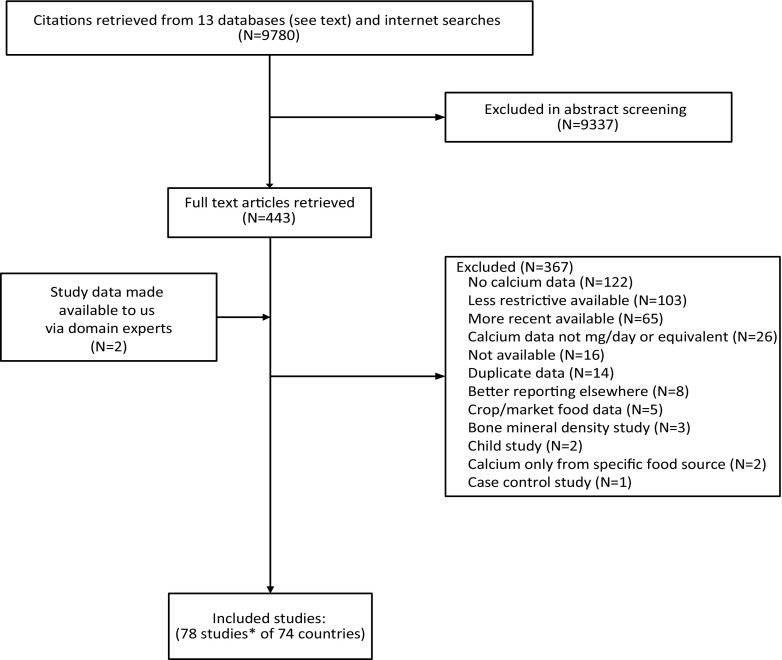
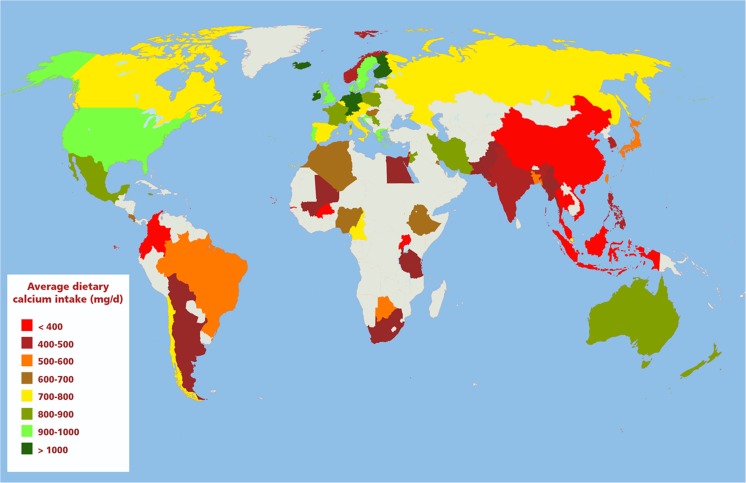
Low calcium intake may adversely affect bone health in adults. Recognizing the presence of low calcium intake is necessary to develop national strategies to optimize intake. To highlight regions where calcium intake should be improved, we systematically searched for the most representative national dietary calcium intake data in adults from the general population in all countries. We searched 13 electronic databases and requested data from domain experts. Studies were double-screened for eligibility. Data were extracted into a standard form. We developed an interactive global map, categorizing countries based on average calcium intake and summarized differences in intake based on sex, age, and socioeconomic status. Searches yielded 9780 abstracts. Across the 74 countries with data, average national dietary calcium intake ranges from 175 to 1233 mg/day. Many countries in Asia have average dietary calcium intake less than 500 mg/day. Countries in Africa and South America mostly have low calcium intake between about 400 and 700 mg/day. Only Northern European countries have national calcium intake greater than 1000 mg/day. Survey data for three quarters of available countries were not nationally representative. Average calcium intake is generally lower in women than men, but there are no clear patterns across countries regarding relative calcium intake by age, sex, or socioeconomic status. The global calcium map reveals that many countries have low average calcium intake. But recent, nationally representative data are mostly lacking. This review draws attention to regions where measures to increase calcium intake are likely to have skeletal benefits.
Keywords: Bone health; Dietary calcium intake; Dietary surveys; Osteoporosis.
Conflict of interest statement
Dr. Balk, Ms. Adam, Ms. Langberg, and Ms. Earley report a grant from International Osteoporosis Foundation during the conduct of the study.
Dr. Clark and Dr. Mithal report no conflict of interest.
Dr. Ebeling reports grants and personal fees from Amgen and Eli-Lilly; grants from Novartis and Merck; and personal fees from Gilead, UCB, and Radius, outside the submitted work.
Dr. Rizzoli reports personal fees from Labatec, Nestlé, and Radius Health, outside the submitted work.
Dr. Zerbini reports grants from Pfizer, Lilly, Merck, Amgen, Sanofi Novartis, and Advisory Board work for Lilly and Pfizer, outside the submitted work.
Dr. Pierroz reports grants from Pfizer Consumer Health, during the conduct of the study.
Dr. Dawson-Hughes reports grants from Pfizer and DSM and personal fees from Amgen, Pfizer, Takeda, and Tricida, outside the submitted work.
Figures
References
-
- Bailey DA, McKay HA, Mirwald RL, Crocker PR, Faulkner RA. A six-year longitudinal study of the relationship of physical activity to bone mineral accrual in growing children: the University of Saskatchewan bone mineral accrual study. J Bone Miner Res. 1999;14:1672–1679. doi: 10.1359/jbmr.1999.14.10.1672. - DOI - PubMed
-
- Heaney RP, Recker RR. Effects of nitrogen, phosphorus, and caffeine on calcium balance in women. J Lab Clin Med. 1982;99:46–55. - PubMed
-
- Morton S, Berg A, Levit L, Eden J. Finding what works in health care: standards for systematic reviews. Washington: National Academies Press; 2011. - PubMed
Publication types
MeSH terms
Substances
LinkOut - more resources
Full Text Sources
Other Literature Sources
Medical
