


MicroRNA Signature of Cigarette Smoking and Evidence for a Putative Causal Role of MicroRNAs in Smoking-Related Inflammation and Target Organ Damage
- PMID: 29030400
- PMCID: PMC5683429
- DOI: 10.1161/CIRCGENETICS.116.001678
MicroRNA Signature of Cigarette Smoking and Evidence for a Putative Causal Role of MicroRNAs in Smoking-Related Inflammation and Target Organ Damage
Abstract
Background: Cigarette smoking increases risk for multiple diseases. MicroRNAs regulate gene expression and may play a role in smoking-induced target organ damage. We sought to describe a microRNA signature of cigarette smoking and relate it to smoking-associated clinical phenotypes, gene expression, and lung inflammatory signaling.
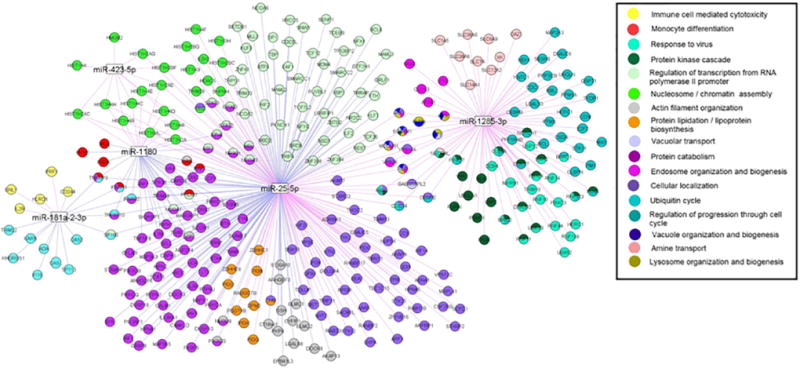
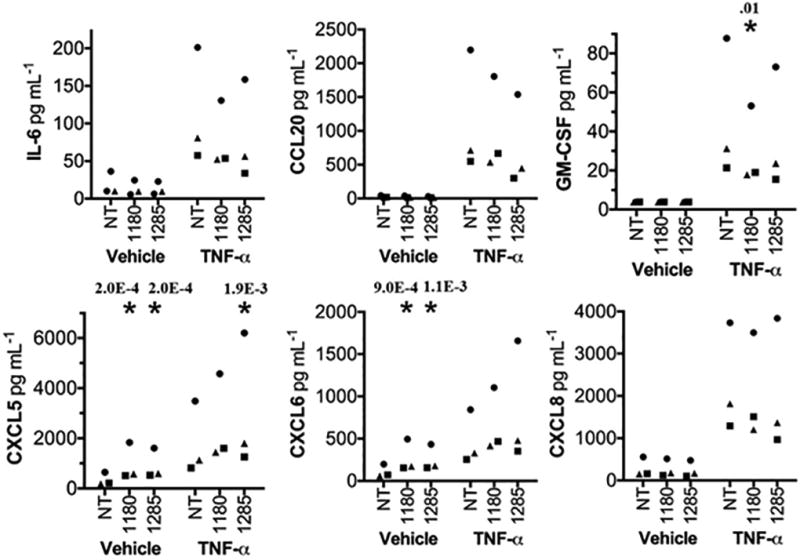
Methods and results: Expression profiling of 283 microRNAs was conducted on whole blood-derived RNA from 5023 Framingham Heart Study participants (54.0% women; mean age, 55±13 years) using TaqMan assays and high-throughput reverse transcription quantitative polymerase chain reaction. Associations of microRNA expression with smoking status and associations of smoking-related microRNAs with inflammatory biomarkers and pulmonary function were tested with linear mixed effects models. We identified a 6-microRNA signature of smoking. Five of the 6 smoking-related microRNAs were associated with serum levels of C-reactive protein or interleukin-6; miR-1180 was associated with pulmonary function measures at a marginally significant level. Bioinformatic evaluation of smoking-associated genes coexpressed with the microRNA signature of cigarette smoking revealed enrichment for immune-related pathways. Smoking-associated microRNAs altered expression of selected inflammatory mediators in cell culture gain-of-function assays.
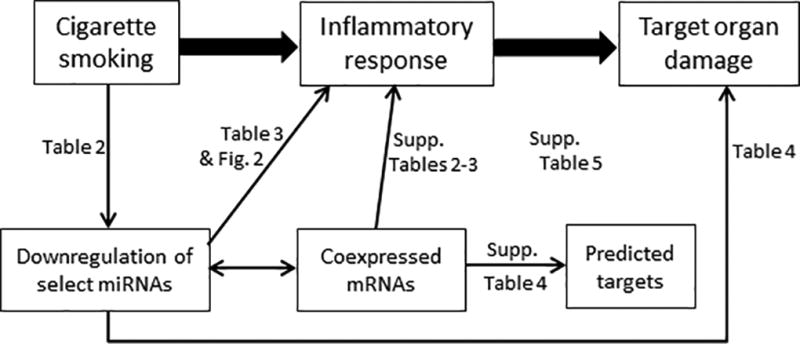
Conclusions: We characterized a novel microRNA signature of cigarette smoking. The top microRNAs were associated with systemic inflammatory markers and reduced pulmonary function, correlated with expression of genes involved in immune function, and were sufficient to modulate inflammatory signaling. Our results highlight smoking-associated microRNAs and are consistent with the hypothesis that smoking-associated microRNAs serve as mediators of smoking-induced inflammation and target organ damage. These findings call for further mechanistic studies to explore the diagnostic and therapeutic use of smoking-related microRNAs.
Keywords: C-reactive protein; inflammation; microRNAs; risk factors; smoking.
© 2017 American Heart Association, Inc.
Figures
Comment in
-
A Smoking-Associated miRNA-mRNA Coexpression Network.Circ Cardiovasc Genet. 2017 Oct;10(5):e001914. doi: 10.1161/CIRCGENETICS.117.001914. Circ Cardiovasc Genet. 2017. PMID: 29030404 Free PMC article. No abstract available.
References
-
- US Department of Health and Human Services. The health consequences of smoking: A report of the surgeon general. Washington: US Department of Health and Human Services, Centers for Disease Control and Prevention, National Center for Chronic Disease Prevention and Health Promotion, Office on Smoking and Health; 2004.
-
- Mackay J. The global epidemiology of tobacco and related chronic diseases. Public Health. 2012;126:199–201. - PubMed
-
- Wahid F, Shehzad A, Khan T, Kim YY. MicroRNAs: synthesis, mechanism, function, and recent clinical trials. Biochim Biophys Acta. 2010;1803:1231–43. - PubMed
MeSH terms
Substances
Grants and funding
LinkOut - more resources
Full Text Sources
Other Literature Sources
Research Materials
Miscellaneous
