


Reduction of in utero lead exposures in South African populations: Positive impact of unleaded petrol
- PMID: 29036215
- PMCID: PMC5643117
- DOI: 10.1371/journal.pone.0186445
Reduction of in utero lead exposures in South African populations: Positive impact of unleaded petrol
Abstract
Background: Prenatal exposure to lead (Pb) has been shown to have negative and irreversible health impacts on foetal and early childhood development, affecting morbidity and mortality in adulthood. This study aimed to assess in utero Pb exposure, examine birth outcomes, and identify confounding factors in the large cohort of South African population, following the legislated removal of Pb from petrol.
Methods: Lead was measured in the maternal blood, urine and cord blood using Inductive Coupled Plasma Mass spectrometry (ICP-MS). The statistical analyses included Spearman's correlation, Wilcoxon rank sum (Mann Whitney), Kruskal-Wallis rank tests and multivariate linear regression.
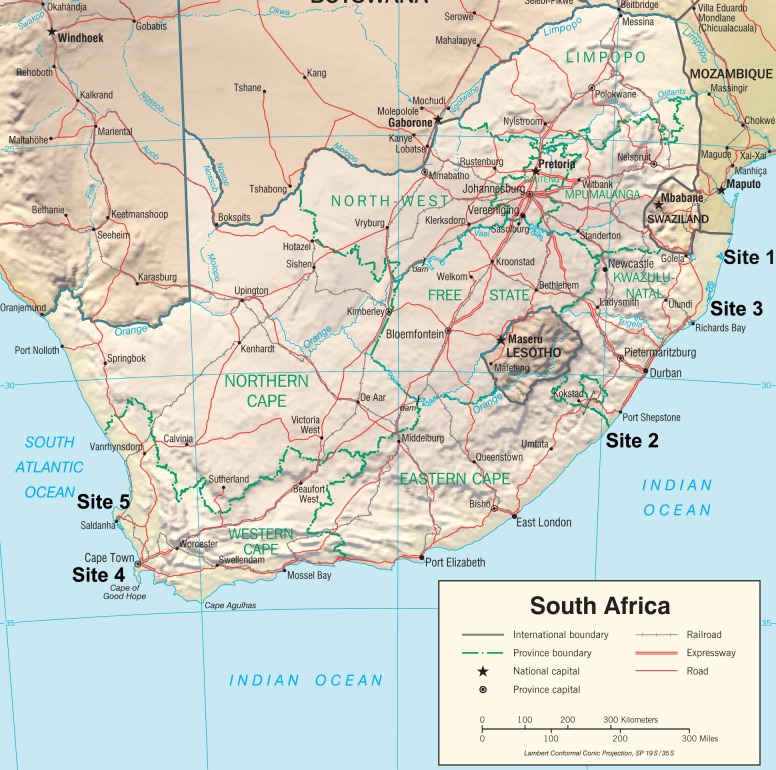
Results: Overall, the geometric mean (GM) of Pb in maternal blood (PbB) was 1.32 μg/dL (n = 640; 95% CI, 1.24-1.40). In the subset cohort, the GM of paired maternal PbB and cord blood (PbC) was 1.73 μg/dL (n = 350; 95% CI, 1.60-1.86) and 1.26 μg/dL (n = 317; 95% CI, 1.18-1.35), respectively with a positive correlation between the log PbB and the log PbC (rho = 0.65, p = <0.001). Birth outcomes showed geographical differences in the gestational age (p<0.001), birth length (p = 0.028) and head circumference (p<0.001), Apgar score at 5 min (p<0.001) and parity (p<0.002). In female neonates, a positive association was found between PbC and head circumference (rho = 0.243; p<0.016). The maternal PbB levels were positively correlated with race, educational status, water sources, cooking fuels and use of pesticides at home.
Conclusions: This study has demonstrated not only the positive impact that the introduction of unleaded petrol and lead-free paint has had on in utero exposure to Pb in South Africa, but has also contributed new data on the topic, in a region where such data and scientific investigations in this field are lacking. Future research should evaluate if similar effects can be detected in young children and the adult population.
Conflict of interest statement
Figures
References
-
- Needleman HL. The current status of childhood lead toxicity. Adv Pediatr. 1993;40: 125–139. - PubMed
-
- U.S. EPA. Air Quality for Lead (Final Report, 1986). 1986; EPA/600/8-83/028AF (NTIS PB87142386).
-
- Needleman H. Lead poisoning. Annu Rev Med. 2004;55: 209–222. doi: 10.1146/annurev.med.55.091902.103653 - DOI - PubMed
-
- Jedrychowski W, Perera F, Jankowski J, Rauh V, Flak E, Caldwell KL, et al. Prenatal low-level lead exposure and developmental delay of infants at age 6 months (Krakow inner city study). Int J Hyg Environ Health. 2008;211: 345–351. doi: 10.1016/j.ijheh.2007.07.023 - DOI - PMC - PubMed
-
- Osman K, Akesson A, Berglund M, Bremme K, Schutz A, Ask K, et al. Toxic and essential elements in placentas of Swedish women. Clin Biochem. 2000;33: 131–138. - PubMed
MeSH terms
Substances
LinkOut - more resources
Full Text Sources
Other Literature Sources
Medical
