


Improvement in Negative Symptoms and Functioning in Cognitive-Behavioral Social Skills Training for Schizophrenia: Mediation by Defeatist Performance Attitudes and Asocial Beliefs
- PMID: 29036391
- PMCID: PMC5890456
- DOI: 10.1093/schbul/sbx099
Improvement in Negative Symptoms and Functioning in Cognitive-Behavioral Social Skills Training for Schizophrenia: Mediation by Defeatist Performance Attitudes and Asocial Beliefs
Abstract
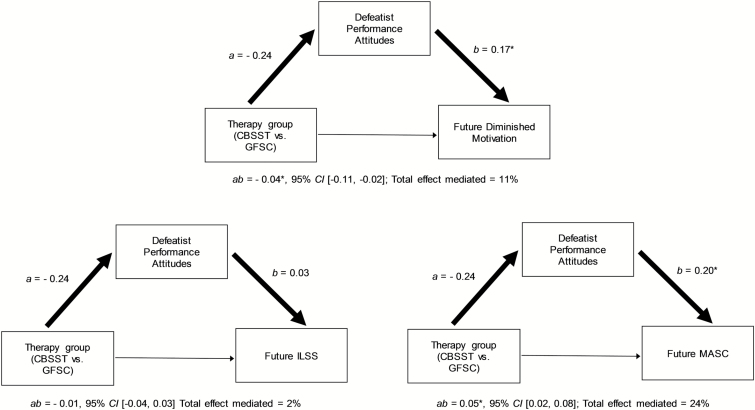
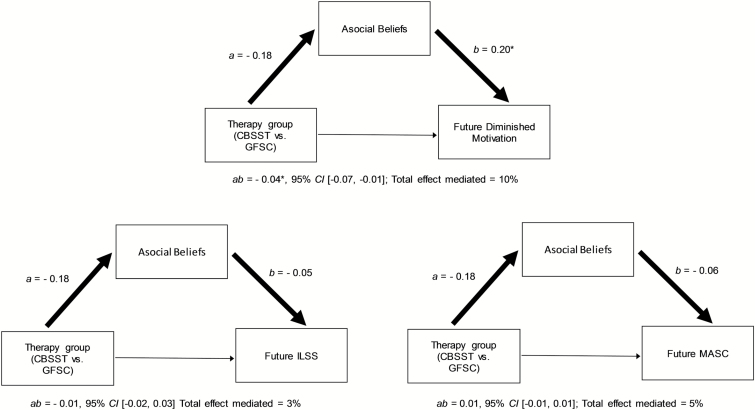
Psychosocial interventions have significant but modest impact on negative symptoms and functioning in schizophrenia. Identifying mechanisms of change in these interventions can inform treatment targets to strengthen these interventions. A number of studies have found associations between dysfunctional attitudes negative symptoms and functioning in schizophrenia. We previously found improvement in experiential negative symptoms and functioning in cognitive-behavioral social skills training (CBSST) in participants with schizophrenia (N = 149), and the present study examined whether improvements in CBSST in that trial were mediated by the group effect on defeatist performance attitudes and asocial beliefs. In multilevel mediation analyses, the effect of treatment group on experiential negative symptoms and functioning was mediated prospectively through defeatist attitudes but asocial beliefs only mediated effects on experiential negative symptoms. The findings suggest that cognitive-behavioral therapy interventions that target dysfunctional attitudes can lead to improvement in negative symptoms and functioning in schizophrenia.
Figures
References
-
- Wu EQ, Birnbaum HG, Shi L et al. The economic burden of schizophrenia in the United States in 2002. J Clin Psychiatry. 2005;66:1122–1129. - PubMed
-
- Marder SR, Kirkpatrick B. Defining and measuring negative symptoms of schizophrenia in clinical trials. Eur Neuropsychopharmacol. 2014;24:737–743. - PubMed
-
- Sayers SL, Curran PJ, Mueser KT. Factor structure and construct validity of the scale for the assessment of negative symptoms. Psychol Assess. 1996;8:269–280.
Publication types
MeSH terms
Grants and funding
LinkOut - more resources
Full Text Sources
Other Literature Sources
Medical
