The effects of downhill and uphill exercise training on osteogenesis-related factors in ovariectomy-induced bone loss
- PMID: 29036760
- PMCID: PMC5643207
- DOI: 10.20463/jenb.2017.0010
The effects of downhill and uphill exercise training on osteogenesis-related factors in ovariectomy-induced bone loss
Abstract
Purpose: Recent evidence suggests that regular exercise training plays a decisive role in maintaining homeostasis and promoting muscle and skeletal formation. However, the effect of downhill exercise training on osteogenesis-related factors is not well understood.
Methods: Thus, we investigated the effect of uphill and downhill training on ovariectomy (OVX)-induced bone loss. After ovary removal, the exercise method performed included uphill (16 m/min, +15°) and downhill training (16 m/min, -15°) for 60 min/day and 5 days/week, respectively, for 8 weeks.
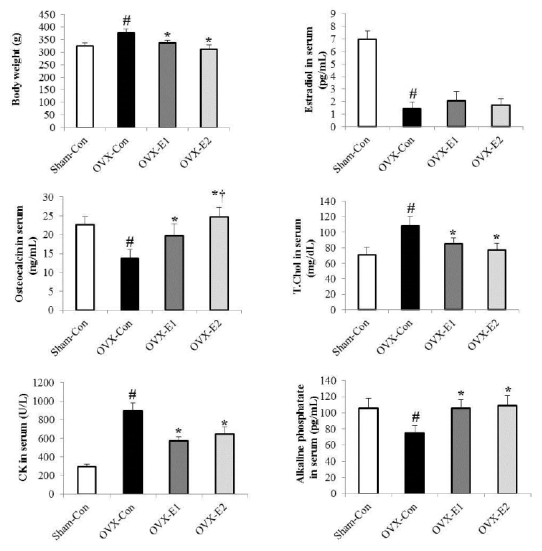
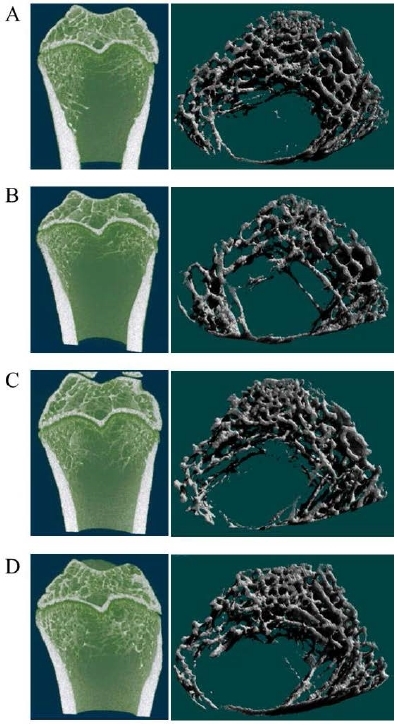
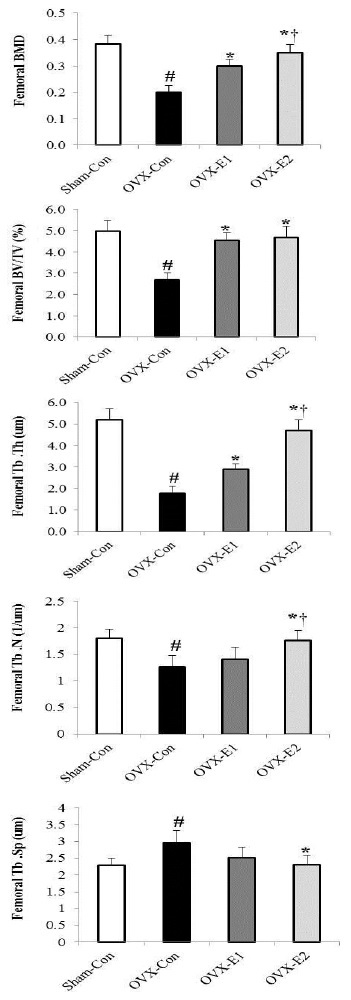
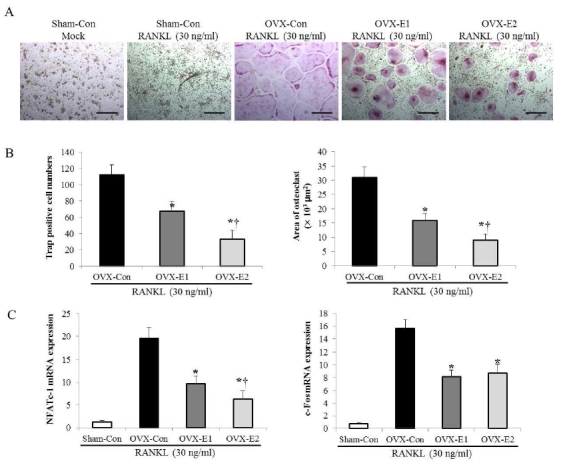
Results: Our results showed that both uphill and downhill training significantly decreased the body weight, total cholesterol, and creatine kinase (CK) levels in the context of OVX-induced bone loss. On the contrary, levels of an osteogenesis indicator, osteocalcin and alkaline phosphatase were elevated. Consequently, the uphill and downhill training reduced OVX- induced bone loss in the distal femoral metaphysis. Likewise, the bone microstructure in OVX-induced bone loss was enhanced upon training. In particular, the inhibition of RANKL-induced osteoclast formation and osteoclast-specific gene expression improved upon downhill training compared to uphill training.
Conclusion: These results suggest that the uphill and downhill exercise types appeared to positively affect the expression of osteogenesis-related factors along with bone density and microstructure. Particularly, the downhill training has more beneficial effects on the maintenance of homeostasis during bone formation.
Keywords: Bone formation; Bone mineral density; Osteogenesis; Ovariectomized rat; Trabecular bone.
©2017 The Korean Society for Exercise Nutrition
Figures
References
-
- Golob AL, Laya MB. Osteoporosis: screening, prevention, and management. Med Clin North Am. 2015;99:587–606. [Golob AL, Laya MB. Osteoporosis: screening, prevention, and management. Med Clin North Am. 2015; 99: 587-606.] - PubMed
-
- Kannus P, Parkkari J, Niemi S, Pasanen M, Palvanen M, Järvinen M, Vuori I. 2000. Prevention of hip fracture in elderly people with use of a hip protector. N Engl J Med. 2000;343:1506–13. [Kannus P, Parkkari J, Niemi S, Pasanen M, Palvanen M, Järvinen M, Vuori I. 2000. Prevention of hip fracture in elderly people with use of a hip protector. N Engl J Med. 2000; 343: 1506-13.] - PubMed
-
- Liu G, Peacock M. Age-related changes in serum undercarboxylated osteocalcin and its relationships with bone density, bone quality, and hip fracture. Calcif Tissue Int. 1998;62:286–289. doi: 10.1007/s002239900432. [Liu G, Peacock M. Age-related changes in serum undercarboxylated osteocalcin and its relationships with bone density, bone quality, and hip fracture. Calcif Tissue Int. 1998; 62: 286-289.] - DOI - PubMed
-
- Currie JL, Harrison MB, Trugman JM, Bennett JP, Wooten GF. Postmenopausal estrogen use affects risk for Parkinson disease. Archives of Neu Rology. 2004;6:886–888. [Currie JL, Harrison MB, Trugman JM, Bennett JP, Wooten GF. Postmenopausal estrogen use affects risk for Parkinson disease. Archives of Neu Rology. 2004; 6: 886-888.] - PubMed
LinkOut - more resources
Full Text Sources
Other Literature Sources
Research Materials