. 2017 Dec;40(6):1731-1740.
doi: 10.3892/ijmm.2017.3170. Epub 2017 Oct 2.

Transcription factors Nrf2 and NF-κB contribute to inflammation and apoptosis induced by intestinal ischemia-reperfusion in mice

Affiliations

Transcription factors Nrf2 and NF-κB contribute to inflammation and apoptosis induced by intestinal ischemia-reperfusion in mice

Qing-Tao Meng et al. Int J Mol Med. 2017 Dec.

Abstract

Intestinal ischemia/reperfusion (IIR) is a common pathological event associated with intestinal injury and apoptosis with high mortality. Nuclear factor (NF)-E2-related factor-2 (Nrf2) is a key transcription factor that interacts with NF-κB and has a vital anti-inflammatory effect. However, whether Nrf2 has a role in IIR-induced apoptosis and the possible underlining mechanisms, such as modulation of the inflammation regulation pathway, have remained to be fully elucidated. In the present study, IIR was identified to cause significant intestinal injury and apoptosis, with high expression levels of inflammatory cytokines, as well as the apoptotic proteins B-cell lymphoma 2 (Bcl-2)-associated X protein (Bax) and caspase-3, while simultaneously decreasing the protein levels of Bcl-2. The effect was more pronounced after pretreatment of the animals with all-trans retinoic acid or brusatol, potent inhibitors of Nrf2. t-Butylhydroquinone, an Nrf2 activator, significantly attenuated IIR-induced intestinal injury and apoptosis, with inhibition of the overexpression of the inflammatory cytokines, Bax and caspase-3 protein and partial restoration of Bcl-2 protein expression. Taken together, these results indicated that increased Nrf2 expression reduced IIR-induced intestinal apoptosis and that the protective function of Nrf2 may be based on its anti-inflammatory effects through the inhibition of the NF-κB pathway.


Figures
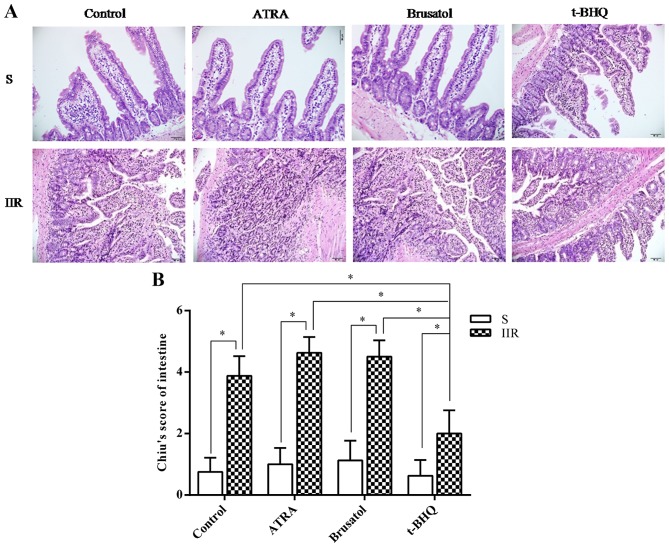
Figure 1
Figure 1
Protective effect of Nrf2 activation on IIR-induced intestinal injury. (A) Histopathological alterations in the intestinal mucosa under a light microscope (magnification, ×200; hematoxylin and eosin staining). Superior mesenteric artery occlusion for 45 min followed by 120 min of reperfusion caused epithelial lifting with a small amount of denuded villi with exposed capillaries, disintegration of the lamina propria, ulceration and hemorrhage. These damage-associated features were markedly deteriorated in animals pretreated with ATRA or brusatol. The damage was markedly ameliorated in animals pretreated with the Nrf2 activator t-BHQ. (B) Summary of Chiu's score in different groups. values are expressed as the mean ± standard deviation (n=8). *P<0.05. S, sham surgery; IIR, intestinal ischemia/reperfusion; ATRA, all-trans retinoic acid; t-BHQ, t-butylhydroquinone; Nrf2, nuclear factor erythroid 2-related factor 2.
Figure 2
Figure 2
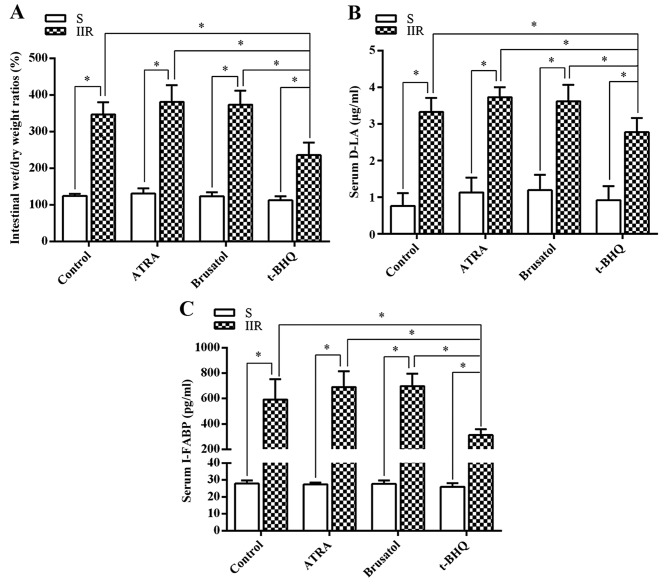
Effect of Nrf2 levels on intestinal permeability and intestinal barrier function. (A) The intestinal water content was determined to reflect gut permeability. The concentrations of (B) D-LA and (C) I-FABP in the serum were detected to determine intestinal epithelial function. values are expressed as the mean ± standard deviation (n=8). *P<0.05. D-LA, D-lactic acid; I-FABP, intestinal-type fatty acid-binding protein; S, sham surgery; IIR, intestinal ischemia/reperfusion; ATRA, all-trans retinoic acid; t-BHQ, t-butylhydroquinone (Nrf2 activator); Nrf2, nuclear factor erythroid 2-related factor 2.
Figure 3
Figure 3
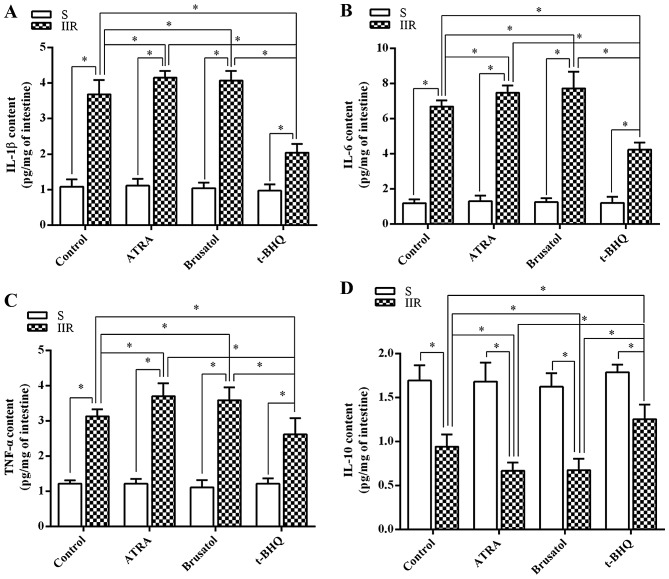
Expression of proinflammatory cytokines (A) IL-1β, (B) IL-6, (C) TNF-α and (D) IL-10 in intestinal tissue. Values are expressed as the mean ± standard deviation (n=8). *P<0.05. IL, interleukin; TNF, tumor necrosis factor; S, sham surgery; IIR, intestinal ischemia/reperfusion; ATRA, all-trans retinoic acid; t-BHQ, t-butylhydroquinone.
Figure 4
Figure 4
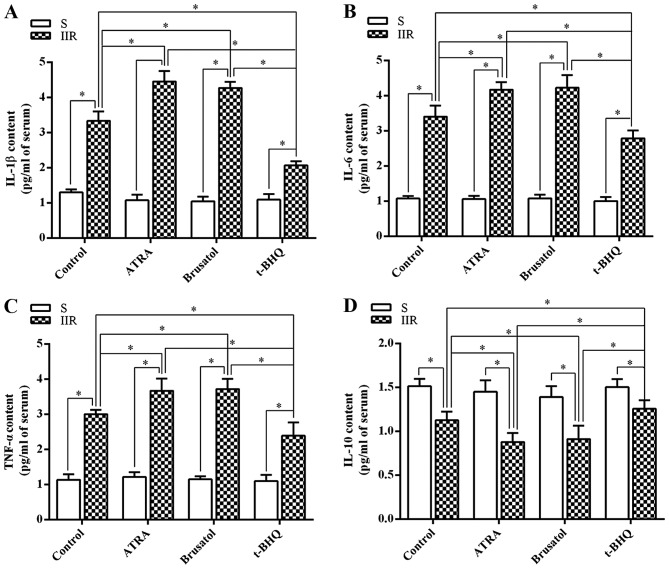
Plasma levels of inflammatory cytokines (A) IL-1β, (B) IL-6, (C) TNF-α and (D) IL-10 in intestinal tissue. Values are expressed as the mean ± standard deviation (n=8). *P<0.05. IL, interleukin; TNF, tumor necrosis factor; S, sham surgery; IIR, intestinal ischemia/reperfusion; ATRA, all-trans retinoic acid; t-BHQ, t-butylhydroquinone.
Figure 5
Figure 5
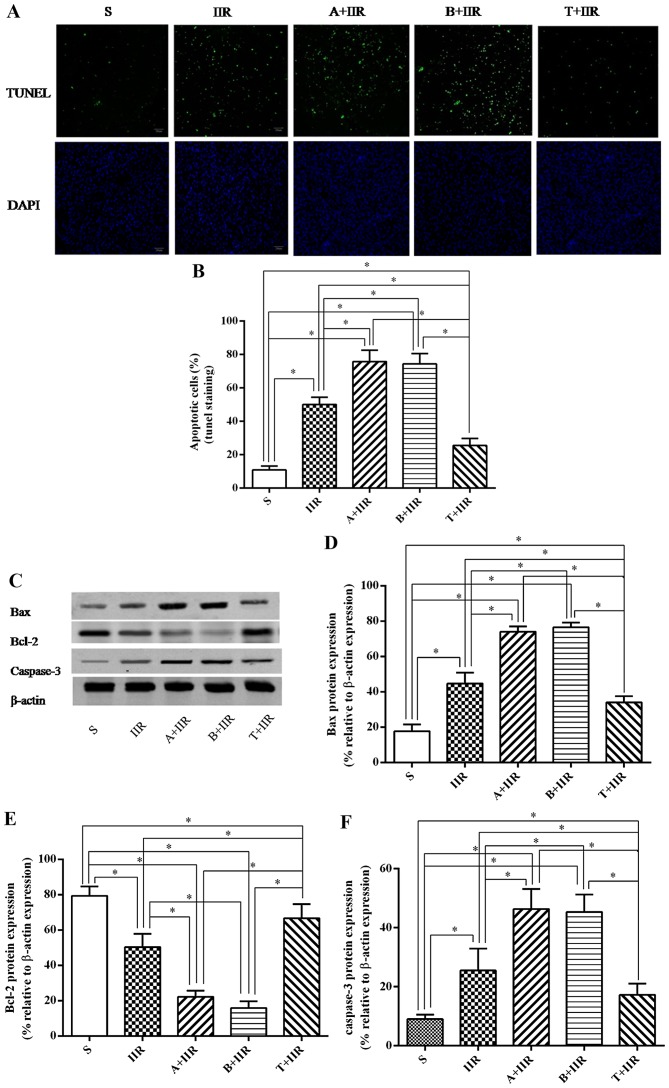
Effect of Nrf2 regulation on IIR-induced apoptosis in intestinal epithelial tissue. (A and B) Apoptosis in the intestine of animals from each group was detected by a TUNEL assay. (A) Representative fluorescence microscopy images (scale bar, 20 µm) and (B) quantified percentages of TUNEL-stained cells in each group. (C–F) The expression of apoptotic proteins was detected by western blot analysis. (C) Representative western blot image and quantified expression levels of (D) Bax, (E) Bcl-2 and (F) cleaved caspase-3. β-actin was used as a loading control. Values are expressed as the mean ± standard deviation (n=8). *P<0.05. S, sham surgery; IIR, intestinal ischemia/reperfusion; A, all-trans retinoic acid; B, brusatol; T, t-butylhydroquinone (Nrf2 activator); Nrf2, nuclear factor erythroid 2-related factor 2; Bcl-2, B-cell lymphoma 2; Bax, Bcl-2-associated X protein; TUNEL, terminal deoxynucleotidyl transferase deoxyuridinetriphosphate nick end labeling.
Figure 6
Figure 6
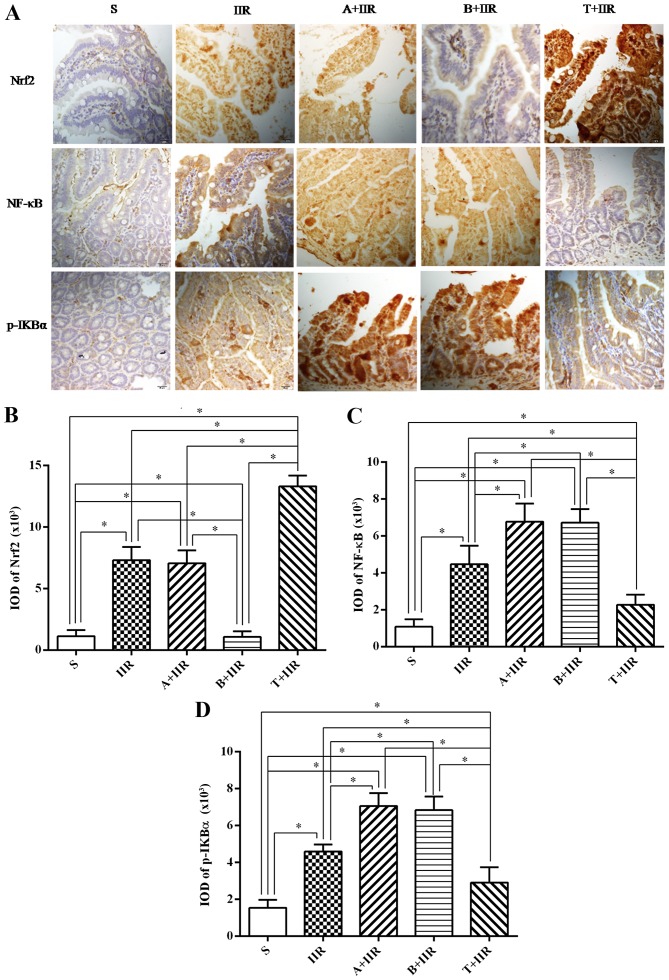
Nrf2 activation is involved in the protection against IIR-induced apoptosis by inhibiting the NF-κB pathway. (A) Representative immunohistochemical images with staining performed using the streptavidin-biotin complex immunohistochemistry technique. Positive staining was indicated by brownish yellow or dark brown cytoplasm or nuclei. A large proportion of the cytoplasm and nuclei of intestinal tissue cells were stained for Nrf2 in the IIR group as well as in the T+IIR group (scale bar, 20 µm). Quantified expression of (B) Nrf2, (C) NF-κB and (D) p-IKBα. Values are expressed as the mean ± standard deviation (n=8). *P<0.05. S, sham surgery; IIR, intestinal ischemia/reperfusion; A, all-trans retinoic acid; B, brusatol; T, t-butylhydroquinone (Nrf2 activator); Nrf2, nuclear factor erythroid 2-related factor 2; NF-κB, nuclear factor-κB; p-IKBα, phosphorylated inhibitor of NF-κB.
Figure 7
Figure 7
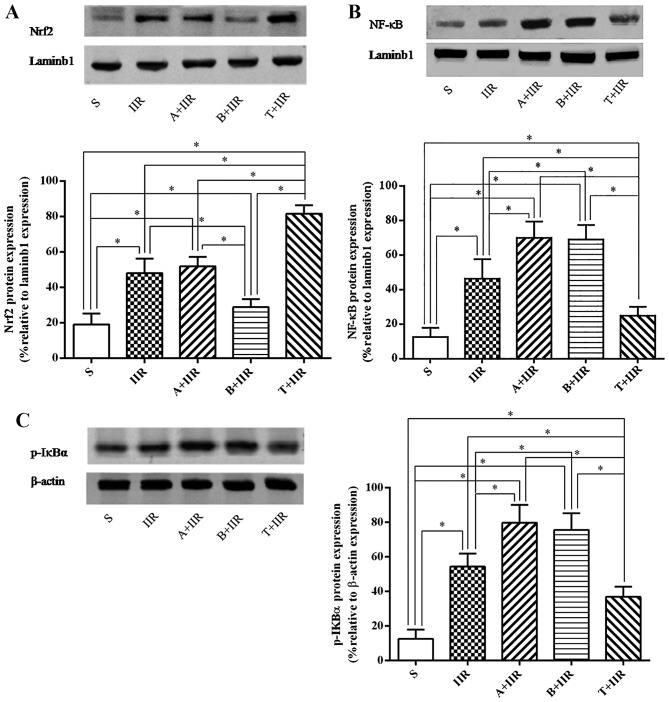
Nrf2 activation is involved in the protection against IIR-induced apoptosis by inhibiting the NF-κB pathway. Western blot analysis was used to assess the expression of (A) Nrf2 and (B) NF-κB in the nuclei with lamin B1 as a loading control, as well as of (C) p-IKBα in the cytoplasm with β-actin used as a loading control. Representative western blot images and quantified expression levels are presented. values are expressed as the mean ± standard deviation (n=8). *P<0.05. S, sham surgery; IIR, intestinal ischemia/reperfusion; A, all-trans retinoic acid; B, brusatol; T, t-butylhydroquinone (Nrf2 activator); Nrf2, nuclear factor erythroid 2-related factor 2; NF-κB, nuclear factor-κB; p-IKBα, phosphorylated inhibitor of NF-κB.

References

    1. Huang CY, Hsiao JK, Lu YZ, Lee TC, Yu LC. Anti-apoptotic PI3K/Akt signaling by sodium/glucose transporter 1 reduces epithelial barrier damage and bacterial translocation in intestinal ischemia. Lab Invest. 2011;91:294–309. doi: 10.1038/labinvest.2010.177. - DOI - PubMed
    1. Gerlach UA, Atanasov G, Wallenta L, Polenz D, Reutzel-Selke A, Kloepfel M, Jurisch A, Marksteiner M, Loddenkemper C, Neuhaus P, et al. Short-term TNF-alpha inhibition reduces short-term and long-term inflammatory changes post-ischemia/reperfusion in rat intestinal transplantation. Transplantation. 2014;97:732–739. doi: 10.1097/TP.0000000000000032. - DOI - PubMed
    1. Kim M, Park SW, Kim M, D'Agati VD, Lee HT. Isoflurane post-conditioning protects against intestinal ischemia-reperfusion injury and multiorgan dysfunction via transforming growth factor-β1 generation. Ann Surg. 2012;255:492–503. doi: 10.1097/SLA.0b013e3182441767. - DOI - PMC - PubMed
    1. Crafts TD, Hunsberger EB, Jensen AR, Rescorla FJ, Yoder MC, Markel TA. Direct peritoneal resuscitation improves survival and decreases inflammation after intestinal ischemia and reperfusion injury. J Surg Res. 2015;199:428–434. doi: 10.1016/j.jss.2015.06.031. - DOI - PubMed
    1. Tian S, Guo R, Wei S, Kong Y, Wei X, Wang W, Shi X, Jiang H. Curcumin protects against the intestinal ischemia-reperfusion injury: Involvement of the tight junction protein ZO-1 and TNF-α related mechanism. Korean J Physiol Pharmacol. 2016;20:147–152. doi: 10.4196/kjpp.2016.20.2.147. - DOI - PMC - PubMed