


Collider scope: when selection bias can substantially influence observed associations
- PMID: 29040562
- PMCID: PMC5837306
- DOI: 10.1093/ije/dyx206
Collider scope: when selection bias can substantially influence observed associations
Abstract
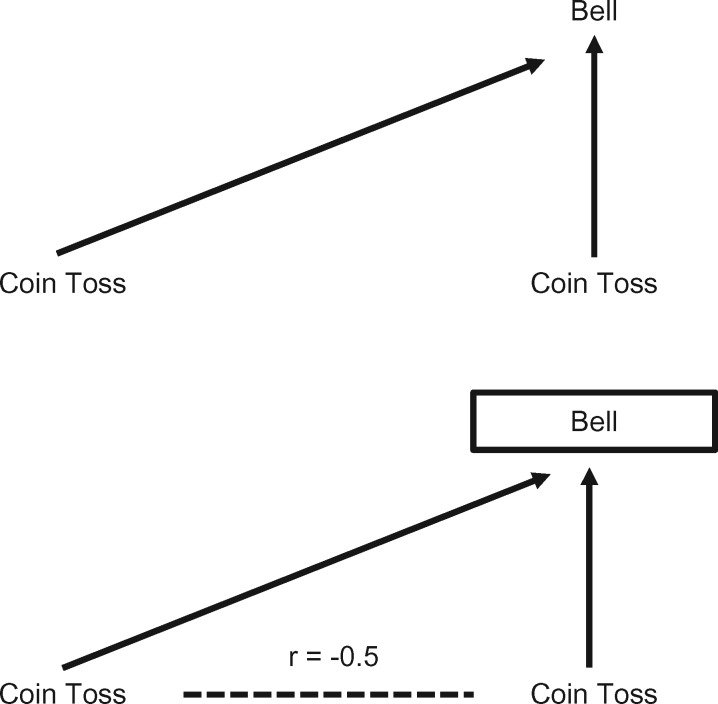
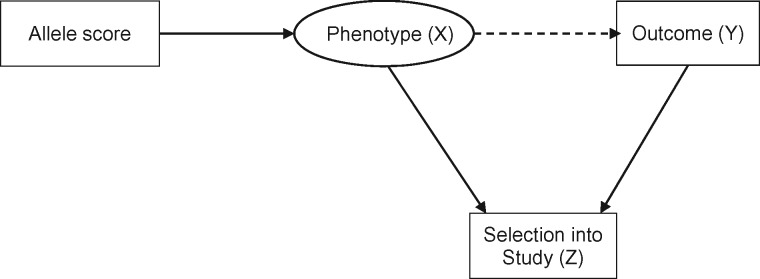
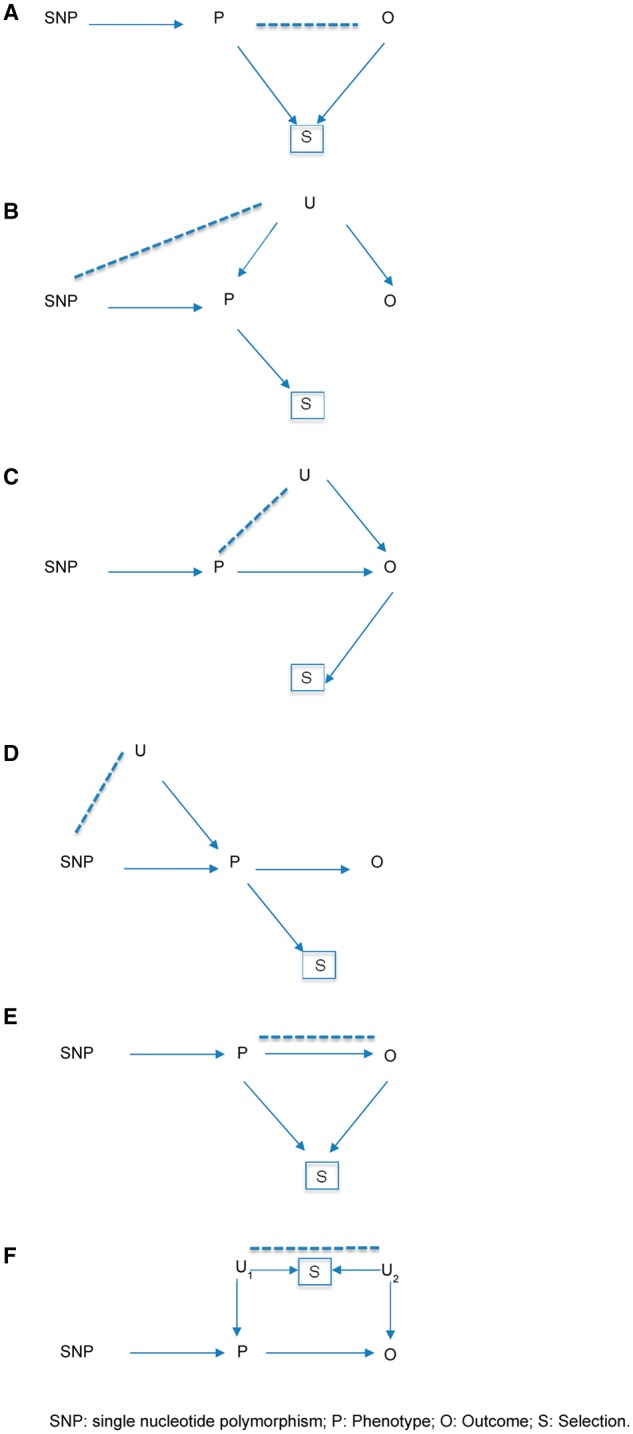
Large-scale cross-sectional and cohort studies have transformed our understanding of the genetic and environmental determinants of health outcomes. However, the representativeness of these samples may be limited-either through selection into studies, or by attrition from studies over time. Here we explore the potential impact of this selection bias on results obtained from these studies, from the perspective that this amounts to conditioning on a collider (i.e. a form of collider bias). Whereas it is acknowledged that selection bias will have a strong effect on representativeness and prevalence estimates, it is often assumed that it should not have a strong impact on estimates of associations. We argue that because selection can induce collider bias (which occurs when two variables independently influence a third variable, and that third variable is conditioned upon), selection can lead to substantially biased estimates of associations. In particular, selection related to phenotypes can bias associations with genetic variants associated with those phenotypes. In simulations, we show that even modest influences on selection into, or attrition from, a study can generate biased and potentially misleading estimates of both phenotypic and genotypic associations. Our results highlight the value of knowing which population your study sample is representative of. If the factors influencing selection and attrition are known, they can be adjusted for. For example, having DNA available on most participants in a birth cohort study offers the possibility of investigating the extent to which polygenic scores predict subsequent participation, which in turn would enable sensitivity analyses of the extent to which bias might distort estimates.
Figures
References
-
- Lee JJ. Correlation and causation in the study of personality. Eur J Pers 2012;26:372–90.
-
- Elwood JM. Commentary: On representativeness. Int J Epidemiol 2013;42:1014–15. - PubMed
Publication types
MeSH terms
Grants and funding
- BHF_/British Heart Foundation/United Kingdom
- MC_UU_00011/7/MRC_/Medical Research Council/United Kingdom
- MC_UU_12013/8/MRC_/Medical Research Council/United Kingdom
- MC_UU_12013/1/MRC_/Medical Research Council/United Kingdom
- MC_UU_12013/4/MRC_/Medical Research Council/United Kingdom
- MC_UU_12013/9/MRC_/Medical Research Council/United Kingdom
- WT_/Wellcome Trust/United Kingdom
- BB/I025263/1/BB_/Biotechnology and Biological Sciences Research Council/United Kingdom
- 102215/2/13/2/WT_/Wellcome Trust/United Kingdom
- CRUK_/Cancer Research UK/United Kingdom
- MC_QA137853/MRC_/Medical Research Council/United Kingdom
- MC_UU_12013/6/MRC_/Medical Research Council/United Kingdom
- BBI025751/1/BB_/Biotechnology and Biological Sciences Research Council/United Kingdom
- MC_PC_15018/MRC_/Medical Research Council/United Kingdom
- G9815508/MRC_/Medical Research Council/United Kingdom
- MC_UU_12013/2/MRC_/Medical Research Council/United Kingdom
LinkOut - more resources
Full Text Sources
Other Literature Sources
Molecular Biology Databases
