


Impact of restricting diagnostic imaging reimbursement for uncomplicated low back pain in Ontario: a population-based interrupted time series analysis
- PMID: 29042408
- PMCID: PMC5741429
- DOI: 10.9778/cmajo.20160151
Impact of restricting diagnostic imaging reimbursement for uncomplicated low back pain in Ontario: a population-based interrupted time series analysis
Abstract
Background: In 2012, the Ontario government withdrew public insurance coverage of imaging tests for uncomplicated low back pain. We studied the impact of this restriction on test ordering by physicians.
Methods: We compared the numbers of lumbar spine radiography, computed tomography (CT) and single-segment magnetic resonance imaging (MRI) studies ordered by physicians in the 3 years before and after the policy change. We linked claims data from the Ontario Health Insurance Program with physician details to calculate rates per test-ordering physician. We compared changes in rates of monthly test ordering by family physicians and specialists before and after the policy change using segmented regression analysis of interrupted time series data.
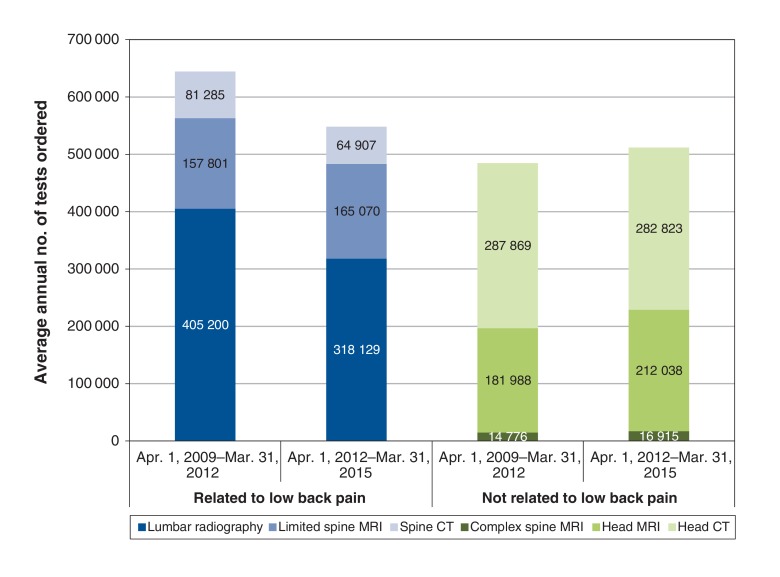
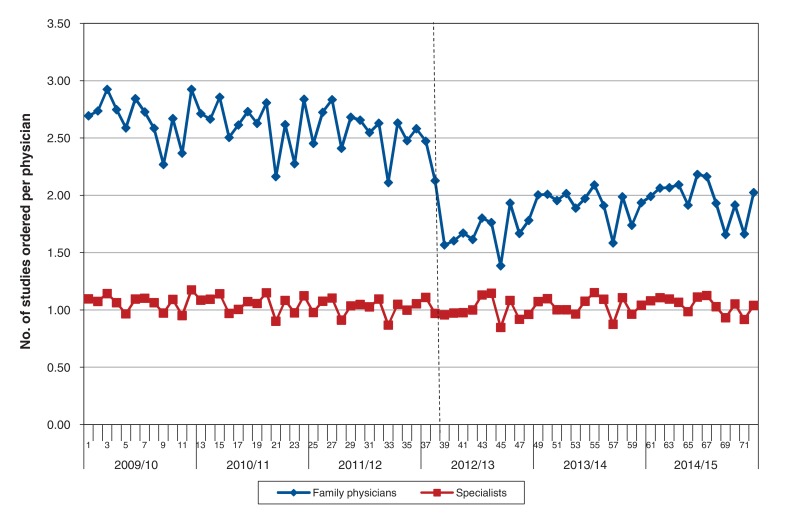
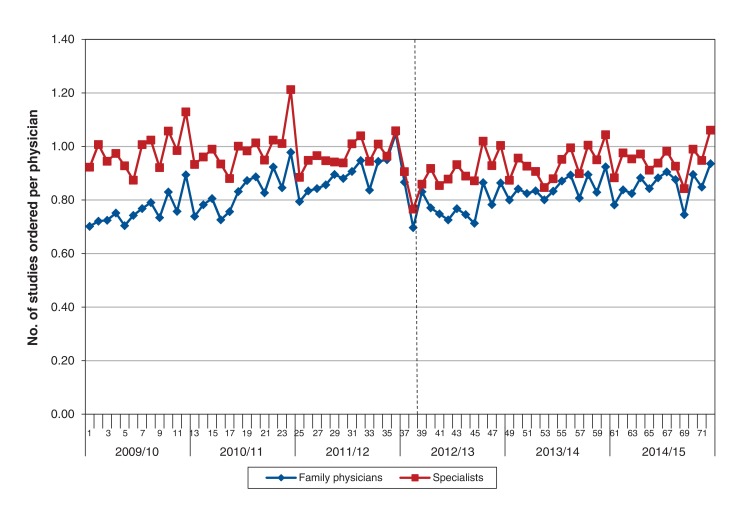
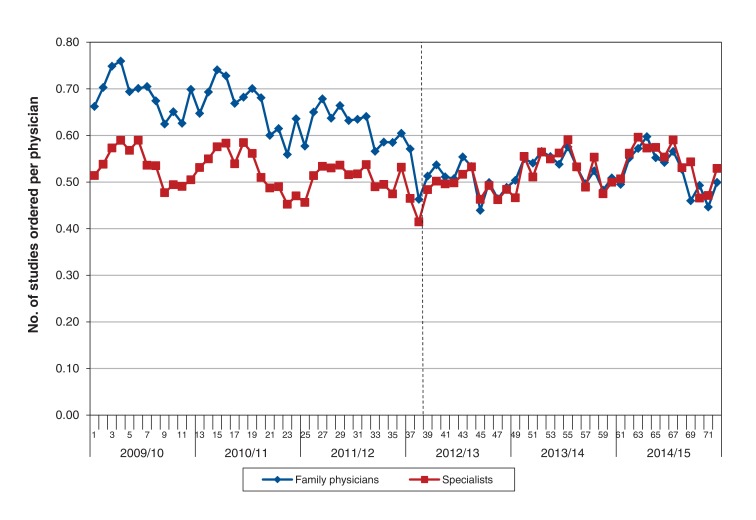
Results: The number of lumbar spine radiography and spine CT studies ordered by family physicians decreased by 98 597 (28.7%) and 17 499 (28.7%), respectively, in the year after the policy change; there was little change in ordering by specialists. The number of lumbar spine radiography studies ordered per family physician by month decreased by 0.81 tests (p < 0.001) after the intervention, followed by a smaller rebound increase that remained below baseline. Monthly ordering of spine CT per family physician declined by 0.1 tests (p < 0.001), and that of limited spine MRI rose before the intervention, decreased by 0.18 tests (p < 0.001) after the intervention, then started to rise again. Monthly ordering of limited spine MRI by specialists, which had been stable before the policy change, decreased by 0.1 tests per specialist (p < 0.001) afterward, then rose to preintervention levels.
Interpretation: The restriction in coverage of imaging tests caused a larger decrease in test ordering by family physicians than by specialists and a larger, more sustained reduction in the use of lumbar spine radiography and spine CT than of spine MRI.
Copyright 2017, Joule Inc. or its licensors.
Conflict of interest statement
Competing interests: None declared.
Figures
References
-
- Chou R, Fu R, Carrino JA, et al. Imaging strategies for low-back pain: systematic review and meta-analysis. Lancet. 2009;373:463–72. - PubMed
-
- Chou D, Samartzis D, Bellabarba C, et al. Degenerative magnetic resonance imaging changes in patients with chronic low back pain: a systematic review. Spine. 2011;36(Suppl):S43–53. - PubMed
-
- Chou R, Deyo RA, Jarvik JG. Appropriate use of lumbar imaging for evaluation of low back pain. Radiol Clin North Am. 2012;50:569–85. - PubMed
-
- Flynn TW, Smith B, Chou R. Appropriate use of diagnostic imaging in low back pain: a reminder that unnecessary imaging may do as much harm as good. J Orthop Sports Phys Ther. 2011;41:838–46. - PubMed
-
- Dagenais S, Tricco AC, Haldeman S. Synthesis of recommendations for the assessment and management of low back pain from recent clinical practice guidelines. Spine J. 2010;10:514–29. - PubMed
LinkOut - more resources
Full Text Sources
Other Literature Sources
Molecular Biology Databases
