


First-visit patients without a referral to the Department of Internal Medicine at a medium-sized acute care hospital in Japan: an observational study
- PMID: 29042808
- PMCID: PMC5633273
- DOI: 10.2147/IJGM.S146830
First-visit patients without a referral to the Department of Internal Medicine at a medium-sized acute care hospital in Japan: an observational study
Abstract
Purpose: We sought to profile first-time patients without a referral who sought medical care at the Department of Internal Medicine at a medium-sized acute care hospital in Japan. We anticipated that the analysis would highlight the demand for medical care needs from acute care hospitals and help confirm one of the problems associated with primary care in Japan.
Patients and methods: The study population comprised 765 patients who sought outpatient consultation without a referral at "the Department of General Internal Medicine" at the Ikeda City Hospital on Fridays over 4 years. Data on the following variables were collected: age, sex, examination date, reason for encounter (RFE), diagnosis, as well as history of consultation with or without antibiotic treatment at another medical institution for the same RFE. We used the International Classicication of Primary Care, Revised Second edition (ICPC-2-R) codes for RFEs and diagnoses.
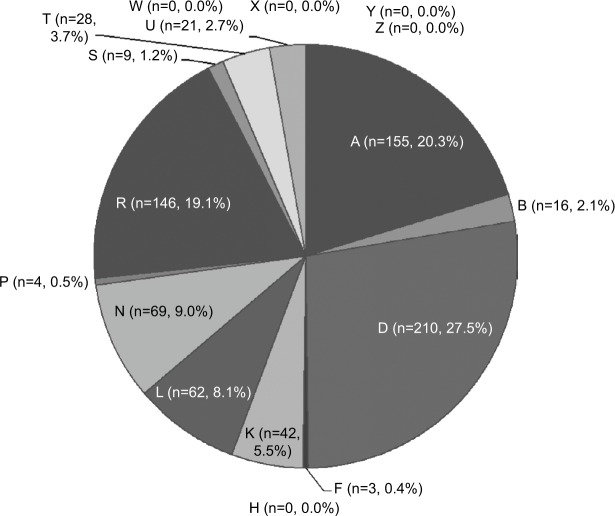
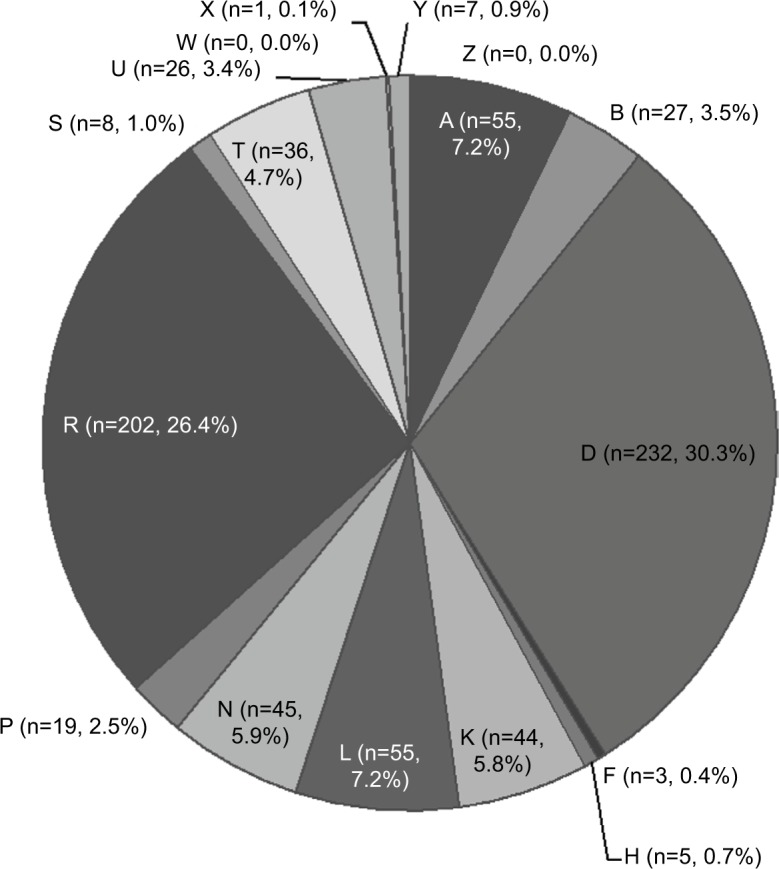
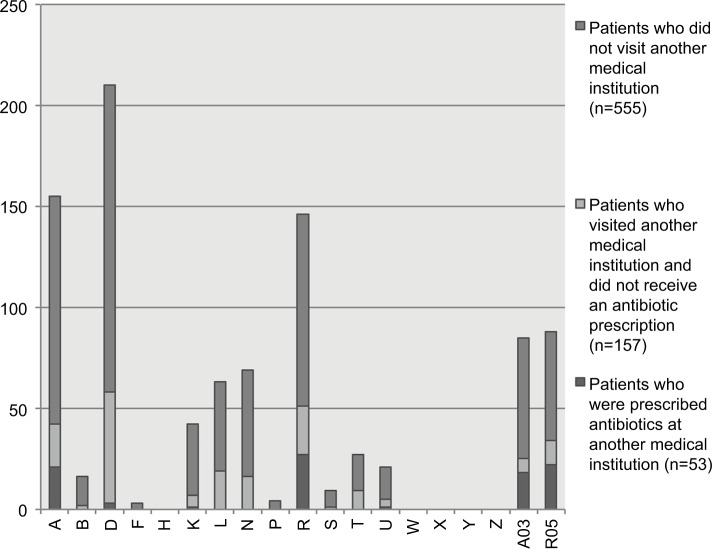
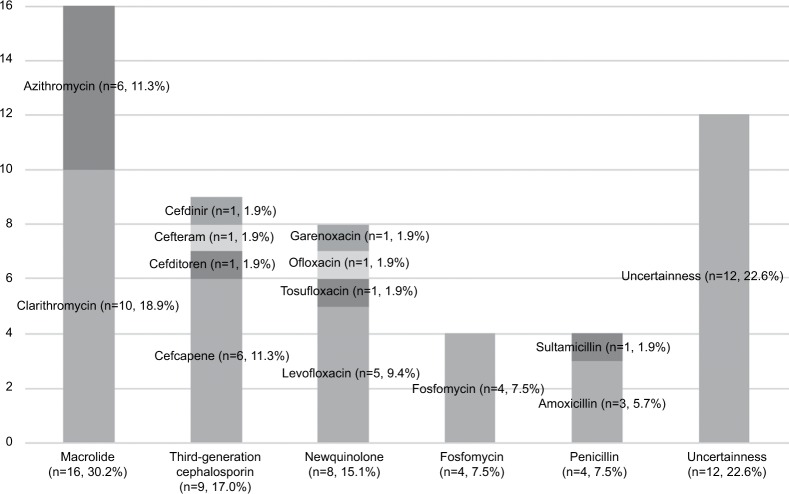
Results: The main RFE fields were digestive (ICPC-2-R Chapter D), general and unspecified (A), and respiratory (R). The main diagnosis fields were digestive (D), respiratory (R), general and unspecified (A), and musculoskeletal (L). In total, 27.6% of patients had sought consultation at another medical institution for the same RFE. Of these, 64.7% of patients for whom the RFE was cough (ICPC-2-R code, R05), and 72.0% for whom the RFE was fever (A03) were prescribed antibiotics. In total, 62.4% of patients underwent emergency investigations and waited for the results; 4.3% were hospitalized on the same day; and 60.5% were medicated at the initial examination. In 11.5%, the main underlying problem appeared to be psychosomatic.
Conclusion: We used the ICPC-2-R to analyze the state of first-visit patients without a referral visiting the Department of Internal Medicine at a medium-sized acute care hospital in Japan. Common RFEs were abdominal pain, cough, and fever. A tendency toward overprescription of antibiotics was observed among primary care physicians.
Keywords: International Classification of Primary Care; antibiotic overuse; general internal medicine; general practice; medium-sized hospital; reason for encounter.
Conflict of interest statement
Disclosure The authors report no conflicts of interest in this work.
Figures
References
-
- Ikeda N, Saito E, Kondo N, et al. What has made the population of Japan healthy? Lancet. 2011;378(9796):1094–1105. - PubMed
-
- Hashimoto H, Ikegami N, Shibuya K, et al. Cost containment and quality of care in Japan: is there a trade-off? Lancet. 2011;378(9797):1174–1182. - PubMed
-
- Britnell Mark. Fragmentation. In: Britnell Mark., editor. Search of The Perfect Health System. London: Palgrave Macmillan; 2015. pp. 16–17.
-
- Ministry of Health, Labour and Welfare [homepage on the Inter-net] Fee for Treatment of Patients’ Choice. Tokyo, Japan: [Accessed November 13, 2016]. Available from: http://www.mhlw.go.jp/file/06-Seisakujouhou-10800000-Isei-kyoku/00000568....
-
- WONCA International Classification Committee (WICC) ICPC-2-R: International Classification of Primary Care Revised Second Edition. Oxford: Oxford Medical Publications; 2005.
LinkOut - more resources
Full Text Sources
Other Literature Sources
