


A pilot open series of lamotrigine in DBT-treated eating disorders characterized by significant affective dysregulation and poor impulse control
- PMID: 29043085
- PMCID: PMC5632524
- DOI: 10.1186/s40479-017-0072-6
A pilot open series of lamotrigine in DBT-treated eating disorders characterized by significant affective dysregulation and poor impulse control
Abstract
Background: There is little effective psychopharmacological treatment for individuals with eating disorders who struggle with pervasive, severe affective and behavioral dysregulation.
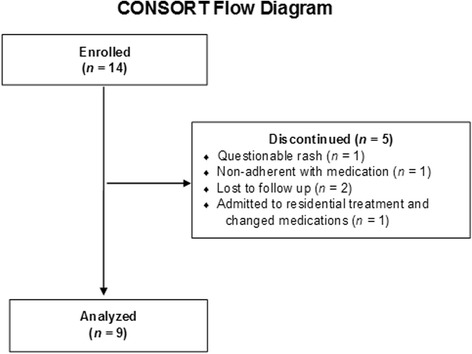
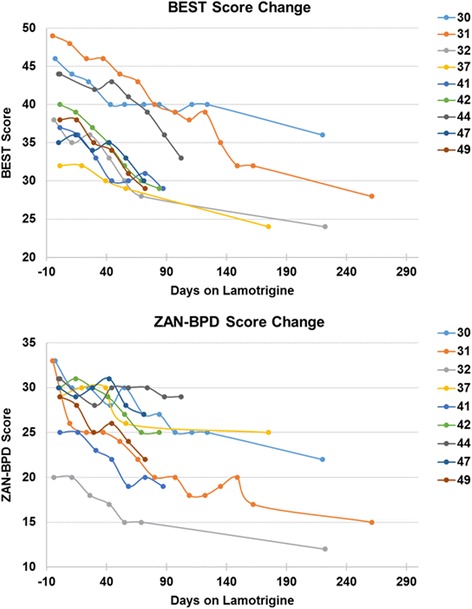
Methods: This pilot open series evaluated lamotrigine, a mood stabilizer, in the treatment of patients with eating disorders who did not respond adequately to antidepressant medications. Nine women with anorexia nervosa- or bulimia nervosa-spectrum eating disorders in partial hospital or intensive outpatient dialectical behavior therapy (DBT)-based eating disorder treatment took lamotrigine for 147 ± 79 days (mean final dose = 161.1 ± 48.6 mg/day). Participants completed standardized self-report measures of emotion dysregulation and impulsivity after lamotrigine initiation and approximately biweekly thereafter. Mood and eating disorder symptomatology were measured at lamotrigine initiation and at time of final assessment.
Results: Lamotrigine and concurrent DBT were associated with large reductions in self-reported affective and behavioral dysregulation (ps < 0.01). Eating disorder and mood symptoms decreased moderately.
Conclusions: Although our findings are limited by the confounds inherent in an open series, lamotrigine showed initial promise in reducing emotional instability and behavioral impulsivity in severely dysregulated eating-disordered patients. These preliminary results support further investigation of lamotrigine for eating disorders in rigorous controlled trials.
Keywords: Anticonvulsants; Binge eating; Emotion dysregulation; Lamotrigine; Purging.
Conflict of interest statement
Ethics approval and consent to participate
The Human Research Protections Program at the University of California, San Diego approved of the collection of data for this study. All participants provided written informed consent before completing assessments and consented to treatment including psychotropic medication.
Consent for publication
Not applicable.
Competing interests
The authors declare that they have no competing interests.
Publisher’s Note
Springer Nature remains neutral with regard to jurisdictional claims in published maps and institutional affiliations.
Figures
References
-
- American Psychiatric Association. Diagnostic and Statistical Manual of Mental Disorders - Fourth Edition - Text Revision (DSM-IV-TR). 2000.
-
- Wonderlich SA, Mitchell JE. Eating disorders and comorbidity: empirical, conceptual, and clinical implications. Psychopharmacol Bull. 1997;33(3):381–390. - PubMed
Grants and funding
LinkOut - more resources
Full Text Sources
Other Literature Sources
