


Selective inhibition of M5 muscarinic acetylcholine receptors attenuates cocaine self-administration in rats
- PMID: 29044937
- PMCID: PMC5906200
- DOI: 10.1111/adb.12567
Selective inhibition of M5 muscarinic acetylcholine receptors attenuates cocaine self-administration in rats
Abstract
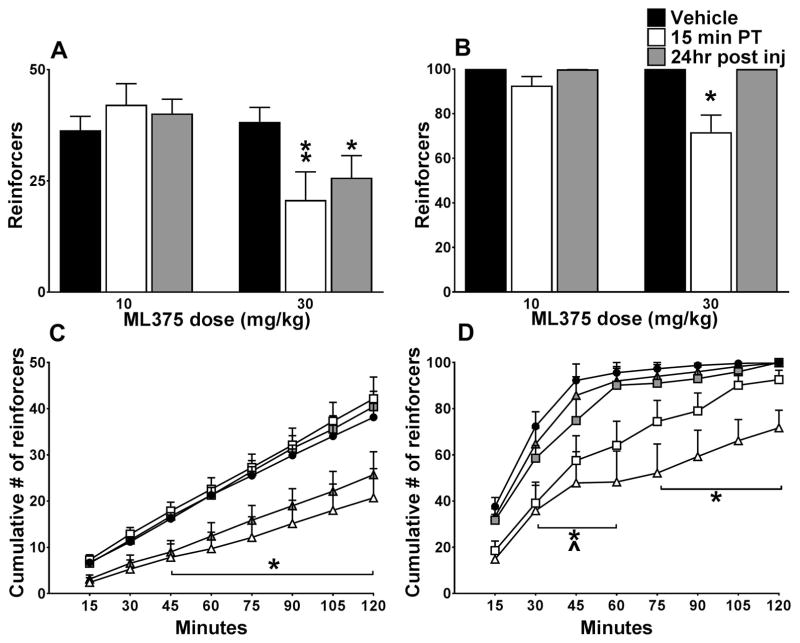
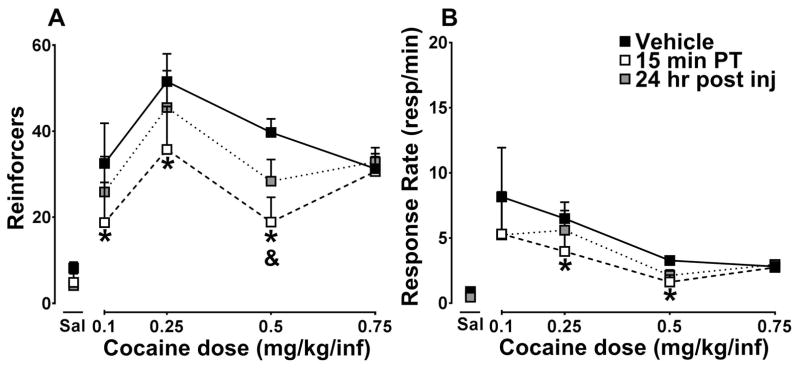
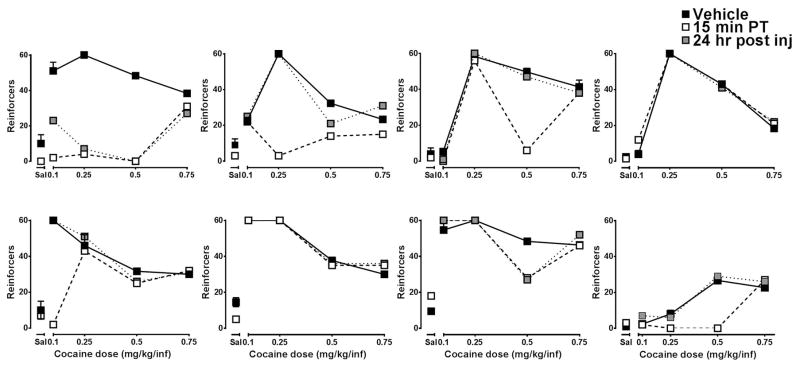
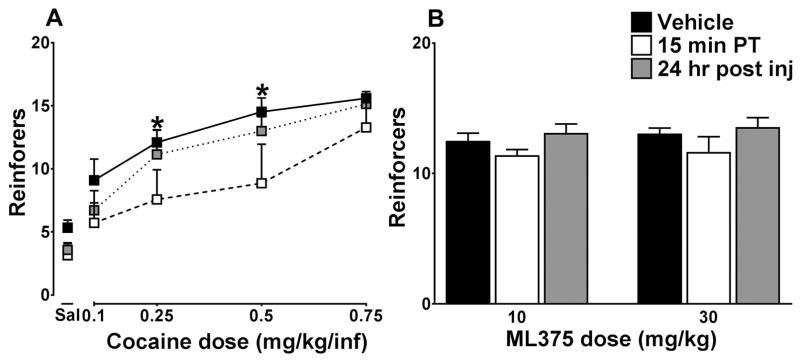
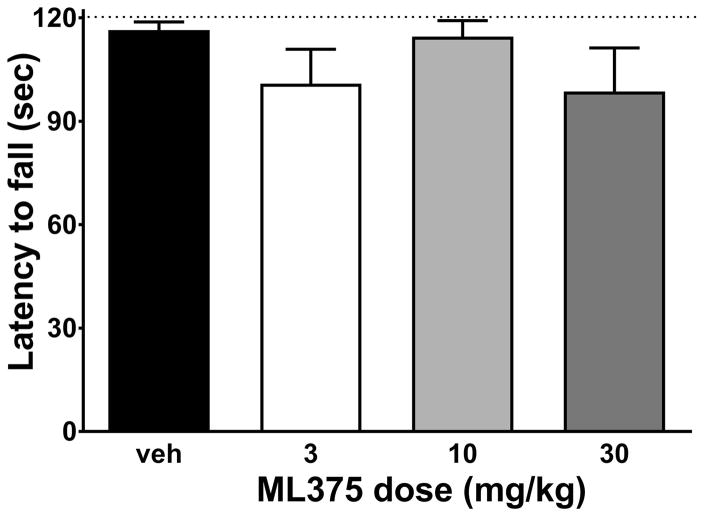
Cocaine use disorder (CUD) remains a debilitating health problem in the United States for which there are no Food and Drug Administration-approved treatment options. Accumulating anatomical and electrophysiological evidence indicates that the muscarinic acetylcholine receptor (mAChR) subtype 5 (M5 ) plays a critical role in the regulation of the mesolimbic dopaminergic reward circuitry, a major site of action for cocaine and other psychostimulants. In addition, M5 knockout mice exhibit reduced cocaine self-administration behaviors with no differences in sugar pellet-maintained responding relative to wild-type mice. These findings suggest that selective inhibition of M5 mAChR may provide a novel pharmacological approach for targeting CUD. Recently, we reported the synthesis and characterization of ML375, a selective negative allosteric modulator (NAM) for the rat and human M5 mAChR with optimized pharmacokinetic properties for systemic dosing in rodents. In the present study, male Sprague-Dawley rats were trained to self-administer intravenous cocaine (0.1-0.75 mg/kg/infusion) under a 10-response fixed ratio or a progressive ratio schedule of reinforcement. Under both schedules of reinforcement, ML375 produced dose-related reductions in cocaine self-administration. ML375 also modestly reduced sugar pellet-maintained responding on the 10-response, fixed ratio schedule but had no effect under a progressive ratio schedule of reinforcement. Further, ML375 did not affect general motor output as assessed by a rotarod test. Collectively, these results provide the first demonstration that selective inhibition of M5 using the M5 NAM ML375 can attenuate both the reinforcing effects and the relative strength of cocaine and suggest that M5 NAMs may represent a promising, novel treatment approach for CUD.
Keywords: cocaine self-administration; muscarinic receptor; negative allosteric modulation.
© 2017 Society for the Study of Addiction.
Figures
References
-
- Arnold JM, Roberts D. A Critique of Fixed and Progressive Ratio Schedules Used to Examine the Neural Substrates of Drug Reinforcement. Pharmacology Biochemistry and Behavior. 1997;57(3):441–447. - PubMed
-
- Bari AA, Pierce RC. D1-like and D2 dopamine receptor antagonists administered into the shell subregion of the rat nucleus accumbens decrease cocaine, but not food, reinforcement. Neuroscience. 2005;135(3):959–68. - PubMed
-
- Blaha CD, Allen LF, Das S, Inglis WL, Latimer MP, Vincent SR, Winn P. Modulation of dopamine efflux in the nucleus accumbens after cholinergic stimulation of the ventral tegmental area in intact, pedunculopontine tegmental nucleus-lesioned, and laterodorsal tegmental nucleus-lesioned rats. J Neurosci. 1996;16:714–722. - PMC - PubMed
Publication types
MeSH terms
Substances
Grants and funding
LinkOut - more resources
Full Text Sources
Other Literature Sources
Medical
