. 2017 Oct 18;12(10):e0182736.
doi: 10.1371/journal.pone.0182736. eCollection 2017.

Older adults' acceptance of a robot for partner dance-based exercise

Affiliations

Older adults' acceptance of a robot for partner dance-based exercise

Tiffany L Chen et al. PLoS One. .

Abstract

Partner dance has been shown to be beneficial for the health of older adults. Robots could potentially facilitate healthy aging by engaging older adults in partner dance-based exercise. However, partner dance involves physical contact between the dancers, and older adults would need to be accepting of partner dancing with a robot. Using methods from the technology acceptance literature, we conducted a study with 16 healthy older adults to investigate their acceptance of robots for partner dance-based exercise. Participants successfully led a human-scale wheeled robot with arms (i.e., a mobile manipulator) in a simple, which we refer to as the Partnered Stepping Task (PST). Participants led the robot by maintaining physical contact and applying forces to the robot's end effectors. According to questionnaires, participants were generally accepting of the robot for partner dance-based exercise, tending to perceive it as useful, easy to use, and enjoyable. Participants tended to perceive the robot as easier to use after performing the PST with it. Through a qualitative data analysis of structured interview data, we also identified facilitators and barriers to acceptance of robots for partner dance-based exercise. Throughout the study, our robot used admittance control to successfully dance with older adults, demonstrating the feasibility of this method. Overall, our results suggest that robots could successfully engage older adults in partner dance-based exercise.


Conflict of interest statement

Competing Interests: Charles C. Kemp is a co-founder, a board member, an equity holder, and the CTO of Hello Robot, Inc., which is developing products related to this research. This research could affect his personal financial status. The terms of this arrangement have been reviewed and approved by Georgia Tech in accordance with its conflict of interest policies. Hello Robot, Inc. did not have any additional role in the study design, data collection and analysis, decision to publish, or preparation of the manuscript.

Figures

Fig 1
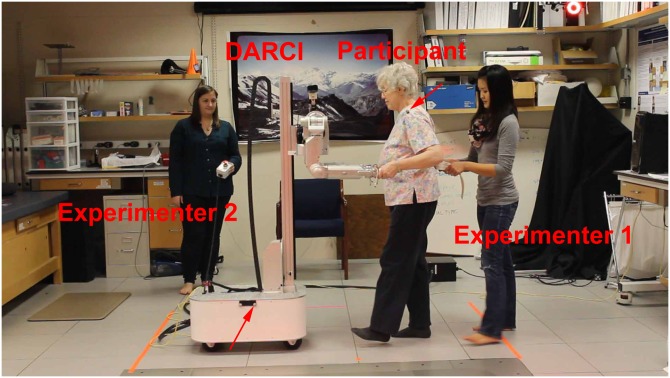
Fig 1. Experimental setup.
Red arrows denote locations of tracking markers used in biomechanical analysis. Experimenter 1 holds gait belt placed on participant. Experimenter 2 holds run-stop button.
Fig 2
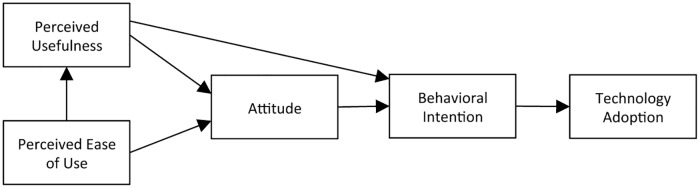
Fig 2. The technology acceptance model (TAM) [7].
Fig 3
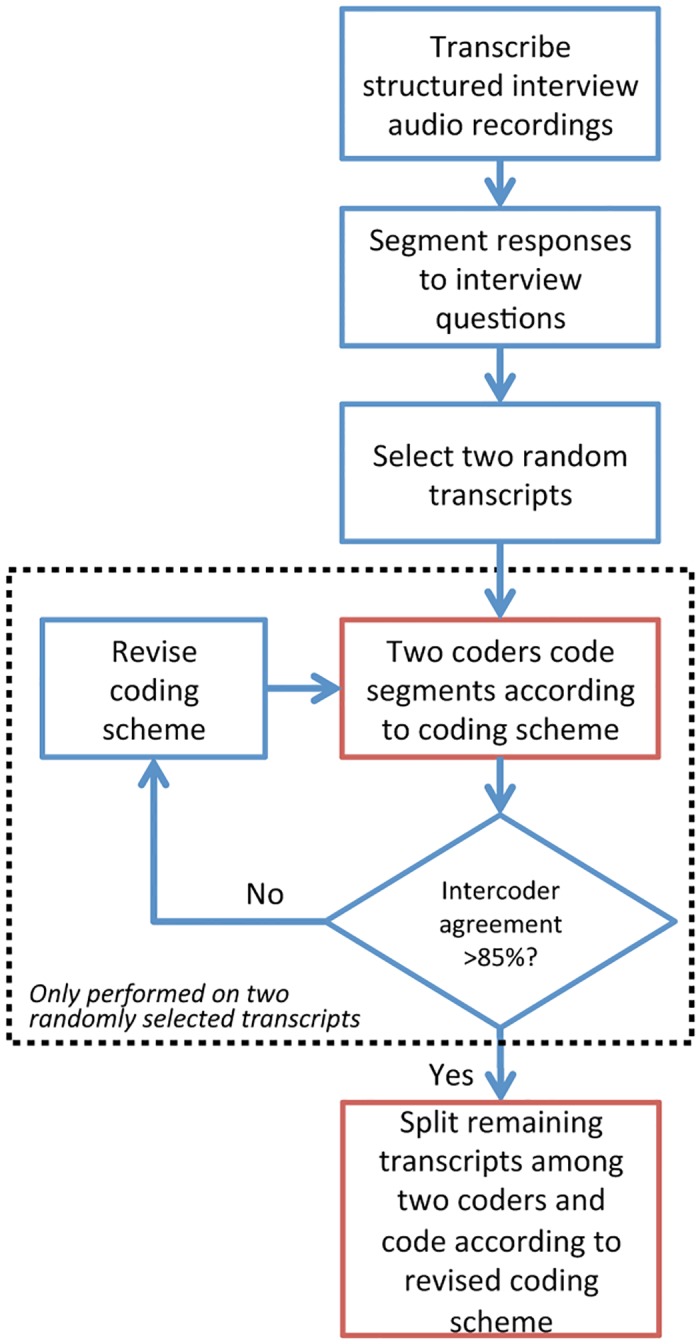
Fig 3. Coding process for qualitative data analysis.
Fig 4
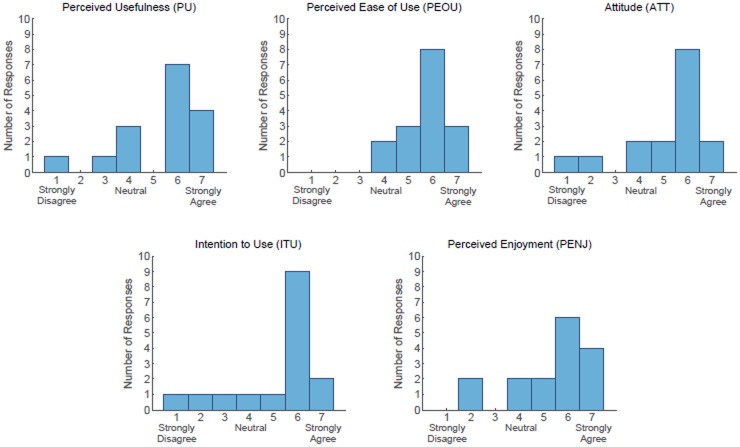
Fig 4. Histograms of responses to Robot Opinions Questionnaire (Post, overall scale) asked during interview.
Fig 5
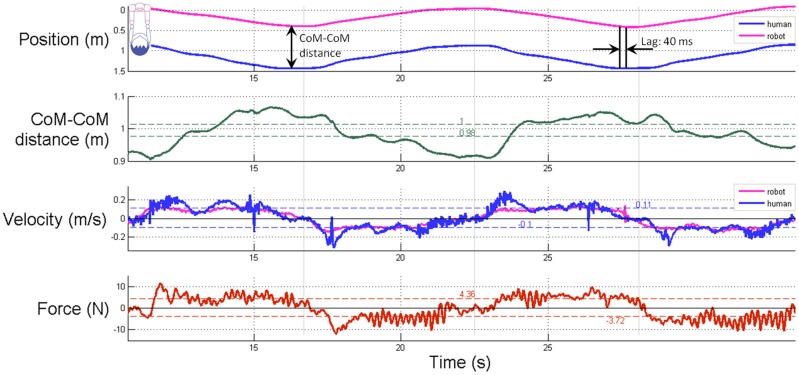
Fig 5. Biomechanics of human-robot partnered stepping.
Example data from two cycles of one trial from one participant. We compute the lag time (lag) by cross correlating the robot’s position as a function of time and the human’s position as function of time, where position is a scalar.

References

    1. Kattenstroth JC, Kalisch T, Holt S, Tegenthoff M, Dinse HR. Six months of dance intervention enhances postural, sensorimotor, and cognitive performance in elderly without affecting cardio-respiratory functions. Frontiers in Aging Neuroscience. 2013;5 10.3389/fnagi.2013.00005 - DOI - PMC - PubMed
    1. Kudlacek S, Pietschmann F, Bernecker P, Resch H, Willvonseder R. The Impact of A Senior Dancing Program on Spinal and Peripheral Bone Mass. American journal of physical medicine & rehabilitation. 1997;76(6):477–481. 10.1097/00002060-199711000-00009 - DOI - PubMed
    1. Pratt RR, et al. Art, dance, and music therapy. Physical medicine and rehabilitation clinics of North America. 2004;15:827–842. 10.1016/j.pmr.2004.03.004 - DOI - PubMed
    1. Borges EGdS, Cader SA, Vale RGdS, Cruz THP, Carvalho MCdGdA, Pinto FM, et al. The effect of ballroom dance on balance and functional autonomy among the isolated elderly. Archives of Gerontology and Geriatrics. 2012; 10.1016/j.archger.2011.09.004 - DOI - PubMed
    1. Hackney M, Kantorovich S, Earhart GM. A Study on the Effects of Argentine Tango as a Form of Partnered Dance for those with Parkinson Disease and the Healthy Elderly. American Journal of Dance Therapy. 2007;29(2):109–127. 10.1007/s10465-007-9039-2 - DOI