


Phylogenetic and functional signals in gymnosperm ovular secretions
- PMID: 29045531
- PMCID: PMC5710648
- DOI: 10.1093/aob/mcx103
Phylogenetic and functional signals in gymnosperm ovular secretions
Abstract
Background and aims: Gymnosperms are either wind-pollinated (anemophilous) or both wind- and insect-pollinated (ambophilous). Regardless of pollination mode, ovular secretions play a key role in pollen capture, germination and growth; they are likely also involved in pollinator reward. Little is known about the broad-scale diversity of ovular secretions across gymnosperms, and how these may relate to various reproductive functions. This study analyses the sugar and amino acid profiles of ovular secretions across a range of ambophilous (cycads and Gnetales) and anemophilous gymnosperms (conifers) to place them in an evolutionary context of their possible functions during reproduction.
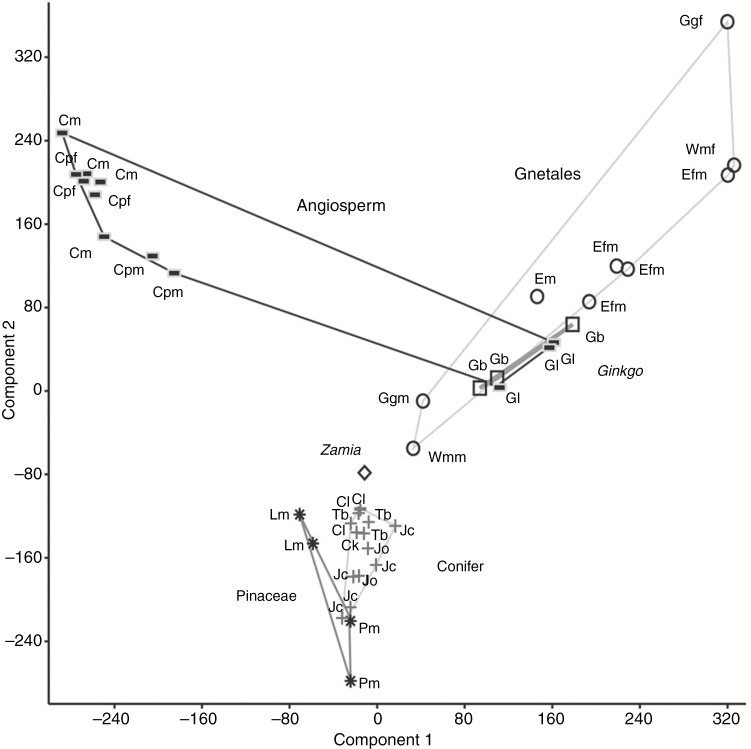
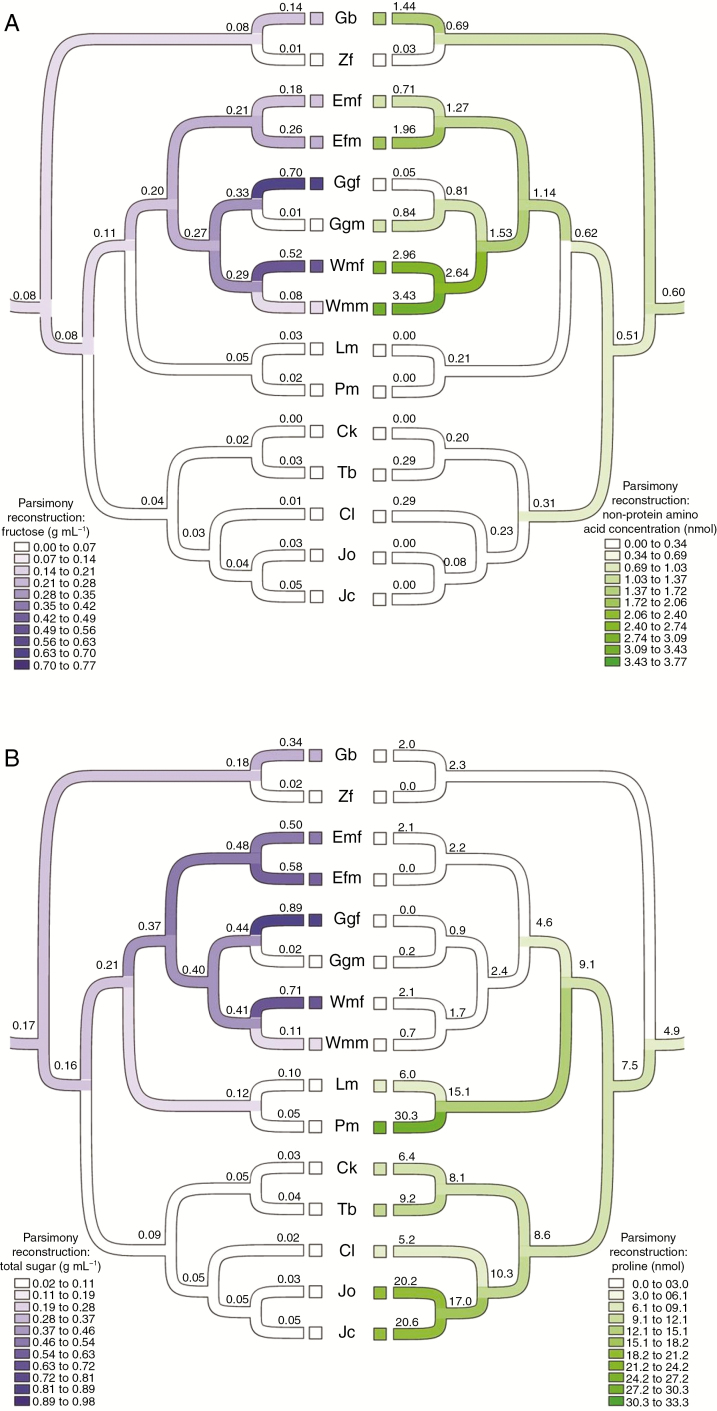
Methods: Ovular secretions from 13 species representing all five main lineages of extant gymnosperms were sampled. High-performance liquid chromatography techniques were used to measure sugar and amino acid content. Multivariate statistics were applied to assess whether there are significant differences in the chemical profiles of anemophilous and ambophilous species. Data were compared with published chemical profiles of angiosperm nectar. Chemical profiles were placed in the context of phylogenetic relationships.
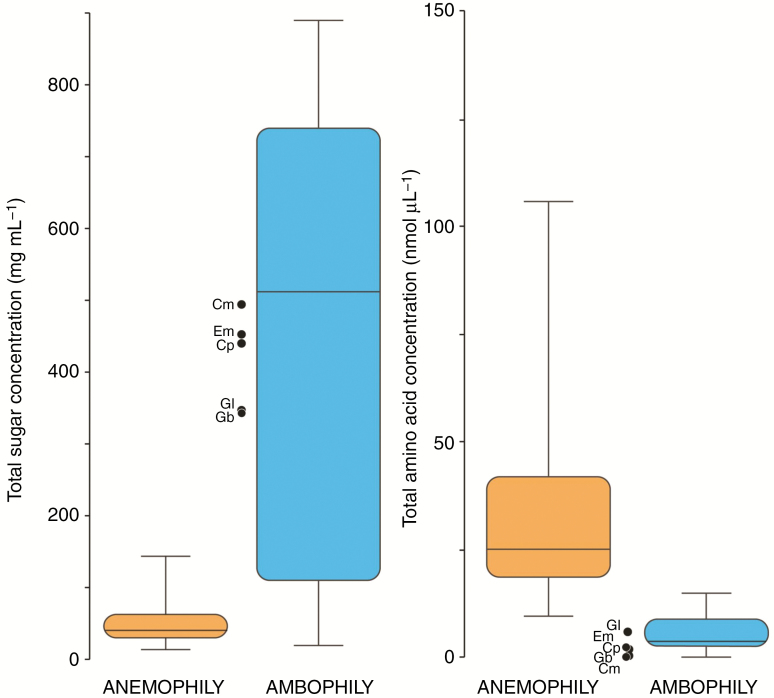
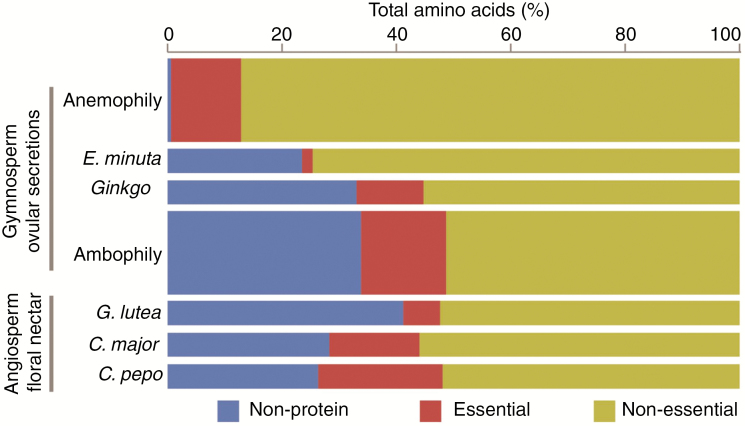
Key results: Total sugar concentrations were significantly higher in ovular secretions of ambophilous species than wind-pollinated taxa such as Pinaceae and Cupressophyta. Ambophilous species had lower amounts of total amino acids, and a higher proportion of non-protein amino acids compared with anemophilous lineages, and were also comparable to angiosperm nectar. Results suggest that early gymnosperms likely had ovular secretion profiles that were a mosaic of those associated with modern anemophilous and ambophilous species. Ginkgo, thought to be anemophilous, had a profile typical of ambophilous taxa, suggesting that insect pollination either exists in Gingko, but is undocumented, or that its ancestral populations were insect-pollinated.
Conclusions: Chemical profiles of ovular secretions of ambophilous gymnosperms show a clear signal of pollinator-driven selection, including higher levels of carbohydrates than anemophilous taxa, lower levels of amino acids, and the presence of specific amino acids, such as β-alanine, that are known to influence insect feeding behaviour and physiology.
Keywords: Amino acids; Ginkgo; floral nectar; gymnosperms; ovular secretions; pollination; sugars.
© The Author 2017. Published by Oxford University Press on behalf of the Annals of Botany Company. All rights reserved. For permissions, please email: journals.permissions@oup.com
Figures
References
-
- Ackerman JD. 2000. Abiotic pollen and pollination: ecological, functional and evolutionary perspectives. Plant Systematics and Evolution 222: 167–185.
-
- von Aderkas P, Nepi M, Rise M et al. 2012. Post-pollination prefertilization drops affect germination rates of heterospecific pollen in larch and Douglas-fir. Sexual Plant Reproduction 25: 215–225. - PubMed
-
- Baker HG, Baker I. 1982. Chemical constituents of nectar in relation to pollination mechanisms and phylogeny. In: Nitecki MH. ed. Biochemical aspects of evolutionary biology. Chicago: Chicago University Press, 131–171.
-
- Baker HG, Baker I. 1983. A brief historical review of the chemistry of floral nectar. In: Bentley B, Elias T eds. The biology of nectaries. New York: Columbia University Press, 126–151.
-
- Barlow C. 2000. The ghosts of evolution: nonsensical fruit, missing partners, and other ecological anachronisms. New York: Perseus Books.
MeSH terms
Substances
LinkOut - more resources
Full Text Sources
Other Literature Sources
