


Development and Content Validation of the Transition Readiness Inventory Item Pool for Adolescent and Young Adult Survivors of Childhood Cancer
- PMID: 29046041
- PMCID: PMC6251597
- DOI: 10.1093/jpepsy/jsx095
Development and Content Validation of the Transition Readiness Inventory Item Pool for Adolescent and Young Adult Survivors of Childhood Cancer
Abstract
Objective: The development of the Transition Readiness Inventory (TRI) item pool for adolescent and young adult childhood cancer survivors is described, aiming to both advance transition research and provide an example of the application of NIH Patient Reported Outcomes Information System methods.
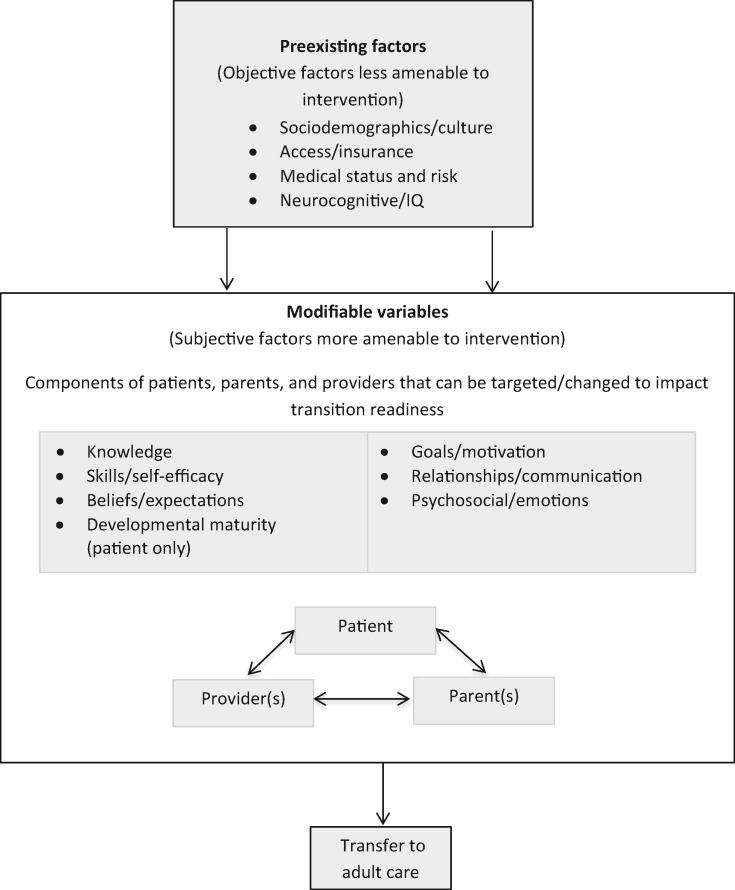
Methods: Using rigorous measurement development methods including mixed methods, patient and parent versions of the TRI item pool were created based on the Social-ecological Model of Adolescent and young adult Readiness for Transition (SMART).
Results: Each stage informed development and refinement of the item pool. Content validity ratings and cognitive interviews resulted in 81 content valid items for the patient version and 85 items for the parent version.
Conclusions: TRI represents the first multi-informant, rigorously developed transition readiness item pool that comprehensively measures the social-ecological components of transition readiness. Discussion includes clinical implications, the application of TRI and the methods to develop the item pool to other populations, and next steps for further validation and refinement.
Keywords: adolescence; assessment; cancer; chronic illness; transition readiness.
© The Author 2017. Published by Oxford University Press on behalf of the Society of Pediatric Psychology. All rights reserved. For permissions, please e-mail: journals.permissions@oup.com
Figures

References
-
- Armstrong G. T., Kawashima T., Leisenring W., Stratton K., Stovall M., Hudson M. M., Sklar C. A., Robison L. L., Oeffinger K. C. (2014). Aging and risk of severe, disabling, life-threatening, and fatal events in the childhood cancer survivor study. Journal of Clinical Oncology, 32, 1218–1227. - PMC - PubMed
-
- Bashore L., Bender J. (2016). Evaluation of the utility of a transition workbook in preparing adolescent and young adult cancer survivors for transition to adult services: A pilot study. Journal of Pediatric Oncology Nursing, 33, 111–118. - PubMed
-
- Betz C. L., Telfair J. (2007). Health care transitions: An introduction In Betz C. L., Nehring W. M. (Eds.), Promoting health care transitions for adolescents with special health care needs and disabilities (pp. 3–19). Baltimore, MD: Paul H. Brookes Pub.
-
- Cella D., Yount S., Rothrock N., Gershon R., Cook K., Reeve B., Ader D., Fries J. F., Bruce B., Rose M.; PROMIS Cooperative Group. (2007). The Patient-Reported Outcomes Measurement Information System (PROMIS): Progress of an NIH Roadmap cooperative group during its first two years. Medical Care, 45, S3–S11. - PMC - PubMed
-
- Children's Oncology Group. (2013). Long-term follow-up guidelines for survivors of childhood, adolescent, and young adult cancers version 4.0. Retrieved from www.survivorshipguidelines.org
Publication types
MeSH terms
Grants and funding
LinkOut - more resources
Full Text Sources
Other Literature Sources
Medical
