Blunted rise in brain glucose levels during hyperglycemia in adults with obesity and T2DM
- PMID: 29046482
- PMCID: PMC5846903
- DOI: 10.1172/jci.insight.95913
Blunted rise in brain glucose levels during hyperglycemia in adults with obesity and T2DM
Abstract
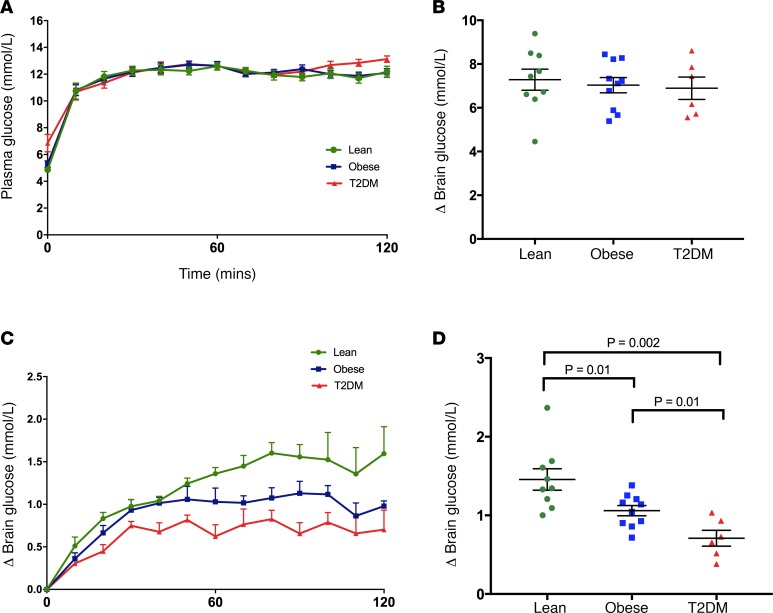
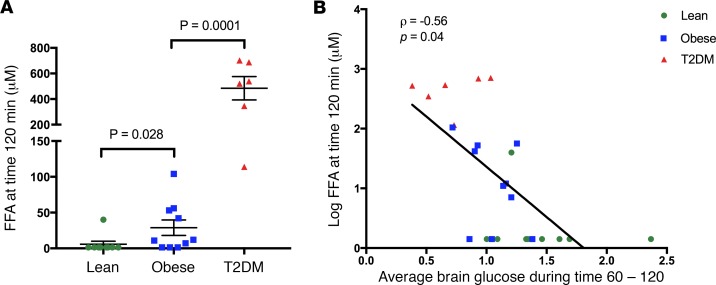
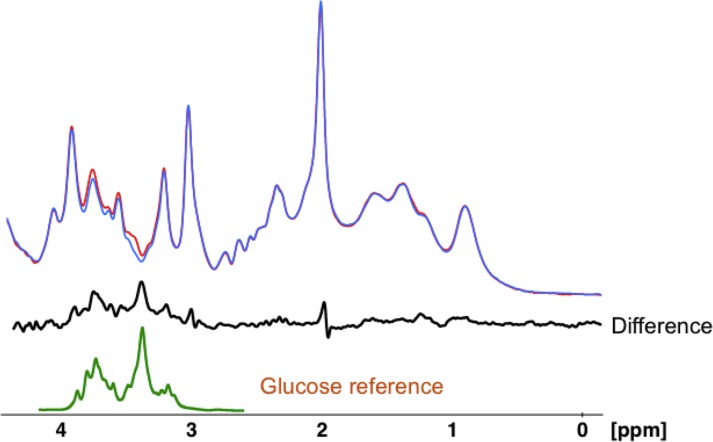
In rodent models, obesity and hyperglycemia alter cerebral glucose metabolism and glucose transport into the brain, resulting in disordered cerebral function as well as inappropriate responses to homeostatic and hedonic inputs. Whether similar findings are seen in the human brain remains unclear. In this study, 25 participants (9 healthy participants; 10 obese nondiabetic participants; and 6 poorly controlled, insulin- and metformin-treated type 2 diabetes mellitus (T2DM) participants) underwent 1H magnetic resonance spectroscopy scanning in the occipital lobe to measure the change in intracerebral glucose levels during a 2-hour hyperglycemic clamp (glucose ~220 mg/dl). The change in intracerebral glucose was significantly different across groups after controlling for age and sex, despite similar plasma glucose levels at baseline and during hyperglycemia. Compared with lean participants, brain glucose increments were lower in participants with obesity and T2DM. Furthermore, the change in brain glucose correlated inversely with plasma free fatty acid (FFA) levels during hyperglycemia. These data suggest that obesity and poorly controlled T2DM progressively diminish brain glucose responses to hyperglycemia, which has important implications for understanding not only the altered feeding behavior, but also the adverse neurocognitive consequences associated with obesity and T2DM.
Conflict of interest statement
Figures
References
-
- Stryer L. Biochemistry. 4th ed. New York: W.H. Freeman; 1995.
Publication types
MeSH terms
Substances
Grants and funding
LinkOut - more resources
Full Text Sources
Other Literature Sources
Medical
Molecular Biology Databases