


Asymmetric RNA Distribution among Cells and Their Secreted Exosomes: Biomedical Meaning and Considerations on Diagnostic Applications
- PMID: 29046875
- PMCID: PMC5632685
- DOI: 10.3389/fmolb.2017.00066
Asymmetric RNA Distribution among Cells and Their Secreted Exosomes: Biomedical Meaning and Considerations on Diagnostic Applications
Abstract
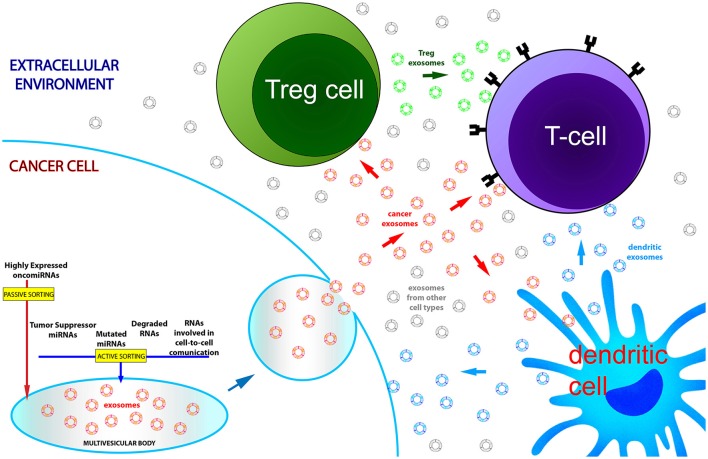
Over the past few years, exosomes and their RNA cargo have been extensively studied because of the fascinating biological roles they play in cell-to-cell communication, including the signal exchange among cancer, stromal, and immune cells, leading to modifications of tumor microenvironment. RNAs, especially miRNAs, stored within exosomes, seem to be among the main determinants of such signaling: their sorting into exosomes appears to be cell-specific and related to cellular physiopathology. Accordingly, the identification of exosomal miRNAs in body fluids from pathological patients has become one of the most promising activity in the field of biomarker discovery. Several analyses on the qualitative and quantitative distribution of RNAs between cells and their secreted exosomes have given rise to questions on whether and how accurately exosomal RNAs would represent the transcriptomic snapshot of the physiological and pathological status of secreting cells. Although the exact molecular mechanisms of sorting remain quite elusive, many papers have reported an evident asymmetric quantitative distribution of RNAs between source cells and their exosomes. This phenomenon could depend both on passive and active sorting mechanisms related to: (a) RNA turnover; (b) maintaining the cytoplasmic miRNA:target equilibrium; (c) removal of RNAs not critical or even detrimental for normal or diseased cells. These observations represent very critical issues in the exploitation of exosomal miRNAs as cancer biomarkers. In this review, we will discuss how much the exosomal and corresponding donor cell transcriptomes match each other, to better understand the actual reliability of exosomal RNA molecules as pathological biomarkers reflecting a diseased status of the cells.
Keywords: RNA sorting; RNAs; asymmetric molecular distribution; biomarkers; cancer; exosomes.
Figures
References
Publication types
LinkOut - more resources
Full Text Sources
Other Literature Sources
Miscellaneous
