


ROS Signaling in the Pathogenesis of Acute Lung Injury (ALI) and Acute Respiratory Distress Syndrome (ARDS)
- PMID: 29047084
- PMCID: PMC7120947
- DOI: 10.1007/978-3-319-63245-2_8
ROS Signaling in the Pathogenesis of Acute Lung Injury (ALI) and Acute Respiratory Distress Syndrome (ARDS)
Abstract
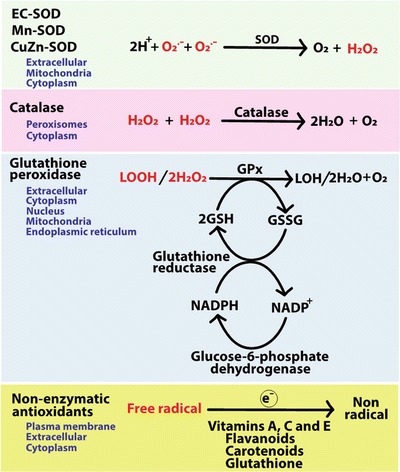
The generation of reactive oxygen species (ROS) plays an important role for the maintenance of cellular processes and functions in the body. However, the excessive generation of oxygen radicals under pathological conditions such as acute lung injury (ALI) and its most severe form acute respiratory distress syndrome (ARDS) leads to increased endothelial permeability. Within this hallmark of ALI and ARDS, vascular microvessels lose their junctional integrity and show increased myosin contractions that promote the migration of polymorphonuclear leukocytes (PMNs) and the transition of solutes and fluids in the alveolar lumen. These processes all have a redox component, and this chapter focuses on the role played by ROS during the development of ALI/ARDS. We discuss the origins of ROS within the cell, cellular defense mechanisms against oxidative damage, the role of ROS in the development of endothelial permeability, and potential therapies targeted at oxidative stress.
Keywords: Catalase; Cytochrome P450; Glutathione; Lung injury; Mitochondrial respiratory chain; NADPH oxidase; Nitric oxide synthase; Polymorphonuclear leukocytes; Pulmonary endothelial cell; Reactive oxygen species; Superoxide dismutase; Xanthine oxidase.
Figures




References
-
- Ranieri VM, Rubenfeld GD, Thompson BT, Ferguson ND, Caldwell E, Fan E, et al. Acute respiratory distress syndrome: The berlin definition. Journal of the American Medical Association. 2012;307(23):2526–2533. - PubMed
MeSH terms
Substances
LinkOut - more resources
Full Text Sources
Other Literature Sources
Medical
