Normative Values of Physical Examinations Commonly Used for Cerebral Palsy
- PMID: 29047241
- PMCID: PMC5653482
- DOI: 10.3349/ymj.2017.58.6.1170
Normative Values of Physical Examinations Commonly Used for Cerebral Palsy
Abstract
Purpose: The aim of this study was to establish normative values and to identify age-related change in physical examinations that are commonly used while evaluating patients with cerebral palsy (CP).
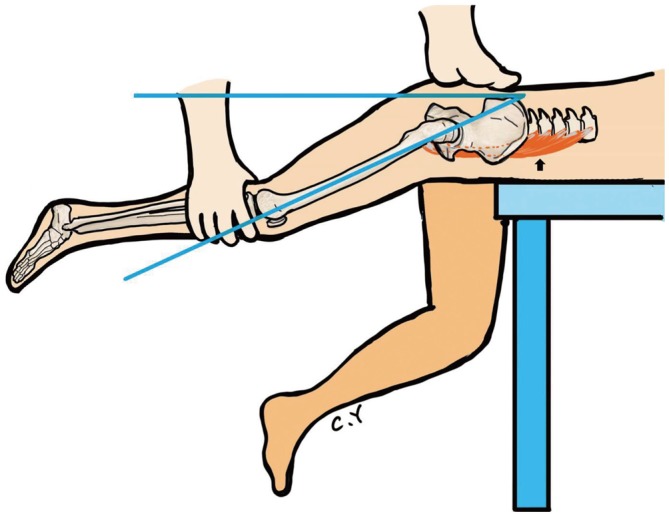
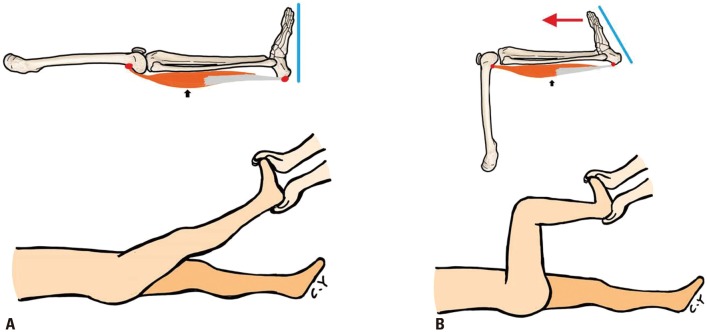
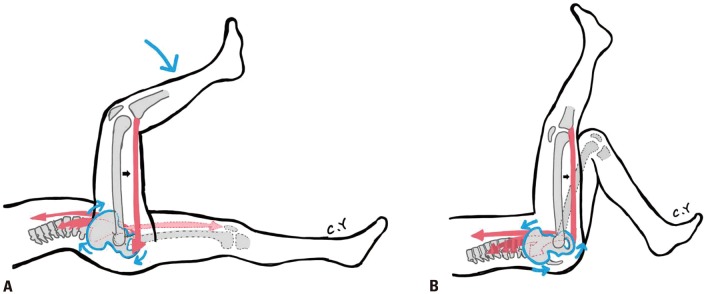
Materials and methods: One hundred four healthy volunteers (mean age 36 years, standard deviation 15 years) were enrolled and divided into four age groups: 13-20, 21-35, 36-50, and 51 years and older. The eighteen physical examination tests for CP were selected by five orthopedic surgeons in consensus-building session. The measurements were taken by three orthopedic surgeons.
Results: There was no significant difference in the measures of physical examination among all the age groups, except for the Staheli test (p=0.002). The post hoc test revealed that the mean hip extension was 2.7° higher in the 13-20-year-old group than in the other age groups. The bilateral popliteal angle had a tendency to increase in those over 36-years-old. There were 31 participants (30%) with a unilateral popliteal angle greater than 40°.
Conclusion: We documented normative values that can be widely used for evaluating CP in patients 13 years and older.
Keywords: Physical examination; cerebral palsy; normative values; range of motion.
© Copyright: Yonsei University College of Medicine 2017
Conflict of interest statement
The authors have no financial conflicts of interest.
Figures
References
-
- Cathels BA, Reddihough DS. The health care of young adults with cerebral palsy. Med J Aust. 1993;159:444–446. - PubMed
-
- Chung CY, Lee KM, Park MS, Lee SH, Choi IH, Cho TJ. Validity and reliability of measuring femoral anteversion and neck-shaft angle in patients with cerebral palsy. J Bone Joint Surg Am. 2010;92:1195–1205. - PubMed
-
- Davids JR, Benfanti P, Blackhurst DW, Allen BL. Assessment of femoral anteversion in children with cerebral palsy: accuracy of the trochanteric prominence angle test. J Pediatr Orthop. 2002;22:173–178. - PubMed
-
- Katz K, Rosenthal A, Yosipovitch Z. Normal ranges of popliteal angle in children. J Pediatr Orthop. 1992;12:229–231. - PubMed
MeSH terms
LinkOut - more resources
Full Text Sources
Other Literature Sources
Medical
Miscellaneous