


Effects of action observation therapy on upper extremity function, daily activities and motion evoked potential in cerebral infarction patients
- PMID: 29049194
- PMCID: PMC5662360
- DOI: 10.1097/MD.0000000000008080
Effects of action observation therapy on upper extremity function, daily activities and motion evoked potential in cerebral infarction patients
Abstract
Background: The aim of this study was to explore the effects of action observation therapy on motor function of upper extremity, activities of daily living, and motion evoked potential in cerebral infarction patients.
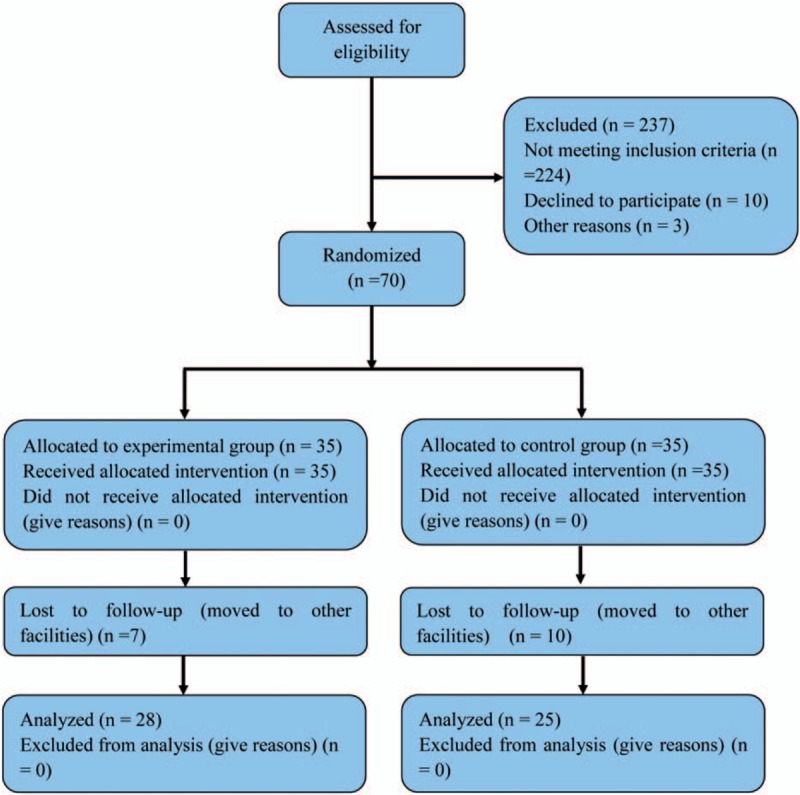
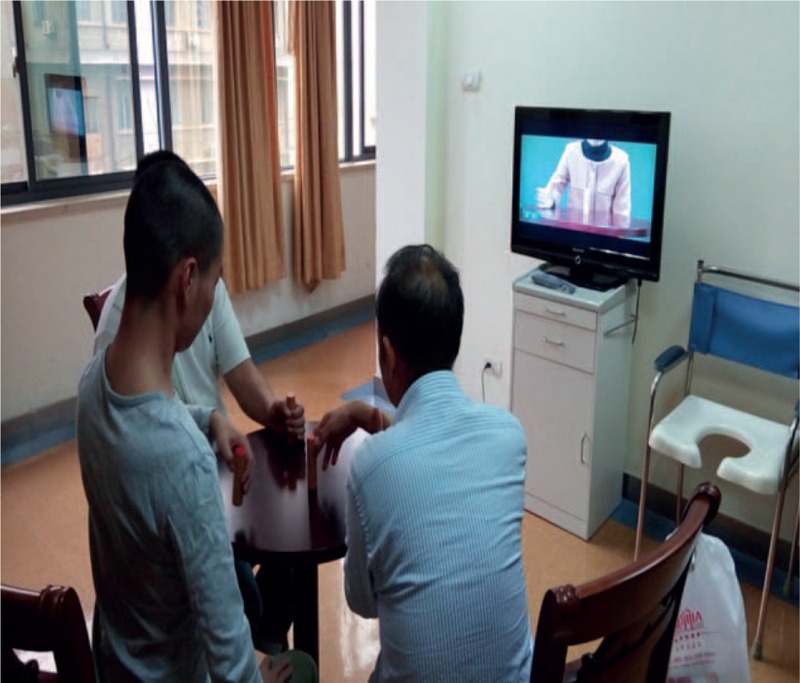
Method: Cerebral infarction survivors were randomly assigned to an experimental group (28 patients) or a control group (25 patients). The conventional rehabilitation treatments were applied in both groups, but the experimental group received an additional action observation therapy for 8 weeks (6 times per week, 20 minutes per time). Fugl-Meyer assessment (FMA), Wolf Motor Function Test (WMFT), Modified Barthel Index (MBI), and motor evoked potential (MEP) were used to evaluate the upper limb movement function and daily life activity.
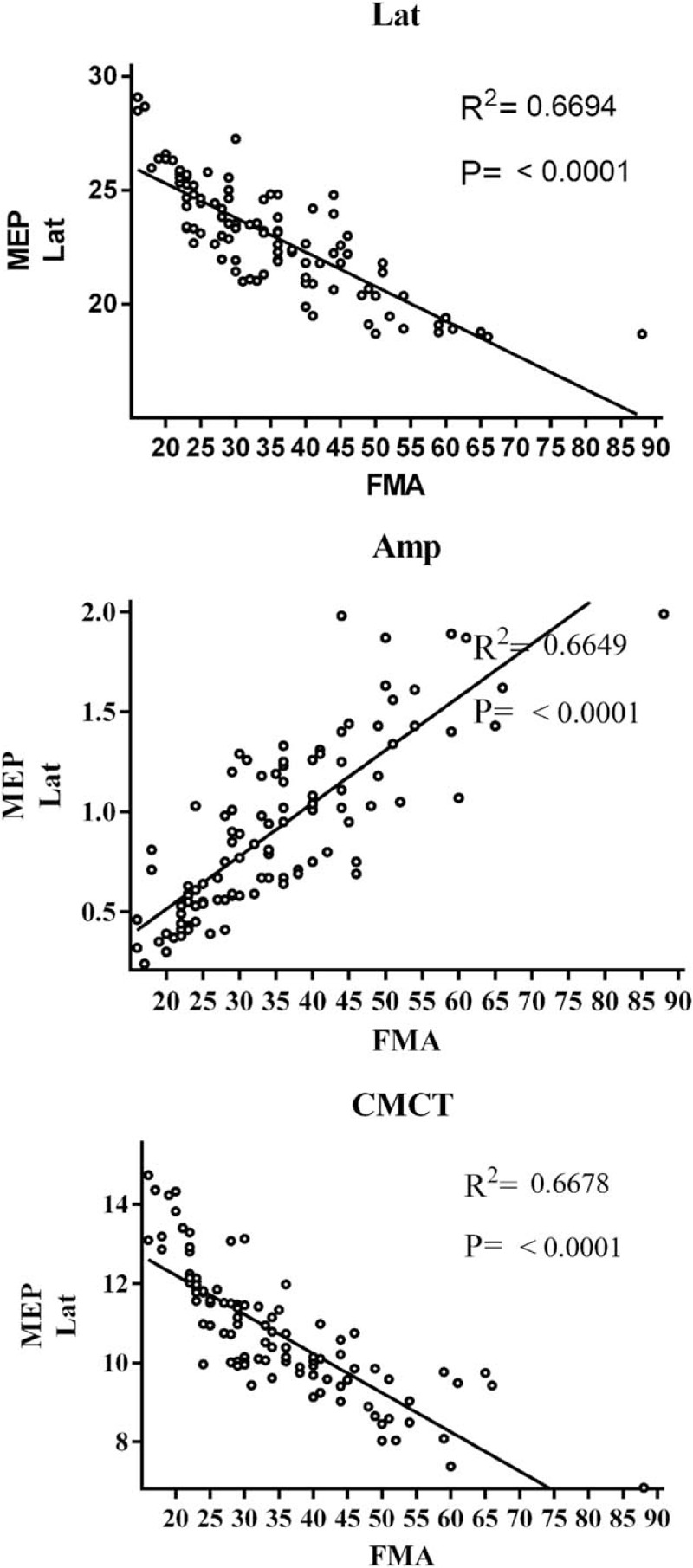
Results: There were no significant differences between experiment and control group in the indexes, including FMA, WMFT, and MBI scores, before the intervention. However, after 8 weeks treatments, these indexes were improved significantly. MEP latency and center-motion conduction time (CMCT) decreased from 23.82 ± 2.16 and 11.15 ± 1.68 to 22.69 ± 2.11 and 10.12 ± 1.46 ms. MEP amplitude increased from 0.61 ± 0.22 to 1.25 ± 0.38 mV. A remarkable relationship between the evaluations indexes of MEP and FMA was found.
Conclusions: Combination of motion observation and traditional upper limb rehabilitation treatment technology can significantly elevate the movement function of cerebral infarction patients in subacute seizure phase with upper limb dysfunction, which expanded the application range of motion observation therapy and provided an effective therapy strategy for upper extremities hemiplegia in stroke patients.
Conflict of interest statement
The authors have no conflicts of interest to disclose.
Figures
References
-
- Cirstea MC, Levin MF. Improvement of arm movement patterns and endpoint control depends on type of feedback during practice in stroke survivors. Neurorehabil Neural Repair 2007;21:398–411. - PubMed
-
- Cacchio A, De BE, De BV, et al. Mirror therapy in complex regional pain syndrome type 1 of the upper limb in stroke patients. Neurorehabil Neural Repair 2009;23:792. - PubMed
-
- Kwakkel G, Kollen BJ, Van der Grond J, et al. Probability of regaining dexterity in the flaccid upper limb: impact of severity of paresis and time since onset in acute stroke. Stroke 2003;34:2181–6. - PubMed
-
- Spieler JF, Lanoë JL, Amarenco P. Costs of stroke care according to handicap levels and stroke subtypes. Cerebrovasc Dis 2004;17:134–42. - PubMed
Publication types
MeSH terms
LinkOut - more resources
Full Text Sources
Other Literature Sources
Medical
