Association of Insulin Pump Therapy vs Insulin Injection Therapy With Severe Hypoglycemia, Ketoacidosis, and Glycemic Control Among Children, Adolescents, and Young Adults With Type 1 Diabetes
- PMID: 29049584
- PMCID: PMC5818842
- DOI: 10.1001/jama.2017.13994
Association of Insulin Pump Therapy vs Insulin Injection Therapy With Severe Hypoglycemia, Ketoacidosis, and Glycemic Control Among Children, Adolescents, and Young Adults With Type 1 Diabetes
Abstract
Importance: Insulin pump therapy may improve metabolic control in young patients with type 1 diabetes, but the association with short-term diabetes complications is unclear.
Objective: To determine whether rates of severe hypoglycemia and diabetic ketoacidosis are lower with insulin pump therapy compared with insulin injection therapy in children, adolescents, and young adults with type 1 diabetes.
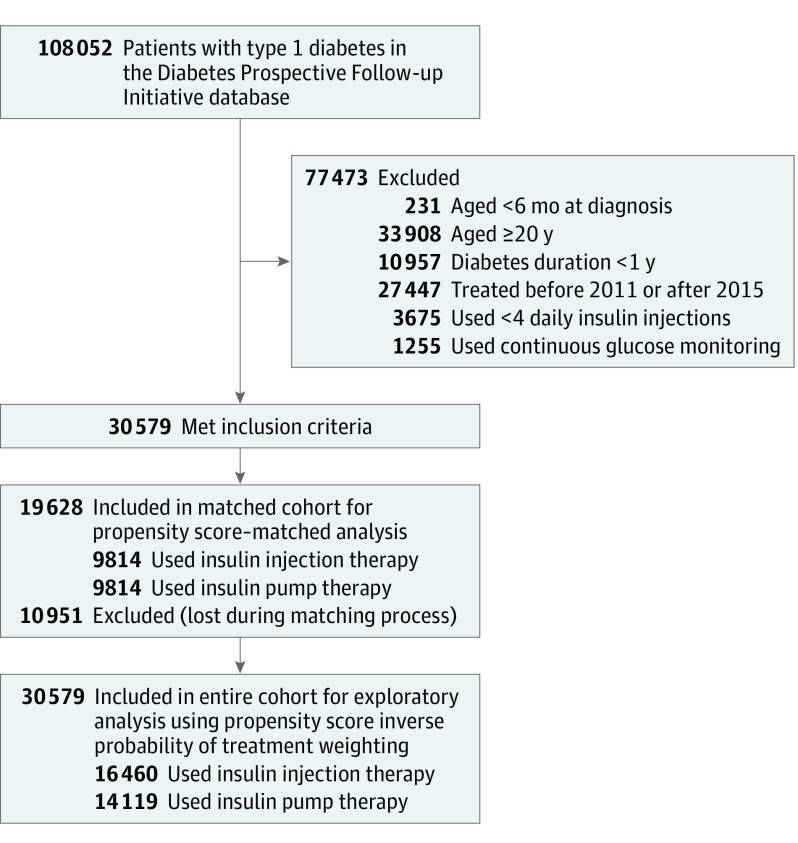
Design, setting, and participants: Population-based cohort study conducted between January 2011 and December 2015 in 446 diabetes centers participating in the Diabetes Prospective Follow-up Initiative in Germany, Austria, and Luxembourg. Patients with type 1 diabetes younger than 20 years and diabetes duration of more than 1 year were identified. Propensity score matching and inverse probability of treatment weighting analyses with age, sex, diabetes duration, migration background (defined as place of birth outside of Germany or Austria), body mass index, and glycated hemoglobin as covariates were used to account for relevant confounders.
Exposures: Type 1 diabetes treated with insulin pump therapy or with multiple (≥4) daily insulin injections.
Main outcomes and measures: Primary outcomes were rates of severe hypoglycemia and diabetic ketoacidosis during the most recent treatment year. Secondary outcomes included glycated hemoglobin levels, insulin dose, and body mass index.
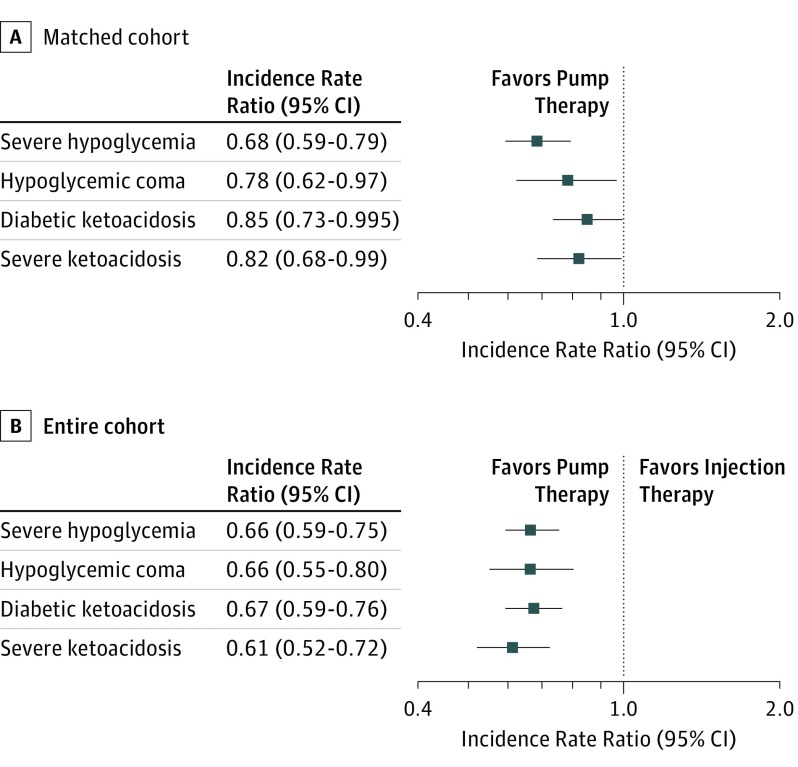
Results: Of 30 579 patients (mean age, 14.1 years [SD, 4.0]; 53% male), 14 119 used pump therapy (median duration, 3.7 years) and 16 460 used insulin injections (median duration, 3.6 years). Patients using pump therapy (n = 9814) were matched with 9814 patients using injection therapy. Pump therapy, compared with injection therapy, was associated with lower rates of severe hypoglycemia (9.55 vs 13.97 per 100 patient-years; difference, -4.42 [95% CI, -6.15 to -2.69]; P < .001) and diabetic ketoacidosis (3.64 vs 4.26 per 100 patient-years; difference, -0.63 [95% CI, -1.24 to -0.02]; P = .04). Glycated hemoglobin levels were lower with pump therapy than with injection therapy (8.04% vs 8.22%; difference, -0.18 [95% CI, -0.22 to -0.13], P < .001). Total daily insulin doses were lower for pump therapy compared with injection therapy (0.84 U/kg vs 0.98 U/kg; difference, -0.14 [-0.15 to -0.13], P < .001). There was no significant difference in body mass index between both treatment regimens. Similar results were obtained after propensity score inverse probability of treatment weighting analyses in the entire cohort.
Conclusions and relevance: Among young patients with type 1 diabetes, insulin pump therapy, compared with insulin injection therapy, was associated with lower risks of severe hypoglycemia and diabetic ketoacidosis and with better glycemic control during the most recent year of therapy. These findings provide evidence for improved clinical outcomes associated with insulin pump therapy compared with injection therapy in children, adolescents, and young adults with type 1 diabetes.
Conflict of interest statement
Figures
Comment in
-
Complications With Insulin Pump Therapy vs Insulin Injection Therapy.JAMA. 2018 Feb 6;319(5):502-503. doi: 10.1001/jama.2017.20345. JAMA. 2018. PMID: 29411027 No abstract available.
References
-
- Sherr JL, Hermann JM, Campbell F, et al. ; T1D Exchange Clinic Network, the DPV Initiative, and the National Paediatric Diabetes Audit and the Royal College of Paediatrics and Child Health registries . Use of insulin pump therapy in children and adolescents with type 1 diabetes and its impact on metabolic control: comparison of results from three large, transatlantic paediatric registries. Diabetologia. 2016;59(1):87-91. - PubMed
-
- Szypowska A, Schwandt A, Svensson J, et al. ; SWEET Study Group . Insulin pump therapy in children with type 1 diabetes: analysis of data from the SWEET registry. Pediatr Diabetes. 2016;17(suppl 23):38-45. - PubMed
Publication types
MeSH terms
Substances
LinkOut - more resources
Full Text Sources
Other Literature Sources
Medical
Molecular Biology Databases