


Marine biogeographic realms and species endemicity
- PMID: 29051522
- PMCID: PMC5648874
- DOI: 10.1038/s41467-017-01121-2
Marine biogeographic realms and species endemicity
Abstract
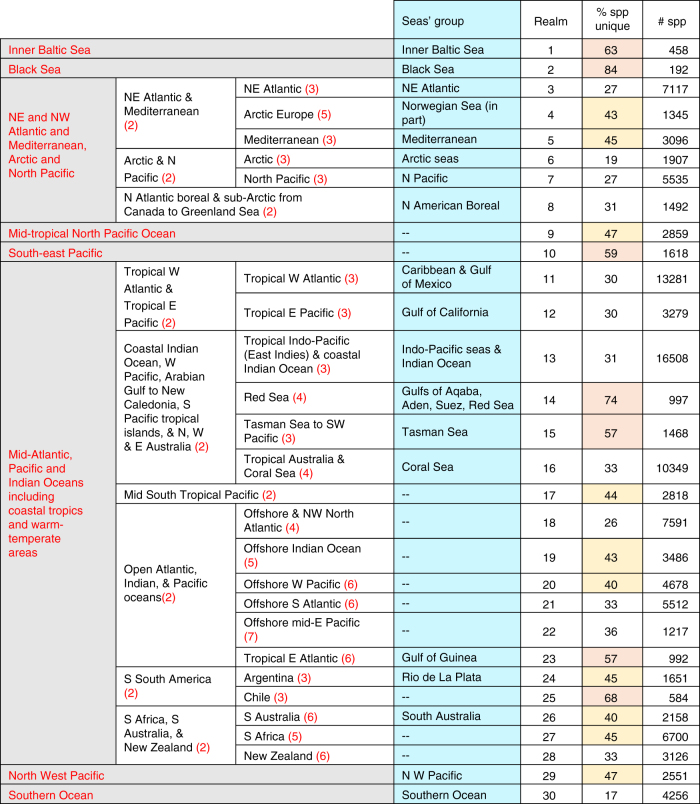
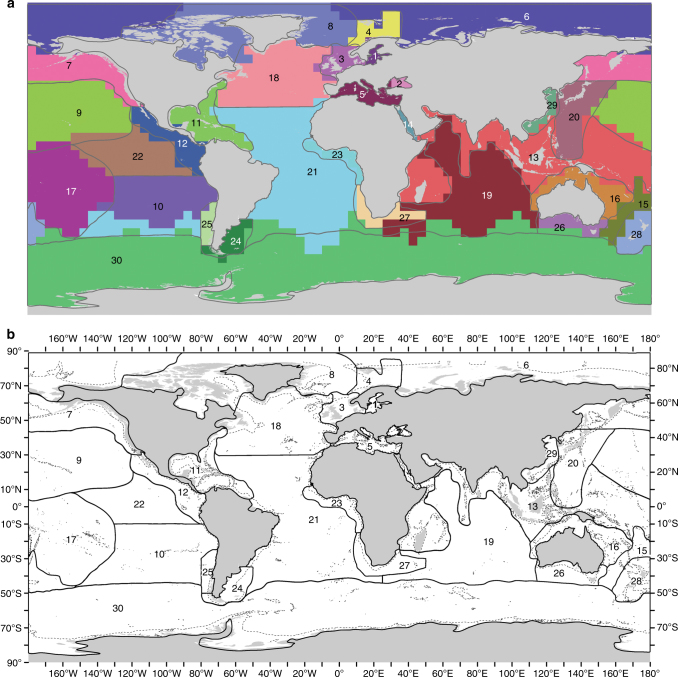
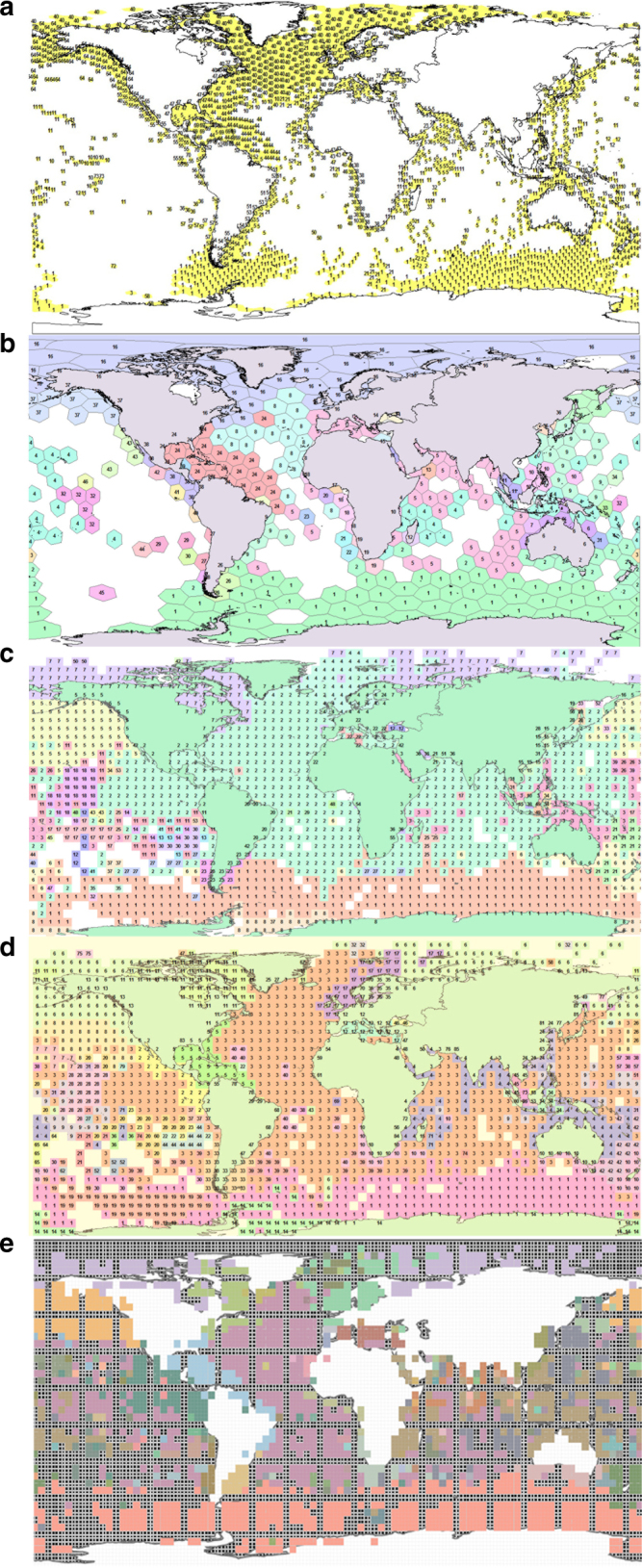
Marine biogeographic realms have been inferred from small groups of species in particular environments (e.g., coastal, pelagic), without a global map of realms based on statistical analysis of species across all higher taxa. Here we analyze the distribution of 65,000 species of marine animals and plants, and distinguish 30 distinct marine realms, a similar proportion per area as found for land. On average, 42% of species are unique to the realms. We reveal 18 continental-shelf and 12 offshore deep-sea realms, reflecting the wider ranges of species in the pelagic and deep-sea compared to coastal areas. The most widespread species are pelagic microscopic plankton and megafauna. Analysis of pelagic species recognizes five realms within which other realms are nested. These maps integrate the biogeography of coastal and deep-sea, pelagic and benthic environments, and show how land-barriers, salinity, depth, and environmental heterogeneity relate to the evolution of biota. The realms have applications for marine reserves, biodiversity assessments, and as an evolution relevant context for climate change studies.
Conflict of interest statement
The authors declare no competing financial interests
Figures
References
-
- Ekman S. Zoogeography of the Sea 417 (Sidgwick and Jackson, 1953).
-
- Briggs J. C. Marine Zoogeography (Elsevier, 1995).
-
- Kreft H, Jetz W. A framework for delineating biogeographical regions based on species distributions. J. Biogeog. 2010;37:2029–2053. doi: 10.1111/j.1365-2699.2010.02375.x. - DOI
-
- Procheş Ş, Ramdhani S. The world’s zoogeographical regions confirmed by cross-taxon analyses. Bioscience. 2012;62:260–270. doi: 10.1525/bio.2012.62.3.7. - DOI
Publication types
MeSH terms
LinkOut - more resources
Full Text Sources
Other Literature Sources
Molecular Biology Databases
