


Predictors of diffuse alveolar damage in patients with acute respiratory distress syndrome: a retrospective analysis of clinical autopsies
- PMID: 29052522
- PMCID: PMC5649062
- DOI: 10.1186/s13054-017-1852-5
Predictors of diffuse alveolar damage in patients with acute respiratory distress syndrome: a retrospective analysis of clinical autopsies
Abstract
Background: Although diffuse alveolar damage (DAD) is considered the typical histological pattern of acute respiratory distress syndrome (ARDS), only half of patients exhibit this morphological hallmark. Patients with DAD may have higher mortality than those without DAD. Therefore, we aimed to identify the factors associated with DAD in patients with ARDS.
Methods: We analyzed autopsy samples of 356 patients who had ARDS at the time of death. DAD was assessed by two pathologists, and ARDS criteria were evaluated by two intensivists. Criteria for severe ARDS included the degree of hypoxemia and the ancillary variables of the current Berlin definition assessed within 48 h before death: radiographic severity, high positive end-expiratory pressure (PEEP) level, and physiological variables (i.e., altered respiratory system compliance and large anatomic dead space).
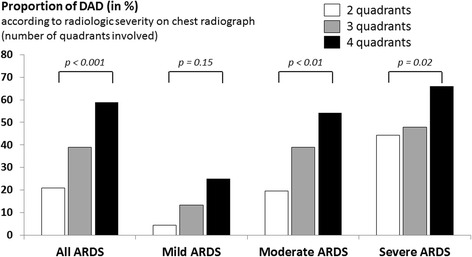
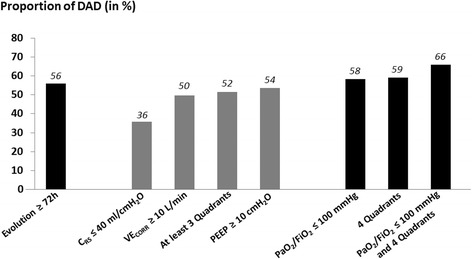
Results: After multivariable analysis, high PEEP levels, physiological variables, and opacities involving only three quadrants on chest radiographs were not associated with DAD. The four markers independently associated with DAD were (1) duration of evolution (OR 3.29 [1.95-5.55] for patients with ARDS ≥ 3 days, p < 0.001), (2) degree of hypoxemia (OR 3.92 [1.48-10.3] for moderate ARDS and 6.18 [2.34-16.3] for severe ARDS, p < 0.01 for both), (3) increased dynamic driving pressure (OR 1.06 [1.04-1.09], p = 0.007), and (4) radiographic severity (OR 2.91 [1.47-5.75] for patients with diffuse opacities involving the four quadrants, p = 0.002). DAD was found in two-thirds of patients with a ratio of partial pressure of arterial oxygen to fraction of inspired oxygen ≤ 100 mmHg and opacities involving the four quadrants.
Conclusions: In addition to severe hypoxemia, diffuse opacities involving the four quadrants were a strong marker of DAD.
Keywords: Acute respiratory distress syndrome; Diffuse alveolar damage; Intensive care unit; Mechanical ventilation.
Conflict of interest statement
Ethics approval and consent to participate
We systematically requested informed consent from patients’ relatives for both clinical autopsies and potential use of tissue samples for subsequent data analysis in research or teaching purposes. The study was approved by the institutional review board of the University Hospital of Getafe.
Consent for publication
We obtained all necessary consent from patients’ next of kin for the study.
Competing interests
The authors declare that they have no competing interests.
Publisher’s Note
Springer Nature remains neutral with regard to jurisdictional claims in published maps and institutional affiliations.
Figures
References
-
- Esteban A, Fernandez-Segoviano P, Frutos-Vivar F, Aramburu JA, Najera L, Ferguson ND, Alia I, Gordo F, Rios F. Comparison of clinical criteria for the acute respiratory distress syndrome with autopsy findings. Ann Intern Med. 2004;141(6):440–5. doi: 10.7326/0003-4819-141-6-200409210-00009. - DOI - PubMed
MeSH terms
LinkOut - more resources
Full Text Sources
Other Literature Sources
