


Health impacts of chemical irritants used for crowd control: a systematic review of the injuries and deaths caused by tear gas and pepper spray
- PMID: 29052530
- PMCID: PMC5649076
- DOI: 10.1186/s12889-017-4814-6
Health impacts of chemical irritants used for crowd control: a systematic review of the injuries and deaths caused by tear gas and pepper spray
Abstract
Background: Chemical irritants used in crowd control, such as tear gases and pepper sprays, are generally considered to be safe and to cause only transient pain and lacrimation. However, there are numerous reports that use and misuse of these chemicals may cause serious injuries. We aimed to review documented injuries from chemical irritants to better understand the morbidity and mortality associated with these weapons.
Methods: We conducted a systematic review using PRISMA guidelines to identify injuries, permanent disabilities, and deaths from chemical irritants worldwide between January 1, 1990 and March 15, 2015. We reviewed injuries to different body systems, injury severity, and potential risk factors for injury severity. We also assessed region, context and quality of each included article.
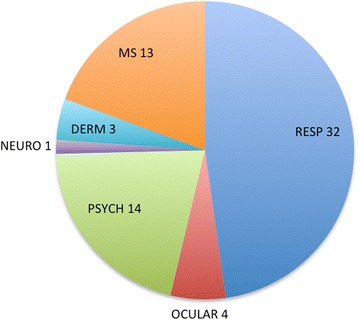
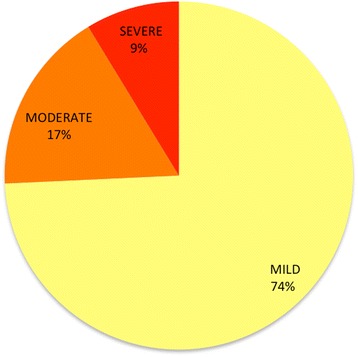
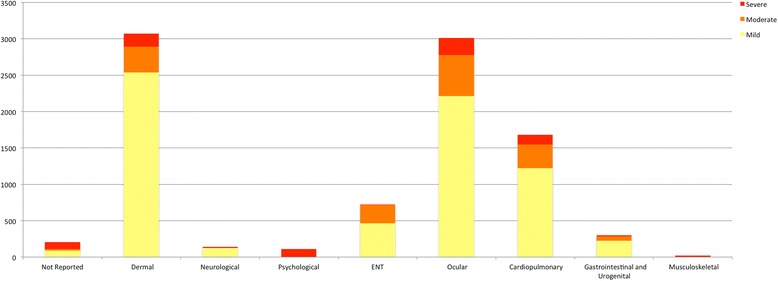
Results: We identified 31 studies from 11 countries. These reported on 5131 people who suffered injuries, two of whom died and 58 of whom suffered permanent disabilities. Out of 9261 total injuries, 8.7% were severe and required professional medical management, while 17% were moderate and 74.3% were minor. Severe injuries occurred to all body systems, with the majority of injuries impacting the skin and eyes. Projectile munition trauma caused 231 projectile injuries, with 63 (27%) severe injuries, including major head injury and vision loss. Potentiating factors for more severe injury included environmental conditions, prolonged exposure time, and higher quantities of chemical agent in enclosed spaces.
Conclusions: Although chemical weapons may have a limited role in crowd control, our findings demonstrate that they have significant potential for misuse, leading to unnecessary morbidity and mortality. A nuanced understanding of the health impacts of chemical weapons and mitigating factors is imperative to avoiding indiscriminate use of chemical weapons and associated health consequences.
Keywords: 2-chlorobenzalmalonitrile (agent CS); Crowd control; Demonstrations; Less lethal weapons; Oleoresin capsicum (agent OC); Pelargonic acid vanillylamide or capsaicin II (PAVA); Pepper spray; Protests; Tear gas.
Conflict of interest statement
Ethics approval and consent to participate
An ethics statement was not required for this work.
Consent to publication
Not applicable.
Competing interests
The authors declare that they have no competing interests.
Publisher’s Note
Springer Nature remains neutral with regard to jurisdictional claims in published maps and institutional affiliations.
Figures



Comment in
-
Use of tear gas for crowd control in Hong Kong.Lancet. 2019 Oct 26;394(10208):1517-1518. doi: 10.1016/S0140-6736(19)32326-8. Epub 2019 Oct 14. Lancet. 2019. PMID: 31623895 No abstract available.
References
-
- Ortiz I, Burke S, Berrada M, Cortes H. World Protests 2006–2013 [Internet]. New York, NY: Initiative for Policy Dialogue and Friedrich-Ebert-Stiftung; 2013 Sep p. 91. Available: http://policydialogue.org/files/publications/papers/World_Protests_2006-....
-
- Alpert GP, Dunham RG. Understanding police use of force: Officers, suspects, and reciprocity [Internet]. Cambridge University Press; 2004. Available: http://assets.cambridge.org/97805218/37736/frontmatter/9780521837736_fro....
-
- Amnesty International. Trigger Happy: Israel’s Excessive Use of Force in the West Bank [Internet]. London, UK: Amnesty International; 2014 Feb. Available: https://www.amnesty.org/en/documents/MDE15/002/2014/en/.
Publication types
MeSH terms
Substances
LinkOut - more resources
Full Text Sources
Other Literature Sources
Medical
