


Mitochondrial Dysfunction in Chemotherapy-Induced Peripheral Neuropathy (CIPN)
- PMID: 29056658
- PMCID: PMC5634687
- DOI: 10.3390/toxics3020198
Mitochondrial Dysfunction in Chemotherapy-Induced Peripheral Neuropathy (CIPN)
Abstract
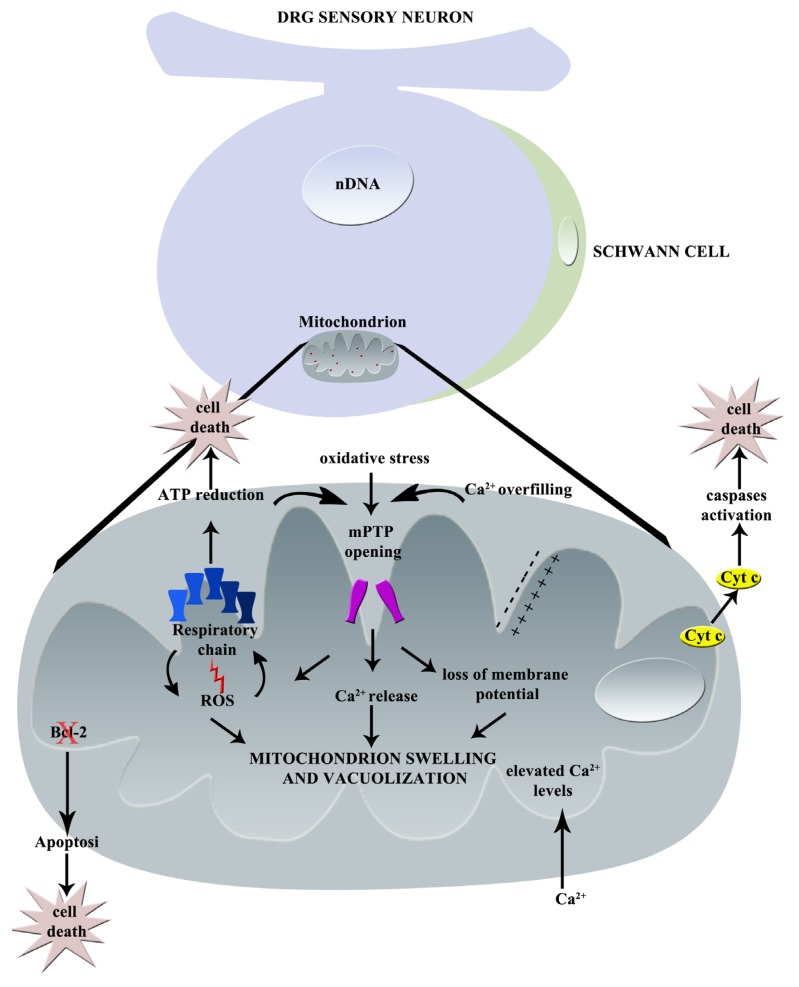
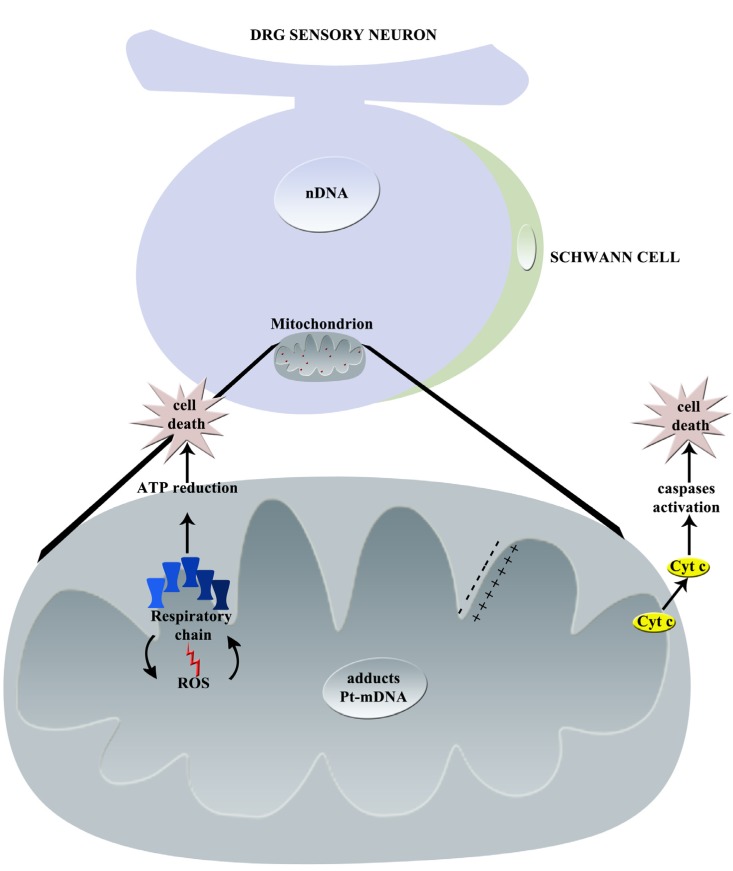
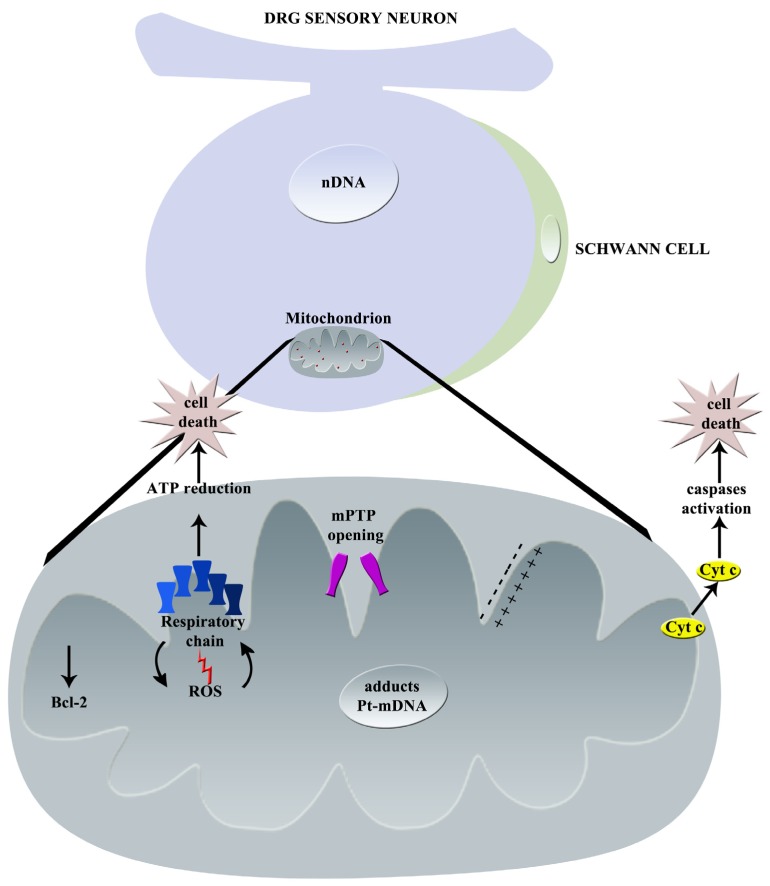
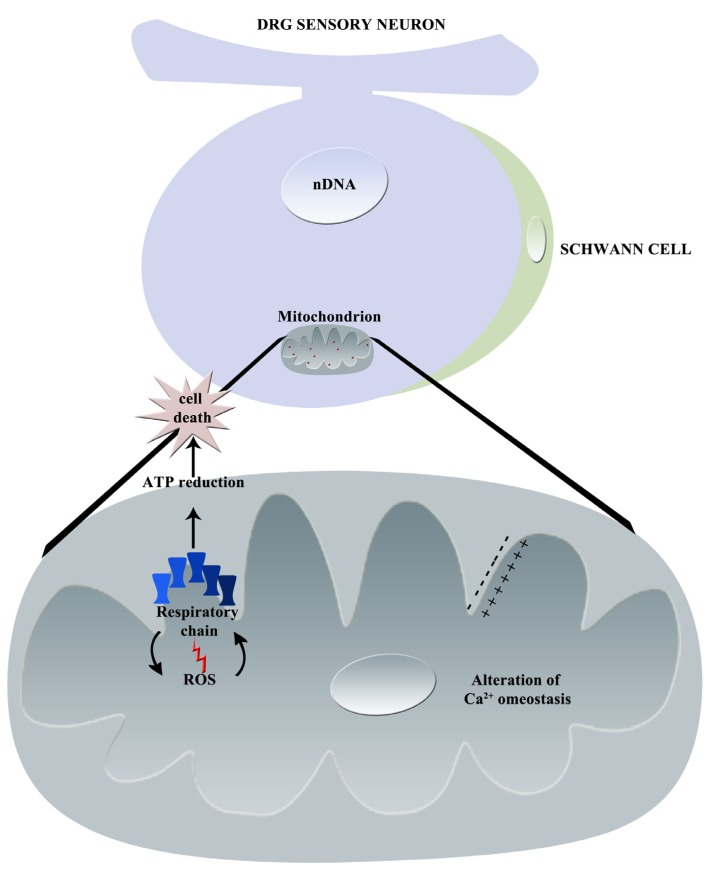
The mitochondrial dysfunction has a critical role in several disorders including chemotherapy-induced peripheral neuropathies (CIPN). This is due to a related dysregulation of pathways involving calcium signalling, reactive oxygen species and apoptosis. Vincristine is able to affect calcium movement through the Dorsal Root Ganglia (DRG) neuronal mitochondrial membrane, altering its homeostasis and leading to abnormal neuronal excitability. Paclitaxel induces the opening of the mitochondrial permeability transition pore in axons followed by mitochondrial membrane potential loss, increased reactive oxygen species generation, ATP level reduction, calcium release and mitochondrial swelling. Cisplatin and oxaliplatin form adducts with mitochondrial DNA producing inhibition of replication, disruption of transcription and morphological abnormalities within mitochondria in DRG neurons, leading to a gradual energy failure. Bortezomib is able to modify mitochondrial calcium homeostasis and mitochondrial respiratory chain. Moreover, the expression of a certain number of genes, including those controlling mitochondrial functions, was altered in patients with bortezomib-induced peripheral neuropathy.
Keywords: Chemotherapy compounds; mitochondria; mitotoxicity; neuropathic pain; peripheral neurotoxicity.
Conflict of interest statement
The authors declare no conflict of interest.
Figures

References
-
- Strumberg D., Brügge S., Korn M.W., Koeppen S., Ranft J., Scheiber G., Reiners C., Möckel C., Seeber S., Scheulen M.E. Evaluation of long-term toxicity in patients after cisplatin-based chemotherapy for non-seminomatous testicular cancer. Ann Oncol. 2002;13:229–236. doi: 10.1093/annonc/mdf058. - DOI - PubMed
Publication types
LinkOut - more resources
Full Text Sources
Other Literature Sources
