


The Multidimensional Assessment of Parenting Scale (MAPS): Development and Psychometric Properties
- PMID: 29056840
- PMCID: PMC5646703
- DOI: 10.1007/s10826-017-0741-5
The Multidimensional Assessment of Parenting Scale (MAPS): Development and Psychometric Properties
Abstract
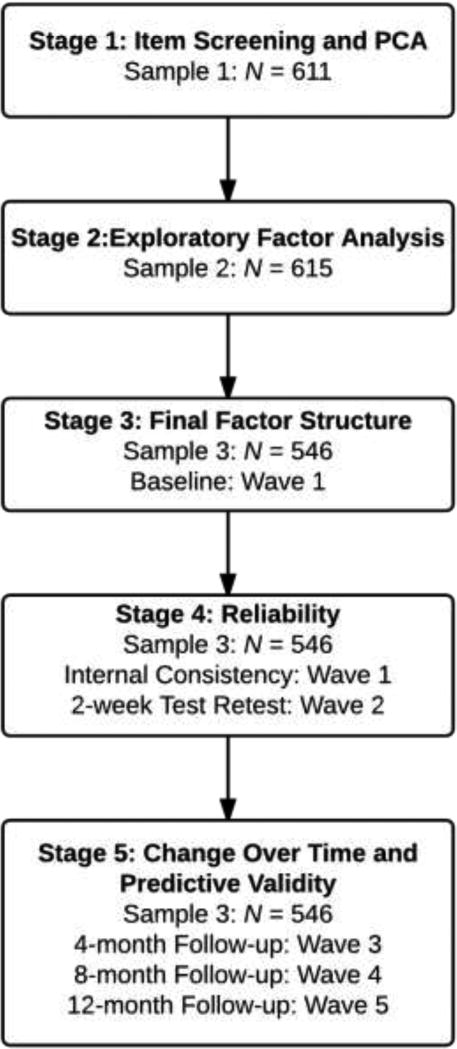
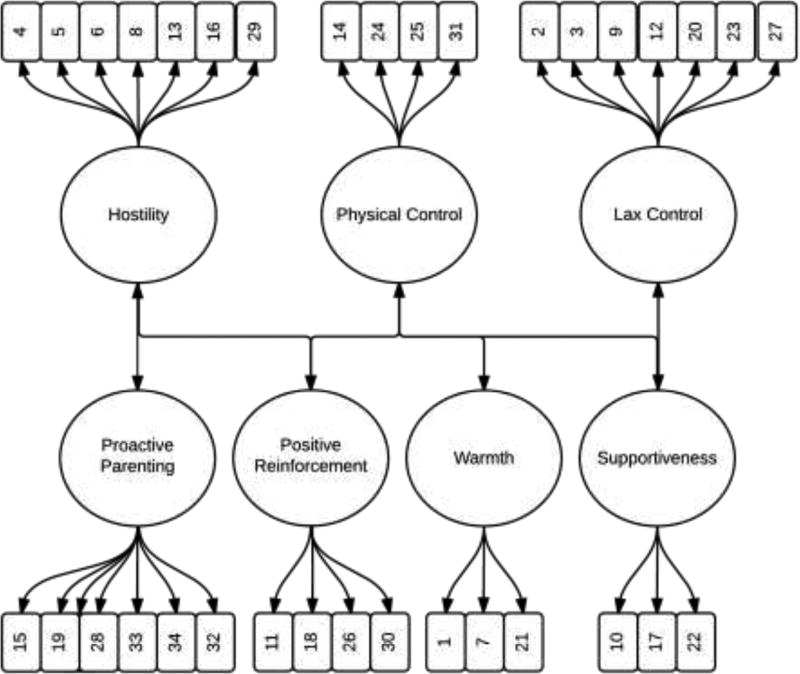
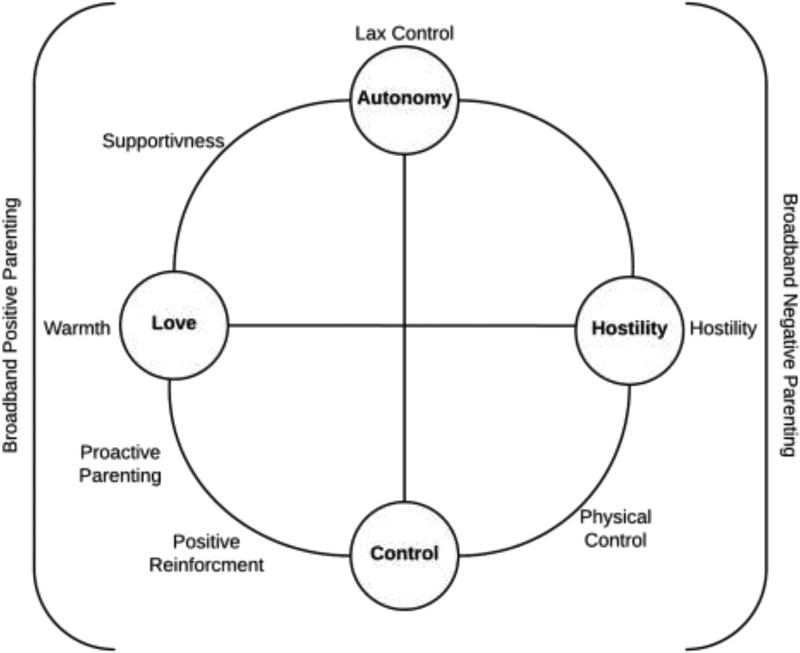
The aim of the current study was to create a new measure of parenting practices, constituted by items from already established measures, to advance the measurement of parenting practices in clinical and research settings. Five stages were utilized to select optimal parenting items, establish a factor structure consisting of positive and negative dimensions of parenting, meaningfully consider child developmental stage, and ensure strong psychometric properties (reliability and validity) of the final measure. A total of 1,790 parents (44% fathers) were recruited online through Amazon's Mechanical Turk for three cohorts: Stages 1 (N = 611), 2 (N = 615), and 3 (N = 564). Each sample was equally divided by child developmental stage: Young childhood (3 to 7 years old), middle childhood (8 to 12 years old), and adolescence (13 to 17 years old). Through the five-stage empirical approach, the Multidimensional Assessment of Parenting Scale (MAPS) was developed, successfully achieving all aims. The MAPS factor structure included both positive and negative dimensions of warmth/hostility and behavioral control that were appropriate for parents of children across the developmental span. The MAPS demonstrated strong reliability and longitudinal analyses provided initial support for the validity of MAPS subscales.
Keywords: assessment; parenting.
Conflict of interest statement
Conflict of Interest: The authors declare that they have no conflicts of interest.
Figures
References
-
- Achenbach TM. Achenbach System of Empirically Based Assessment (ASEBA): Development, findings, theory, and applications. Burlington, VT: University of Vermont; 2009.
-
- Achenbach T, McConaughy S, Ivanova MY, Rescorla LA. Manual for the ASEBA Brief Problem Monitor (BPM) Burlington, VT: University of Vermont; 2011.
-
- Achenbach TM, Rescorla L. ASEBA school-age forms & profiles. Burlington, VT: 2001.
-
- Arnold DS, O’Leary SG, Wolff LS, Acker MM. The Parenting Scale: A measure of dysfunctional parenting in discipline situations. Psychological Assessment. 1993;5:137–144.
-
- Barber BK. Introduction: Adolescent socialization in context—the role of connection, regulation, and autonomy in the family. Journal of Adolescent Research. 1997;12(1):5–11.
Grants and funding
LinkOut - more resources
Full Text Sources
Other Literature Sources
Medical